

The cryptocurrency market continues to grow despite a slowdown in the number of new cryptos launched this year. Over the last twelve months, new cryptocurrency launches have been restricted to a few projects from gigantic tech players and disruptive startups targeting specific markets.
Furthermore, the “coin cemetery” has expanded with more dead coins joining the graveyard of obsolescence. As such, some cryptocurrencies are being knocked out of the market as soon as they are launched. Some even don’t make it passed the ICO (Initial coin offering) stage.
Cryptocurrency trading has experienced increased volatility in the last few months
This in and out movement amid growing uncertainty on government views and regulation makes the cryptocurrency market even more volatile. Facebook’s Libra continues to face obstacles months after it was announced.
Facebook CEO, Mark Zuckerberg has been grilled and questioned by the US Congress on the decision to launch Libra cryptocurrency under Facebook. This has caused more shockwaves in the cryptocurrency market.
This year alone we have witnessed the price of pioneer cryptocurrency Bitcoin (BTC) hit a new 18-month high of just under the $14,000 mark in July before plunging to bottom at around $7,300 last month.
On the other hand, Ripple (XRP) topped $0.50 in late June this year before plunging more than 90% to trade at about $0.24 three months later while Litecoin (LTC) hit a high of $146.00 this year but is now down to about $61.00.
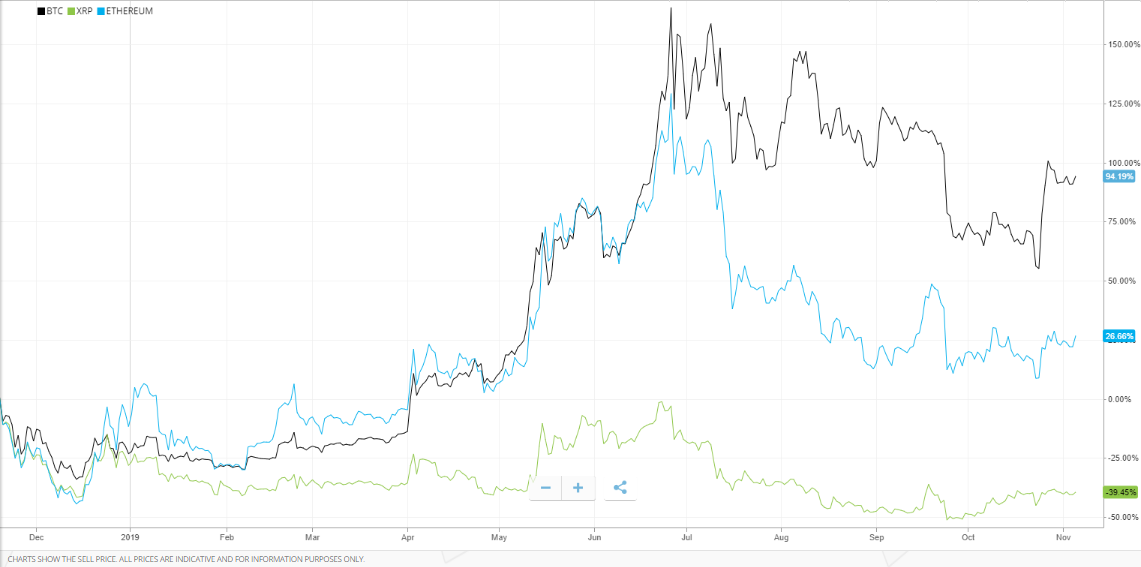
Bitcoin, Ethereum and Litecoin Chart via eToro
This level of volatility makes it harder to profit from the market for those without expertise and experience in trading cryptocurrencies. As such, alternative methods of profiting from the market would appeal to a select group of traders that are not prepared to tangle with the intricacies of trading in a market that is becoming highly dynamic.
Copy-trading cryptocurrencies
Traders who have traded traditional currencies via forex brokerage platforms are aware of the existence of copy trading systems, which allow novice or inexperienced traders to copy the trades of expert traders thereby allowing them to enjoy similar profits. Most social trading platforms already have copy traders for cryptocurrencies. However, most of them are only offered in Europe, Asia and other parts of the world, but not in the US.
Nonetheless, following the launch of eToro’s CopyTrader(™) in the US earlier this month, this makes passive investing in the cryptocurrency market easier for US-based traders. The launch of CopyTrader in the US was flagged by some of the leading names in Hollywood with Alec Baldwin spearheading the campaign. Clearly, it looks like all the groundwork has been prepared perfectly for copy trading to thrive in the country.
Copy trading is a technique that democratizes investing and portfolio management for all types of traders. Ideally, a trader can allocate specific amounts of capital to copy the trades of expert traders with unique profiles.
A short-term cryptocurrency expert trader who specializes in the top five cryptocurrencies like Ethereum, Bitcoin, Bitcoin Cash, Litecoin, and Ripple will have a different profile from another expert trader that focuses on trading disruptive cryptos, like Neo (NEO), Cardano (ADA) and Eos (EOS), among others. Other specification features may include win-rates, investment time frame, the maximum drawdown (the maximum decline experienced before making a full recovery).
Copy trading is an effective and transparent method of building wealth. Any individual who wants to passively invest in crypto assets can simply look “for an investor with a proven track record and just hit copy to execute the same trades automatically,” Guy Hirsch, US managing director of eToro said in a recent press release. This sounds like the perfect vehicle for wealth building in an industry that has proven to be very volatile in recent months.
Conclusion
In summary, passive crypto trading is becoming a reality in the US. Traders can now use a CopyTrader to copy proven expert traders and make similar profits without actively analyzing the market.
In addition, this also provides traders with an opportunity to diversify their investment portfolios across several expert traders with different profiles thereby limiting their risk exposure.



Comments
Log in or sign up to join the conversation.