


Agri Commodity Upside Risk
I wanted to share this topic from a recent Weekly Macro Themes report because things are getting interesting in this overlooked corner of global markets.
But also this issue (upside risk in agricultural commodities) is interesting both from a position taking standpoint — and from a macro standpoint. Because upside in agri commodity prices will directly and acutely affect consumer prices aka inflation …which is probably one of the biggest macro issues right now (particularly given the impact on policymaking and bond markets).
So I hope you find this rare dive into agri commodities interesting.
First up is the Main Page for this topic, all topics in my weekly report take this format: an overall assessment (summing up the outlook), risks against the view, catalysts to reinforce the view, a key chart to provide big picture visibility on what is happening, and ratings for each of the core factors I look at (table at the bottom).
As you can see the overall assessment is bullish agri commodities.
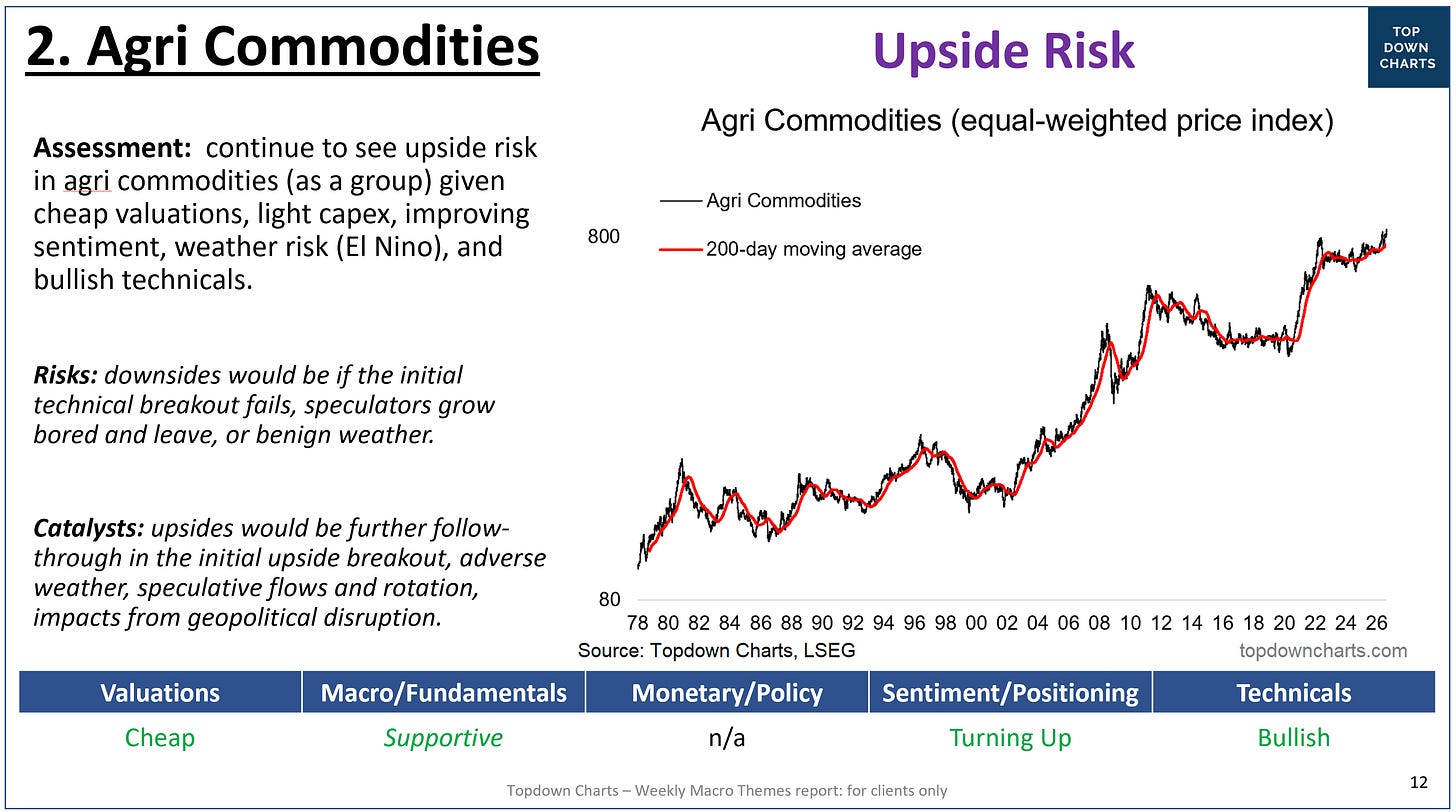
Rotation Catch-up and Rising Sentiment: Agri commodities as a group are seeing generalized upward pressure in prices already (with arguably some catch-up and rotation effects going on as the rest of commodities lead the way [particularly gold and energy]). As such, consensus sentiment is trending up with ample scope for further upside.
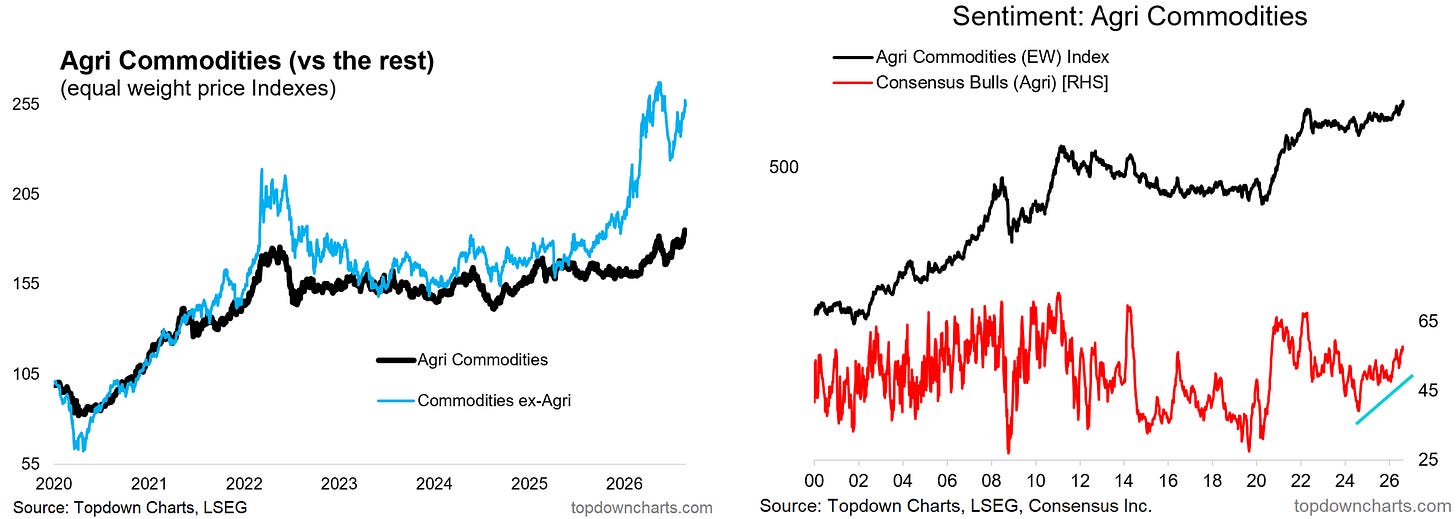
From a high level, on the technical front it has the look and feel of a market getting ready to move (particularly as the equal-weighted index has already broken out).
Fundamental Supports to Agri Upside Risk: The key fundamental backdrop supports for agri prices include a continued soft pace of capex among global food producers (likely leading to future capacity constraints on the supply side), ongoing +potential geopolitical disruption, and now the prospect of weather risk as a historically strong El Nino develops.
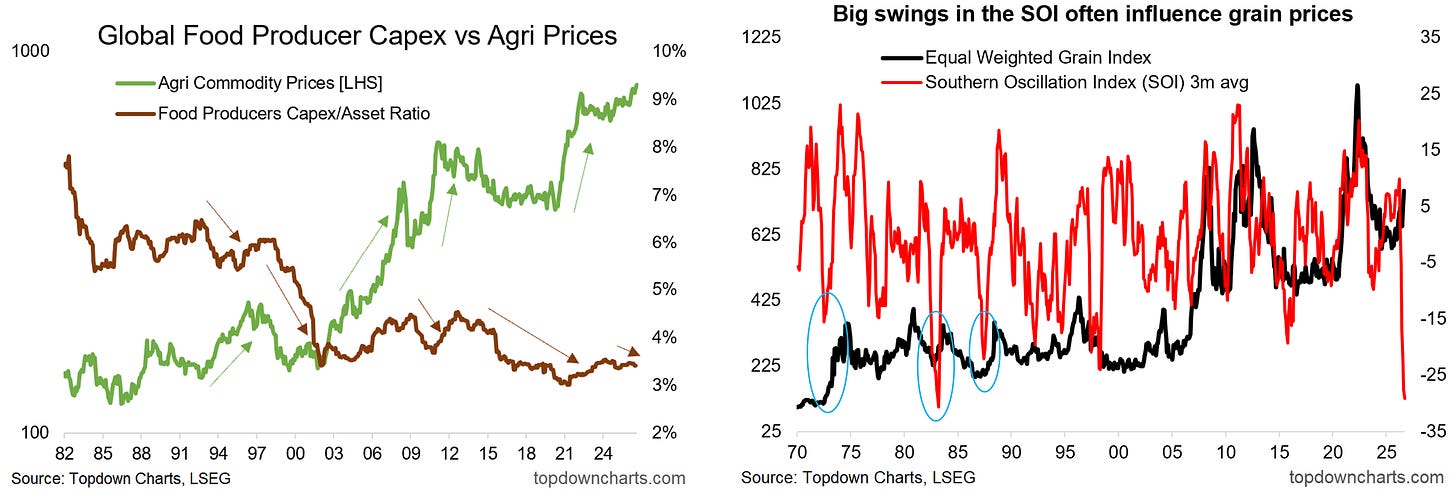
Note, using the Southern Oscillation Index as a quantitative indicator for weather regime impacts [it is a key indicator for El Nino vs La Nina weather systems], we can see that large swings down (indicating El Nino) have often had mixed-to-bearish initial impacts, but have been followed by several major upswings in agri prices e.g. early 1970’s and twice in the 1980’s.
The impact is not consistent as there can be multiple offsetting factors, but the fact that it has coincided with major price upswings before only adds to the upside risk case (and is that it is developing alongside bullish technicals, underinvestment in supply, and geopolitical disruption raises the odds of upside).
Grain Prices — Cheap and Turning Up: Within agri, grains look particularly interesting; the equal-weighted index of soybeans/wheat/corn is looking cheap on a real price basis, and the index is turning up off the lows (with sentiment and positioning also trending up from previous consensus/crowded bearish conditions).
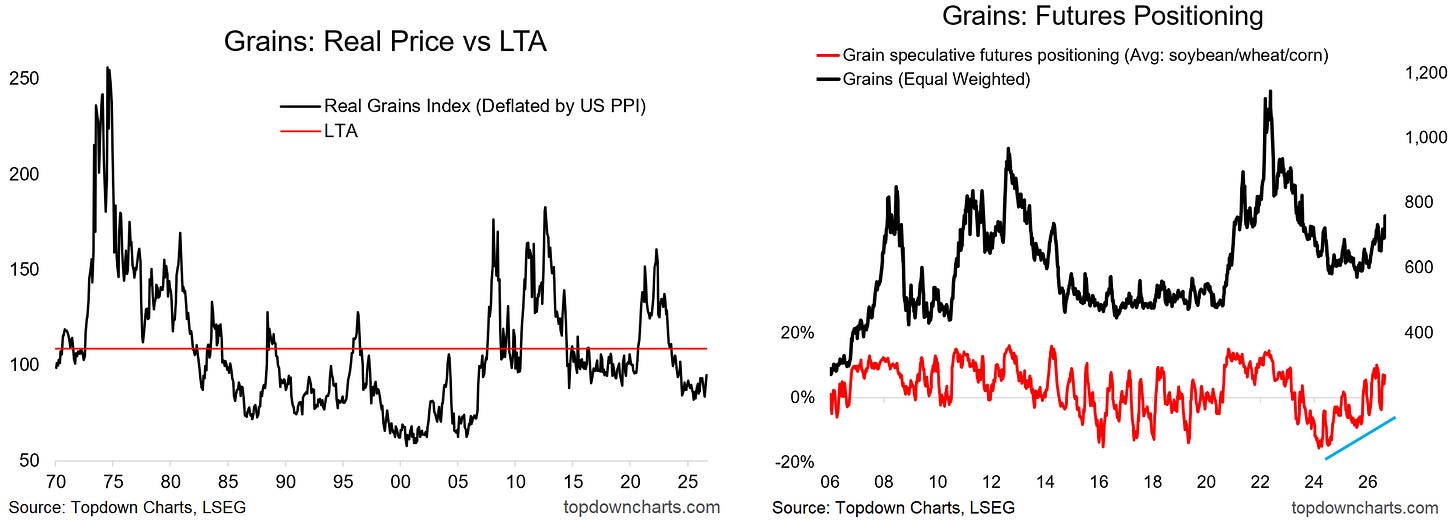
Again, from a technical standpoint it looks like a market getting ready to move, just looking for an excuse.
Agri Commodities — Participating in Upside: Lastly, as I have previously outlined, I would highlight that it can be problematic trying to invest in agri commodity upside via futures and ETFs due to performance drag from the futures roll, but having said that the main agri ETF in the USA has established a decent uptrend since the 2020 low.
Agri equities can be a good alternative, often rallying alongside agri commodity prices (albeit also introducing equity beta risk, but also income from the dividends and earnings growth).
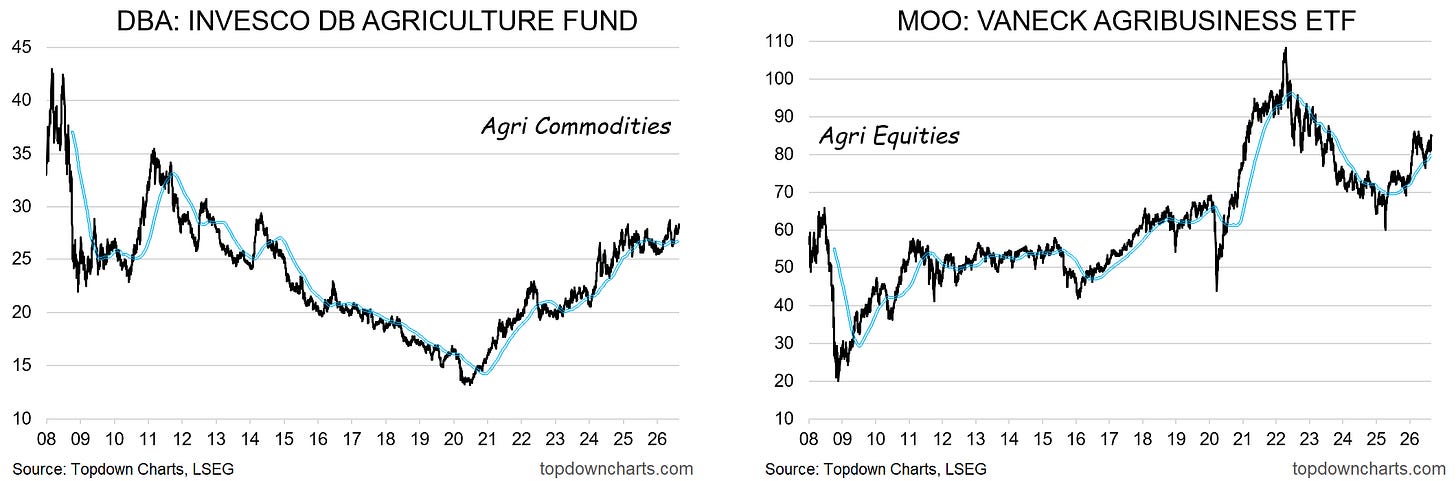
Combining the two can help offset the drawbacks of each, and interestingly enough, results in closer tracking vs spot agri price indexes.
Overall Conclusion…
As you can see there is a body of evidence pointing to upside risk for agri commodity prices. This presents an interesting opportunity for speculators, but also a potential hedge against inflation risk for asset allocators (as higher agri prices will likely put upward pressure on inflation and ultimately interest rates).
On that note, it also plays into the macro outlook in so far as it reinforces the existing upside case for inflation globally.
[n.b. this is an aggregate/asset-class view, and there will likely be outliers to the upside and downside across individual agri commodities]


Comments
Log in or sign up to join the conversation.