


U.S. Treasury issuance in 2026 has had a weighted average maturity of just 1.7 years, compared with 9.8 years for U.S. corporate bonds. This contrast highlights two very different financing strategies. Corporate America is increasingly relying on longer-term debt to fund investments in AI infrastructure, data centers, and technology systems, which require substantial upfront capital and years to generate returns. Meanwhile, the Treasury is leaning toward shorter-term financing, potentially limiting borrowing costs in today's high-interest-rate environment while betting that it will be able to refinance at lower rates within the next two years. This strategy, however, exposes the government to greater refinancing risk if interest rates remain elevated.
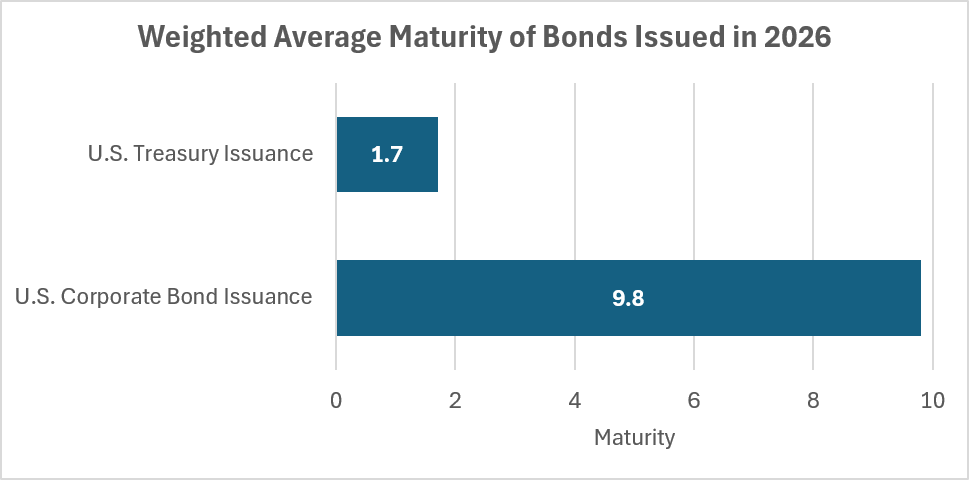
Source: Bloomberg SRCH, Apollo Chief Economist
This graph was produced by Lucas Juery, CFA, CFPⓇ and is not intended to provide financial advice.



Comments
Log in or sign up to join the conversation.