


These days it’s tough to find a double-digit yield that you feel good about. Most come from master limited partnerships whose stocks have been beaten down badly or business development companies that have suffered a similar fate.
Real estate investment trusts (REITs) have also not fared particularly well in the market swoon, although most have not fallen to the point of sporting a double-digit yield.
Apollo Commercial Real Estate Finance Inc. (NYSE: ARI) has had a strong yield for a while, but the recent slump has made that yield even richer.
But at 11.7%, is it sustainable?
Apollo originates and invests in commercial real estate loans. Its portfolio has loans from all over the country, but a third of them are for properties in New York City.
In 2015, the company generated $143.3 million in net interest income (NII), which is an important measure of cash flow for this type of REIT. It’s similar to a bank that generates most of its cash flow from interest-bearing loans.
Though it released its full-year earnings results, it has not filed its 10-K with the SEC, so I have to make an educated guess on some of its numbers.
I estimate that the company paid out $124.6 million in dividends, for a payout ratio of 87%. That’s a little high for my taste. I like to see 75% or less of cash flow paid out in dividends…
But REITs are often a different animal. Because they’re required to pay 90% or more of their earnings in dividends, the percentage of cash flow can be higher than usual.
The fourth quarter was the seventh consecutive quarter that NII covered the dividend, which is a positive.
There are no analysts specifically estimating NII for the company, but the few analysts who cover the stock expect earnings to grow 14% per year over the next five years. Theoretically, NII should go in the same direction as earnings, although not necessarily by the same amount.
But if earnings do go higher, NII should as well, which would allow Apollo to continue to cover the dividend.
Short but Sweet Track Record
Apollo has paid a dividend every quarter since 2010. Management has raised it three times, including in December, when it boosted the dividend to $0.46 from $0.44. The dividend was stable at $0.40 from 2010 to 2014. Apollo raised it to $0.44 in March of 2015 and then to $0.46 in December.
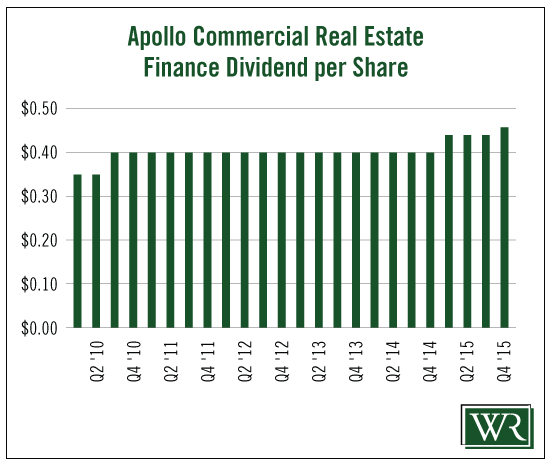
My only concern is that the dividend eats up most of the NII. I’d like to see NII move higher without the company paying out more in dividends to give it more of a buffer if NII slips.
But with presumably higher NII coming down the road and a six-year commitment to the dividend, I believe Apollo’s shareholders are among the few who can collect a double-digit yield without stressing out too much.
Keep in mind that I have not analyzed what rising or falling interest rates could do to the company’s NII or its ability to pay the dividend. So if you see a change in rates and the company’s performance starts to suffer, that could alter the safety of the dividend.
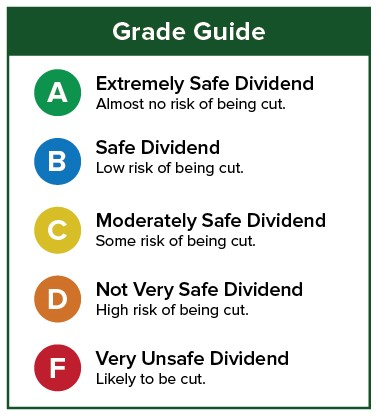
Dividend Safety Rating: B



Comments
Log in or sign up to join the conversation.