

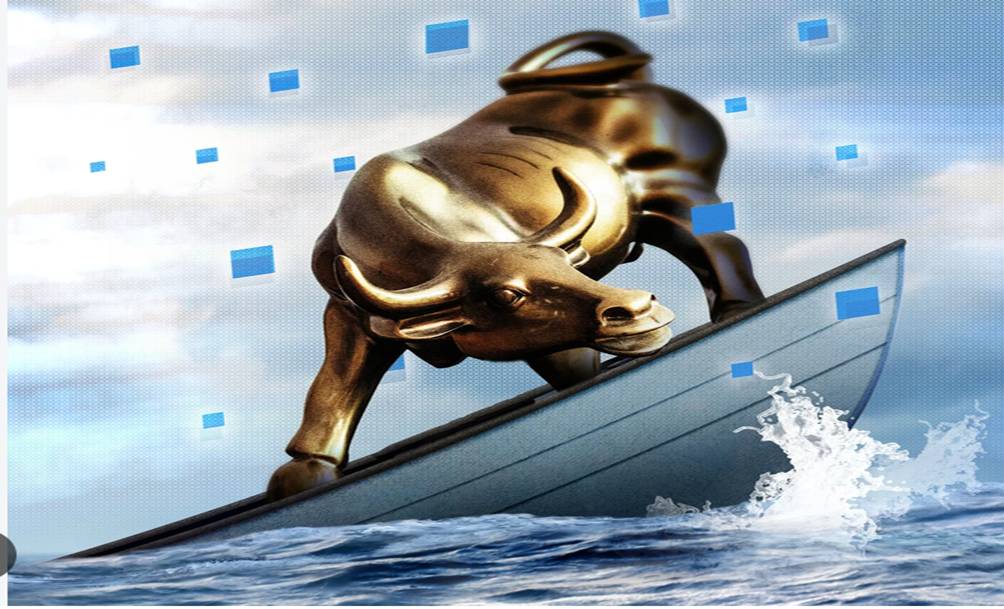
· The S&P 500 (SPY) is now highly concentrated, with the top 10 stocks comprising 40% of its capitalization versus 20% in 1990.
· None of the top 10 companies from 1990 remain in today's top 10, highlighting rapid shifts in market leadership.
· Current S&P 500 leadership is heavily exposed to AI, raising concerns about escalating investments and potential diminishing returns.
· Investors should consider diversifying beyond the S&P 500’s top 10, as historical expensiveness has preceded market corrections.
Remember the Nifty 50 of the 1990s when the largest companies in the S&P500 were too big to fail? Well, the S&P did fail and so did the largest companies. Today the top 10 are 40% of the S&P capitalization; back then they were only 20%. The S&P has become twice as top heavy, as shown in the following.
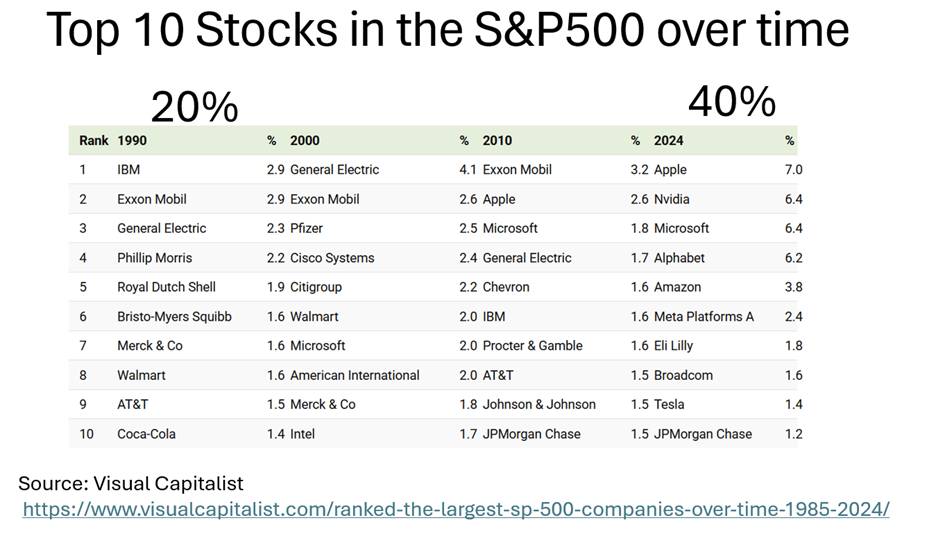
Note also that none of the top 10 in 1990 are in the current top 10. Market leadership is 100% different.
Here is a graphical comparison:
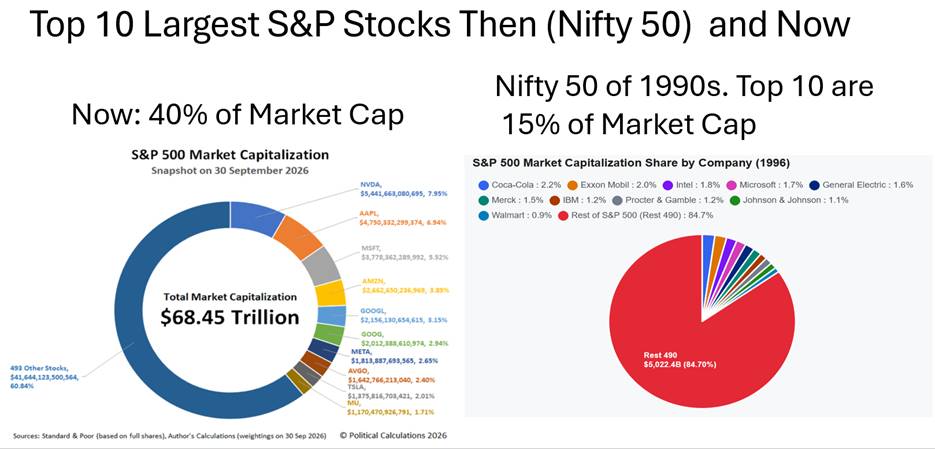
What does it mean?
S&P500 index investors have doubled their bets on the top 10 stocks, so their performance is twice as much dependent on those 10 stocks. Is that a good bet? Who knows, but it is a large bet. Time will tell.
Investors in S&P500 index funds should consider diversifying beyond those stocks, especially the top 10. That’s why the equal weighted version is gaining popularity. Hedge your bets.
Too big to fail?
There is a common thread running through the current top 10. They are heavily invested in artificial intelligence (AI). Some observe that these investments must escalate and that eventually there will be diminishing returns on those investments and that only a few will survive. They could go the way of the dot com bubble. One thing is for sure: the competition is huge, as shown in the following:
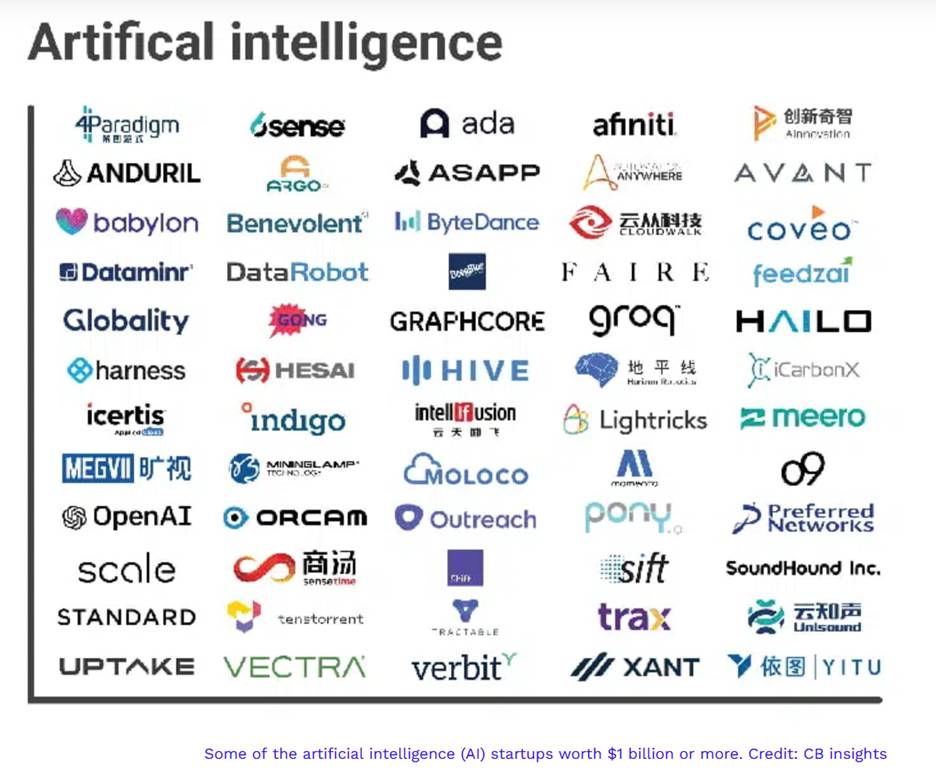
AI is the current big deal that is buoying up a very expensive market with a Buffet ratio (market cap divide by GDP) at a historic high. Past historic highs have been followed by stock market crashes.
Is it different this time? Yes. Market dominance has changed significantly. Has this happened before? Yes. The dotcom bubble eventually burst.
Beware.



Comments
Log in or sign up to join the conversation.