

The Higher the Rise, the Greater the Fall

· U.S. stock market valuations are at extreme highs, driven by investor greed and expectations of 50% earnings growth.
· Current market valuation measures, like P/E, exceed 3 standard deviations above the norm, signaling significant overvaluation risk that should instill fear.
· Future returns hinge on dividends, earnings, and investor sentiment. If investor sentiment regresses to historic levels, the stock market will lose more than 40% regardless of dividends and earnings.
· Spectacular earnings growth may soften losses, but market direction depends on whether fear or greed dominates investor sentiment. Greed is the current driver.
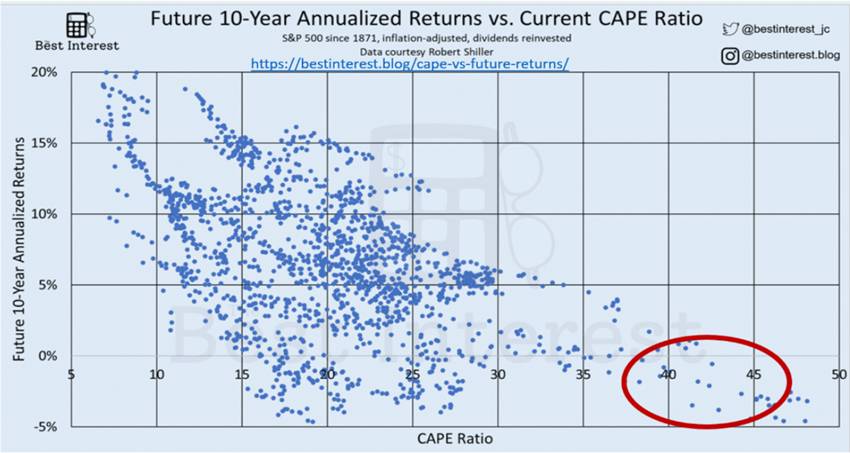
Yesterday the U.S. stock market reached new highs in anticipation of a resolution with Iran and expectations of high earnings growth approaching 50%. We all suffer from Recency Bias that leads us to expect more of the same – even higher highs –, but history teaches a different lesson. When valuations have reached extremes in the past, as they have now, subsequent returns have been negative – markets lost money.
Investor Behavior is the Wild Card
Fear and greed are powerful forces driving market valuations that are measured by the price paid for earnings, namely the Price/Earnings ratio and similar valuation measures. Greed has driven these valuations north of 3 standard deviations above the norm, indicating a high level of expensiveness, as shown in the following:
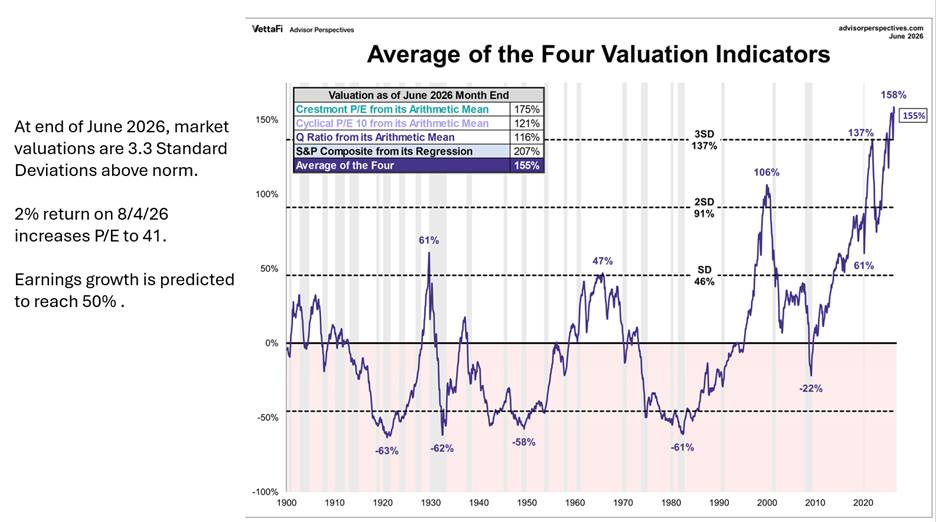
Can these valuations continue higher? Of course, but they typically have not remained high for long in the past. Even though earnings growth expectations are high, investor behavior remains crucial. Will investors continue to pay even higher prices?
The Trade-off
Future stock market returns derive from three factors: dividends, earnings, and investor behavior. The following table examines the current trade-offs
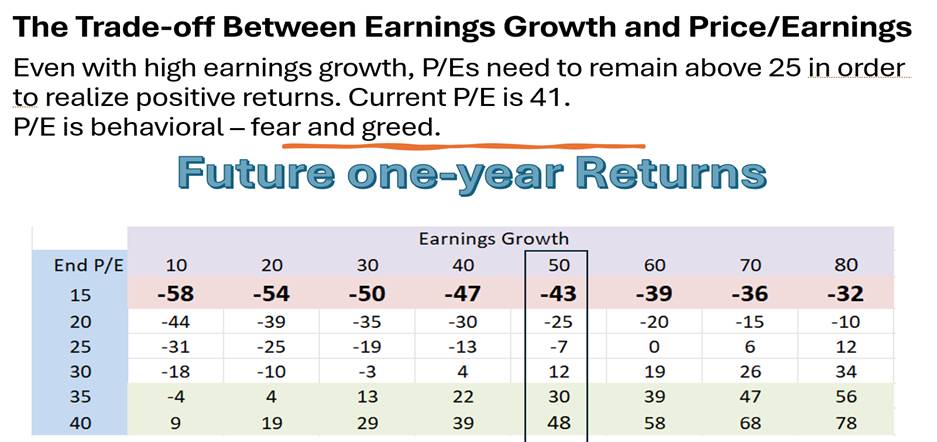
If P/Es remain elevated and earnings grow 50%, the stock market will return 48% -- well above historic averages -- making it the 3rd highest return ever, behind 1933 and 1954. But if investors get scared, say by escalations of current wars or other geopolitical upheavals, valuations will plummet below the current level. Declines below a P/E of 30 will result in losses. And a decrease to the historic average of 15 will generate losses greater than 40%.
Conclusion
Which will prevail? Fear or greed? Regression to the mean (reversal) or more of the same (momentum)? One or the other will be the actual case. Spectacular earnings growth does not predict the future, but it does soften the impact of potentially declining valuations.



Comments
Log in or sign up to join the conversation.