

This is an odd week for me. I am always eager to speak at conferences, particularly when they involve traveling to interesting places. I get to exchange ideas with other participants and to make new connections with attendees. But they wreak havoc on my publishing schedule. As I type this, I’m returning from a couple of days in Toronto. I was a panelist at a conference entitled “The Future of Retail Investing,” hosted by TMX, the parent of the main Canadian stock and options exchanges. There was much to learn and a key myth to be punctured.
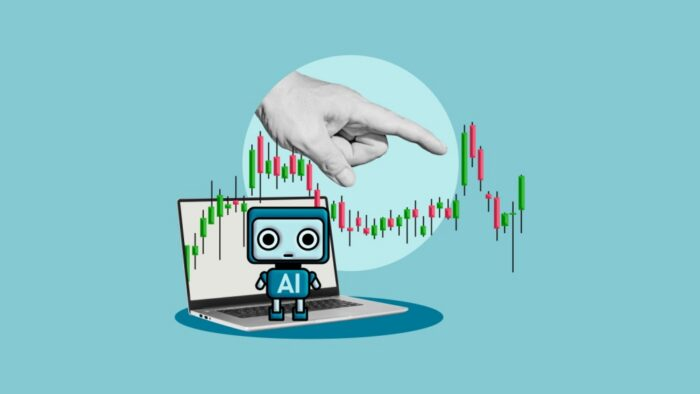
I find that any gathering of intelligent people eventually includes a discussion about artificial intelligence. This was no exception; in fact, it was a key theme at this gathering. As you might expect, AI is changing the investment landscape rapidly, and financial institutions large and small are doing their best to incorporate the new technology in myriad ways. They include everything from handling routine customer inquiries, software development, gathering and analyzing data, through to automated trading applications.
Not every firm is utilizing the same approach, which makes perfect sense. The wealth management team at a large bank has vastly different priorities from a brokerage firm that caters to active traders. There is a clear consensus about the inevitability of AI taking on an ever-increasing role in the investment process, while at the same time there is significant uncertainty about how that role will evolve in the near future. The most difficult question posed to my panel was “Where do you see the role of AI in your business one year from now?” The generalities were the same – it would play a bigger role, it would be more integrated into our basic businesses, that sort of thing – but the specifics varied amidst a layer of uncertainty.
Nonetheless, there was a key point that I felt was important to make. AI is blurring the distinction between “smart” and “dumb” money.
For decades, institutional investors were considered “smart money.” This made sense at a basic level. Institutions could hire teams of experts who could gather and interpret data, analyze it in depth, and employ sophisticated techniques to execute orders. Individuals, regardless of intelligence and expertise, simply lacked the resources to do the same. It didn’t help that many chose to treat their portfolios as vehicles for speculation rather than serious investment. Hence, the “dumb money” moniker.
Over time, however, that dichotomy made less and less sense. Individual investors have a wealth of educational materials and trading tools at their disposal to narrow those gaps in expertise and access. Interactive Brokers clients have access to most of the same types of order types and algorithms that were once available only to top clients of “bulge bracket” brokerage firms, along with a wealth of educational resources via IBKR Campus. Begrudgingly, I’ll admit that some of our competitors are endeavoring to do the same sort of things.
AI narrows that gap even further. One area where institutions had a clear remaining advantage was in gathering and interpreting financial data and news. There is simply too much for any one person to manage. But now, AI can allow sophisticated individuals using clever prompts to sift through reams of incoming information quickly and efficiently. Anyone can effectively become an institutional investor, regardless of assets under management.
The term that I think best describes this is “protail.” It was coined by my friend Henry Schwartz, the data guru at Cboe, and I think it describes many of you quite well. You might be an individual investor, but you are using many of the tactics and techniques formerly employed only by institutional investors, and with similar levels of competency and seriousness. Keep up the good work! And let our AI tools continue to help you in that journey.


Comments
Log in or sign up to join the conversation.