


Every paradigm shift in global energy begins down a bumpy road of divergence between political ambition and physical reality.
Right now, nuclear power is riding an unprecedented wave of institutional capital and political momentum. From Big Tech-driven hyperscalers who are looking for speed to power and a 24/7 baseload power that’s increasingly renewable energy to governments pledging to triple nuclear output by 2050. What’s increasingly clear from Bangladesh to the U.S. is that the future belongs to atomic energy.
Yet, Wall Street is making a classic mistake. The market is cheering corporate power purchase agreements and modular reactor designs while turning a blind eye to the literal bedrock beneath them. While looking at Southern Company (SO) and the overbudget and extended timeline that nuclear Plant Vogtle offered might cause some investors concern, when looking at how the company is now set up for the future should be a material reason for optimism.
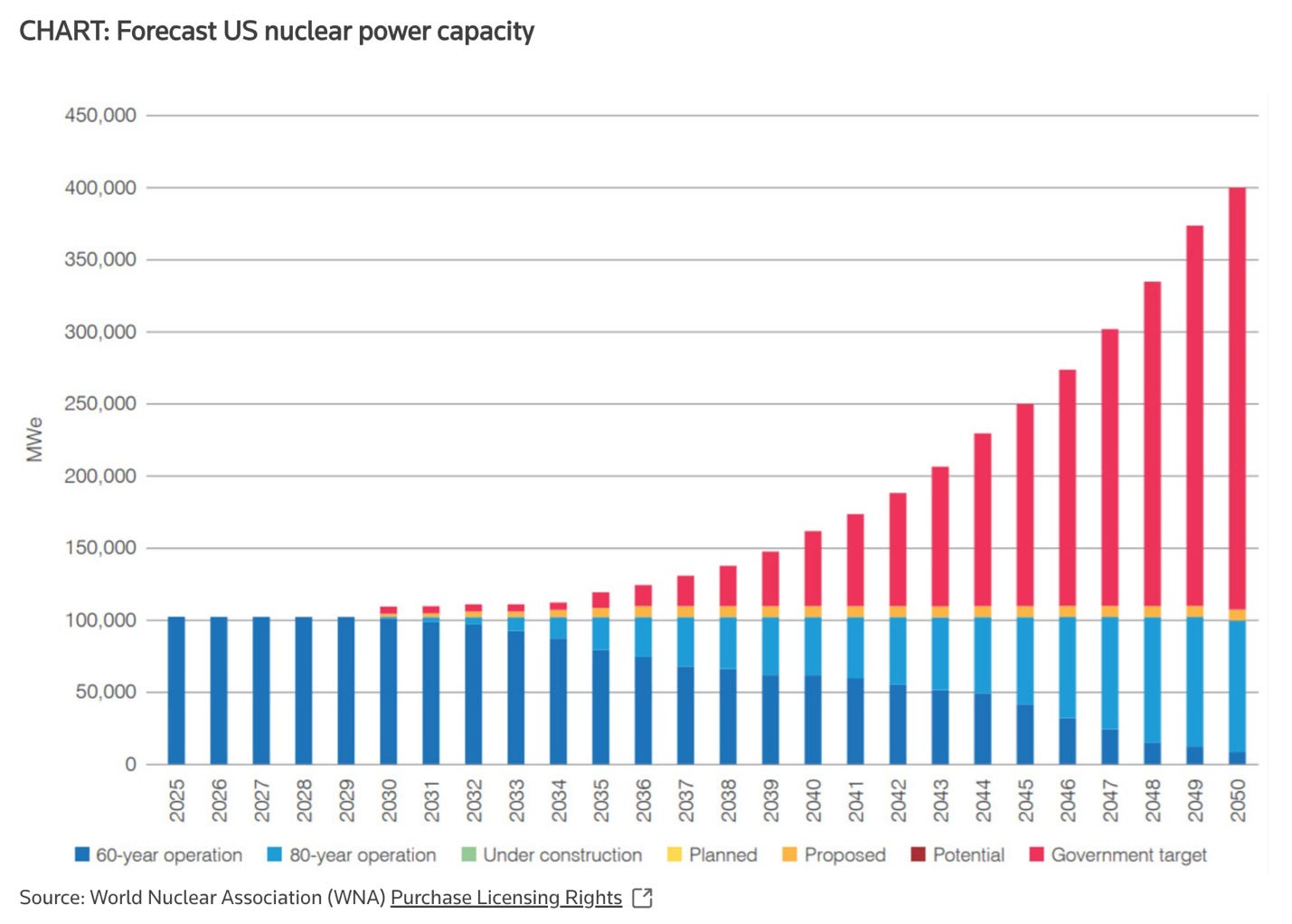
Yet the low-hanging fruit of this modern nuclear moment is rapidly disappearing. As Bloomberg recently pointed out, the quick-fix playbook, restarting shuttered plants and extending operating licenses for legacy fleets, is nearing exhaustion. Naturally, what comes next should be hard asset construction. That push is colliding head-on with a fragile, bottlenecked supply chain.
The Emerging Reality of “New Nuclear”
When investors and energy utility leaders talk about “new nuclear,” they aren’t just discussing the monolithic, multi-billion-dollar gigawatt plants like we saw in the 1970s. While modernized AP1000 reactors from builders like Westinghouse remain a cornerstone of U.S. strategy, new nuclear encompasses Small Modular Reactors (SMRs) and advanced microreactors.
While still in development, these designs offer factory-built scale, incredibly designed and crafted safety mechanisms and shorter deployment timelines.
What you should know is that they have been engineered to solve a massive modern problem – powering large load customers and the electrification of everything, without negatively impacting regional grid stability.
A key recent example is Amazon’s partnership with X-energy and AEP in Indiana. The project is being designed to deploy hundreds of megawatts of capacity directly to power the AI boom.
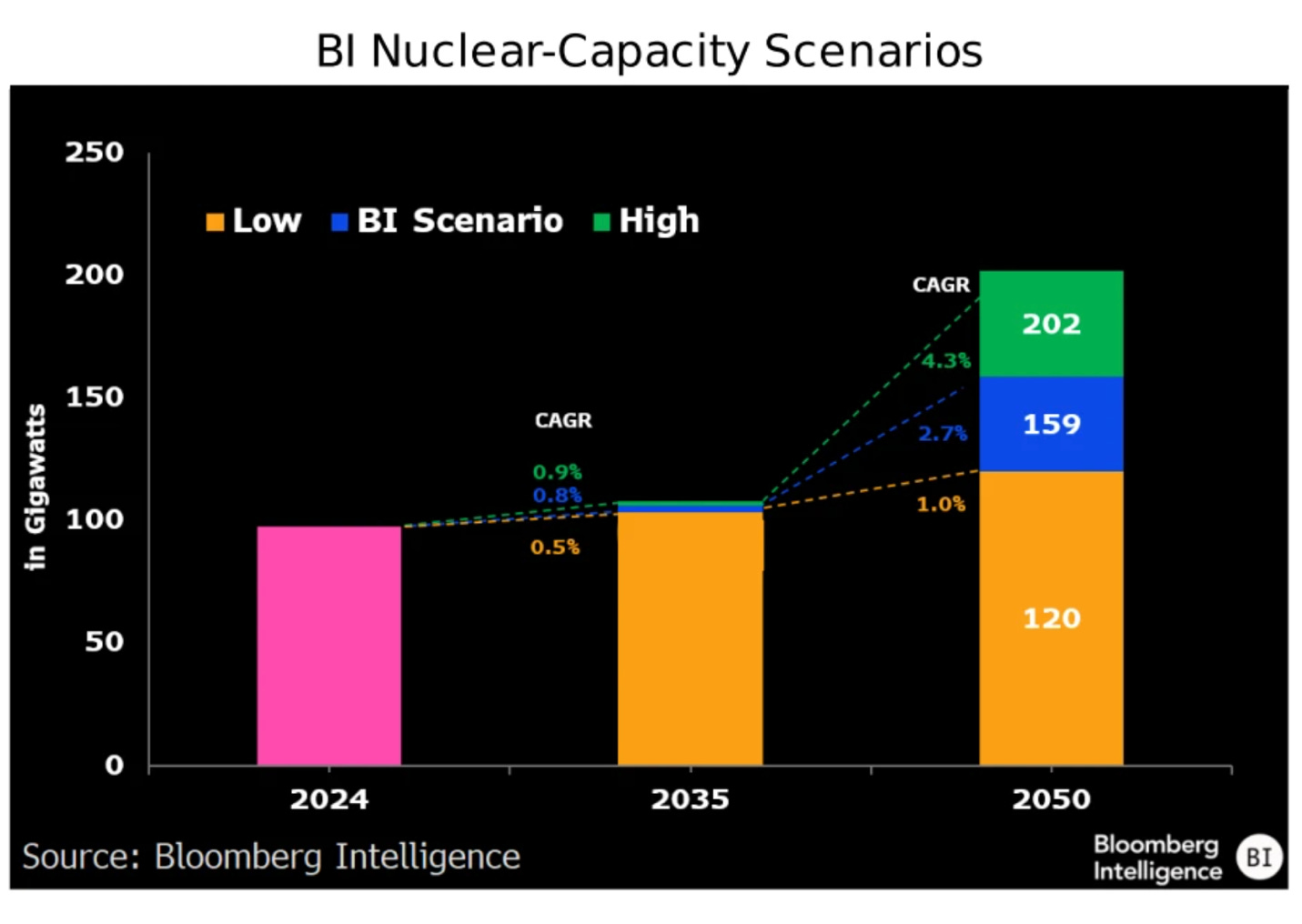
Over the long term, this structural shift benefits energy utilities that are trying to balance peak load, governments pursuing energy security and everyday customers ranging from small businesses to families navigating skyrocketing spot electricity prices.
As international policymakers emphasized at the OECD-NEA Roadmaps to New Nuclear summit, scaling this technology is critical for modern industrial survival. But enthusiasm does not equal execution.
As Bloomberg highlighted, Big Tech’s nuclear dreams are already running right up against regulatory delays, specialized component shortages and cost overruns. At the same time, as we have been detailing for years now, often the most overlooked vulnerability lies at the base of the fuel cycle.
The Upstream Pinch: A Structural Supply Deficit
We cannot experience a true nuclear renaissance without fuel.
According to IAEA data reported by ANI, global nuclear expansion faces a severe uranium supply challenge as legacy tier-one mines deplete faster than replacement reserves come online. Even the Wall Street Journal has warned that this relentless demand wave is experiencing historic upward pressure on raw material and conversion services which are the backbone of a nuclear power plant.
Geopolitical tensions make this problem even worse. Research from Stanford University research makes it clear that the domestic fuel supply chain is already struggling. For decades, Western utilities outsourced primary enrichment and conversion to state-backed entities in Russia and Central Asia. Yet in a multipolar world that’s largely characterized by resource nationalism and sanctions, relying on foreign adversaries for reactor fuel poses an existential national security hazard.
Recently, S&P Global Market Intelligence concluded that this tight supply will spark a broader mining boom over the coming decade. That’s because building a licensed mine, mill, or enrichment centrifuge takes anywhere from 7 to 15 years. Meanwhile, U.S. relies heavily on imported uranium to operate the world’s largest commercial reactor fleet. This domestic imbalance is stark and sobering.
The Contrarian Playbook for Strategic Capital
Mainstream financial media treats these supply chain frictions as a reason to be skeptical of nuclear power’s trajectory. And while being cautious and strategic is smart, being sidelined from the nuclear trend is a mistake.
In every structural supercycle, the most strategic investors view supply chain issues not as an obstacle to growth but as a place where the highest gains could be unlocked.
The real leverage to the nuclear buildout does not sit in the tech giants paying premiums for speed to power or new plants. Neither is it found purely in heavily regulated public utilities.
Instead, there is great opportunity imbedded in the supply chain enablers. Specifically, those firms that are bridging the physical gap between political ambition and actual fuel delivery. Below are three key indicators to consider when investing in this sub-sector:
Jurisdictional Safety: Capital will flow aggressively into extraction, processing, and high-assay low-enriched uranium development situated in stable, rule-of-law jurisdictions (North America and allied territories as primary options).
National Security: Companies providing domestic conversion, enrichment, and precision components can serve as key defense hedges against supply cutoffs from adversarial governments.
Scarcity Pricing Power: As existing mines decline and tech giants compete for every megawatt-hour, upstream suppliers, royalty companies, and infrastructure providers will hold immense pricing leverage.
The energy transition cannot happen through wishful thinking or strategic alliances alone.
It requires atoms and domestic industrial capacity and planning. For investors willing to look beneath the headlines, the nuclear supply squeeze is an exceptional macro setup for the decade ahead.
Later this week, our Pulse Premium October issue will feature a company central to both energy and national-security strategies. The recently oversold U.S. company is one that mines uranium on home soil and is implementing strategic plans to secure tomorrow’s critical mineral supply.

Comments
Log in or sign up to join the conversation.