

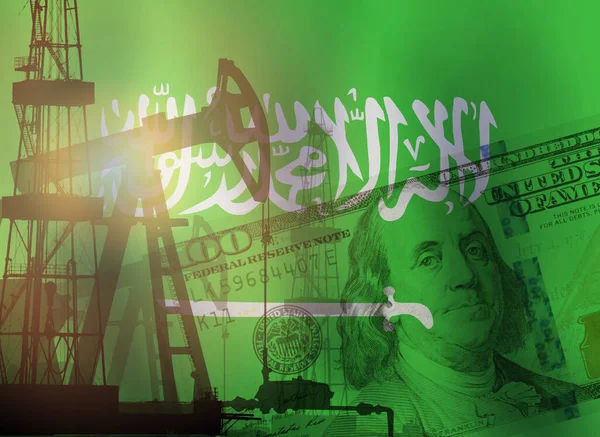
The Current Delusion
As of March 30, 2026, the global market is pricing WTI at $103–$105/bbl based on the "tactical" assumption that the Strait of Hormuz is a temporary bottleneck. President Trump’s recent framing of 20 tankers passing "out of respect" has led many to believe we are nearing a reversion to the status quo.
This is a critical miscalculation.
Our research indicates that the kinetic conflict has served as a "black swan" catalyst for a terminal structural shift. The "Petrodollar" is not merely under pressure; it is being bypassed by a parallel monetary architecture that has achieved operational maturity while the U.S. remains kinetically distracted.
Key Selected Exhibits
1. The "Infrastructure Attrition" Wall
The market has yet to account for the Physical Law of Infrastructure.
● The Qatari Bottleneck: Iranian strikes on the Ras Laffan LNG complex have sidelined 17% of Qatar’s export capacity.
● The Turbine Crisis: Our analysis of global supply chains reveals a 5-year recovery timeline. Only three firms (GE, Siemens (SIEGY), Mitsubishi (MHVYF)) produce the large-frame turbines required for repairs; all entered 2026 with a 4-year backlog due to AI data center expansion.
● Verdict: Energy "reliability" in the Gulf is a 20th-century memory.
2. The mBridge "Sovereign Toll"
While the U.S. Navy maintains a presence, the financial sovereignty of the Strait has already shifted.
● The Ledger over the Launcher: Project mBridge transaction volume has surged to $55.49 billion, with the Digital Yuan (e-CNY) accounting for 95.3% of total settlement.
● The Reality: Iran is now granting "safe passage" to vessels that settle transit fees and cargo in Yuan. The U.S. is currently providing a "security umbrella" for a trade route that is effectively de-dollarizing in real-time.
3. The Fiscal "Checkmate"
U.S. National Debt has reached $39.01 trillion. For the first time, net interest outlays exceed 13.8% of federal spending.
● The Sustainability Gap: The U.S. cannot afford the $212 billion required to rebuild its destroyed regional bases without triggering a domestic sovereign debt crisis. The "Hotel War"—where troops are embedded in civilian luxury hotels—is not a choice; it is a symptom of fiscal exhaustion.
Strategic Conclusion
The war in the Gulf is a Kinetic De-leveraging. The U.S. is "winning" the kill-count while losing the Mandate of the Dollar. As we approach the April 6th escalation deadline, the risk is no longer a spike in oil prices, but a permanent transition to a bifurcated global economy where the West is fiscally isolated and the East controls the energy ledger.


Comments
Log in or sign up to join the conversation.