

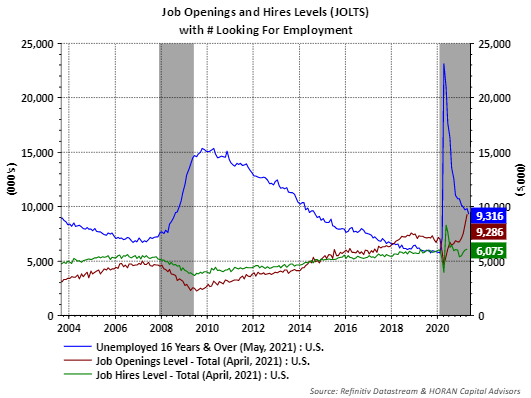
This week the April Job Openings and Labor Turnover Survey (JOLTS) was released by the Bureau of Labor Statistics. Interestingly, the survey shows a record level of job openings that are close to exceeding the number of individuals that are unemployed. Notable is the fact this is occurring at such a high level of unemployed individuals. There may be various reasons unemployed individuals are not filling these openings, with one being the generous unemployment/stimulus payments. These extended benefits are set to end at the end of September and Congress is unlikely to extend them.
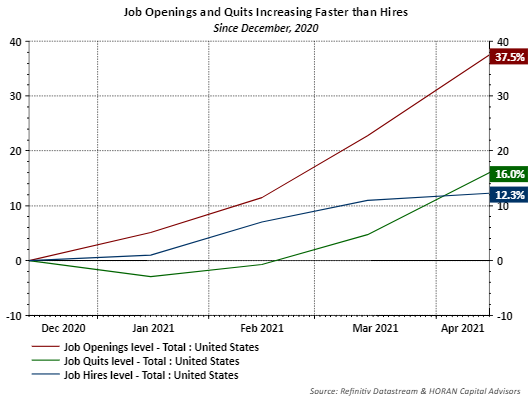
Also contributing to the growth in openings may be the fact the rate of quits, as well as openings themselves, are increasing at a faster rate than job hires as seen below. The quit rate tends to increase when individuals are confident in their view of the economy and their ability to obtain a new job position. The other factor associated with an increasing quit rate is individuals tend to accept alternative positions because they will be paid a higher wage which can lead to wage inflation that leads to broader inflation in the economy. This is not always the case though as the 2018 crossover did not lead to elevated inflation either.
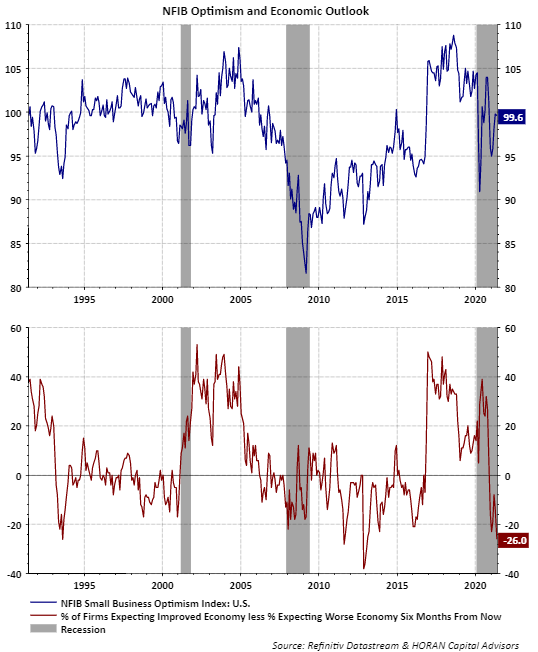
Also reported this week was the NFIB's May Small Business Optimism Index. The Optimism Index fell slightly, i.e., .2 points to 99.6. Associated with the decline in the index was the view by small businesses that the economy will be worse six months from now.
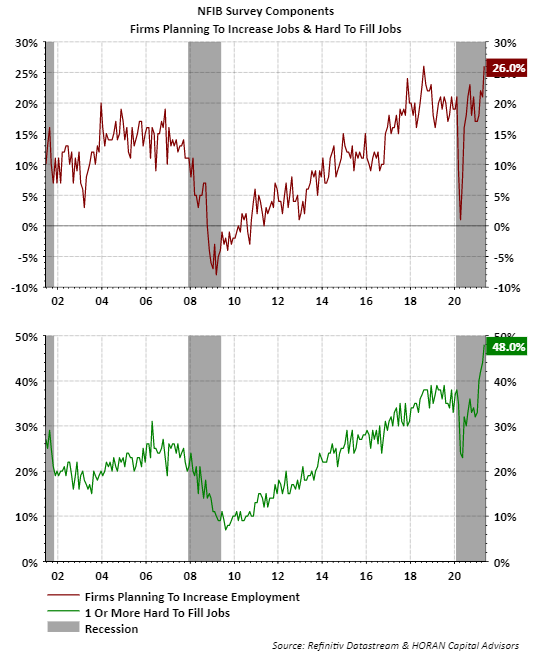
Although small businesses have a dim view of the economy looking out six months, their view on hiring is counter to this. The below chart shows a record 26% of firms surveyed plan to increase hiring and 48% report one or more hard-to-fill positions.
In conclusion, the job market is favorable for those looking for employment. Additionally, the strong job market is reflective of an improving economy that is expected to see continued growth, all else being equal.


Comments
Log in or sign up to join the conversation.