


One lesson from both football and economics is that momentum can change quickly. After a bruising first half, the global economy still has time to put in a decent second-half performance.
As the World Cup enters its decisive stage, it is once again reminding us that, for all the talk of shifting geopolitical and economic power, football remains largely dominated by Europe. Six of the eight quarter-finalists are European, alongside one African and one South American team. A closer look at the remaining contenders reveals another curiosity: three of the six European teams are members of neither the eurozone nor the European Union. Could this be a reason to call for a Draghi football plan? Or a European Football Recovery fund, backed by eurofootbonds? Or does this performance bring back the discussion about optimal government debt ratios, as the highly indebted eurozone countries, Italy and Greece, didn’t even qualify for the World Cup, while the low-debt countries, Germany, the Netherlands and Austria, are already back home. Enough, I promise. At this point, I suspect European policymakers will be keen to stress that there is absolutely no relationship between footballing success and the economy.
Even if parallels between football and the economy are far-fetched, the World Cup has offered a timely reminder that the White House can influence not only financial markets and the global economy, but also one of the world's favourite pastimes. President Trump asked FIFA President Gianni Infantino to review the red card shown to US striker Folarin Balogun, saying he believed the dismissal was unfair, leading to FIFA declaring that Balogun could play in his team's next match.
That brings us to the most striking market development of recent weeks: the sharp fall in oil prices, but also the recent increase again as President Trump shifted his attention away from the World Cup and back to the Middle East. We had already feared that the oil market was too good to be true, and now feel certain of our more conservative oil price forecasts, even when prices dropped below their pre-conflict levels. It turns out that the negotiations between the US and Iran are anything but straightforward, and that continued fragility around shipping through the Strait of Hormuz should remain the base case, rather than the benign scenario many market participants had been pricing until recently.
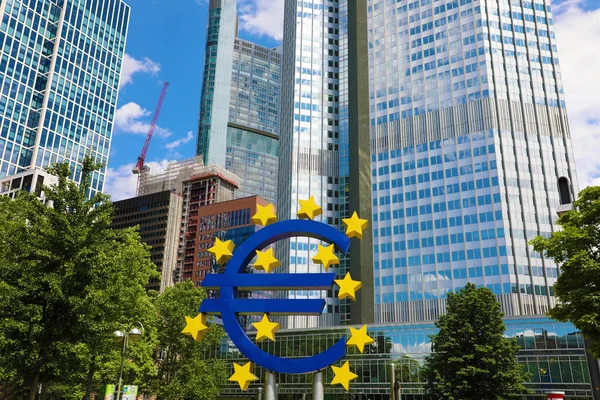
With the drop in oil prices in recent weeks, some central bank officials, particularly at the ECB, will have doubted the need for further rate hikes and might dig out the term ‘transitory’ from the central bankers’ dictionary of forbidden words. In any case, unless we see a further escalation and a resurgence of energy prices, even with the latest rebound, the drop in energy prices since May should bring some relief for the global economy. However, it is still too early to call this a kind of back-to-the-future moment, taking the global economy back to where it stood at the start of the year: the prospect of a gradual recovery, driven by large investment needs, and the chance of monetary easing on the back of possible inflation undershooting.
As we are still licking the wounds of an unexpected first half of the year, it would be presumptuous to call for an entirely benign macro environment in the second half. In fact, developments of the last 24 hours just demonstrated exactly that. Instead, let’s do it like the football pundits and simply carve out the themes that will probably shape the next few months. Our three things to watch in the second half of 2026:
Central bankers vs the textbook supply shock. The ongoing struggle of central bankers with what increasingly looks like a pure textbook supply shock will dominate headlines. Delivering more rate hikes could quickly turn into a policy mistake, while doing nothing could become a reputational issue. We still fear that the ECB feels inclined to deliver on yet another insurance rate hike, while most other central banks will keep their powder dry.
The race for the strongest rebound. The recovery in economic activity as energy prices retreat could differ significantly across countries and regions. While Asian economies have been hit massively by the closure of the Strait of Hormuz, relief and reopening could boost activity. In Europe and the US, lower energy prices should bring relief for consumers. While this reprieve is traditionally more likely to end in additional savings in Europe, it could bring a boost to consumption in the US.
Politics, again. Whether it’s the US mid-term elections, with potential implications for economic and foreign policy, or European leaders having to deliver on their February promises to structurally strengthen the single market, energy policies and capital markets union. Politics will once again have the potential to move markets and the global economy.
One lesson from both football and economics is that momentum can change quickly. After a bruising first half, the global economy still has time to put in a decent second-half performance.
Video Length: 00:01:49
Looking ahead to the rest of 2026
Our key calls
Oil prices: The quicker ramp-up in flows through the Strait of Hormuz has led us to revise our ICE Brent forecast lower for the remainder of the year. We're now expecting Brent to average $80/bbl in 3Q26 and $74/bbl in 4Q26. That assumes no meaningful disruptions to flows, which risks proving optimistic after the latest re-escalation in US-Iran tensions.
United States: Lower motor fuel prices are bringing relief for consumers, but it also means that inflation has likely peaked, barring a severe escalation in the Middle East. Slowing housing rents, weak wage growth and a waning influence from tariffs should more than offset concerns tied to tech-related inflation pressures. We expect the Fed to stay on hold until summer 2027.
Eurozone: We expect the ECB to sit out the July meeting to see how the situation in the Middle East evolves. But with higher core inflation, the central bank could hike once more in September if inflation risks still provide reason for concern.
China: We expect first-half 2026 growth to be around 4.8% YoY, though a further deterioration in data could increase pressure for greater policy support this year. We now expect the PBoC to cut rates in the third quarter on lower energy prices and potentially softer inflation.
United Kingdom: We think the Bank of England will keep rates on hold until next spring/early summer, when we’re likely to see the resumption of gradual rate cuts. Inflation is unlikely to peak much above 3% this year on our revised energy price forecast.
Asia ex-China: Falling oil prices should ease inflation and external pressures across Asia, but second-order inflation effects and FX vulnerabilities remain key constraints. Central banks are likely to maintain a tightening bias until price pressures and external balances improve.
FX: We’re mildly dollar negative into year-end and into 2027, largely driven by our Fed view. EUR/USD and USD/JPY can end this year near 1.18 and 158, respectively.
Market rates: We expect the US yield curve to steepen from both ends. Front-end yields should get back below 4%, while the 10yr yield will have a tendency to hug the 4.5% area (and quite potentially test higher). The eurozone curve sees a similar tendency, as the front end calms on reduced rate hike pressure, and the back end holds steady, we think, with the 10yr holding broadly in the 3% area (Germany and Euribor).

Comments
Log in or sign up to join the conversation.