

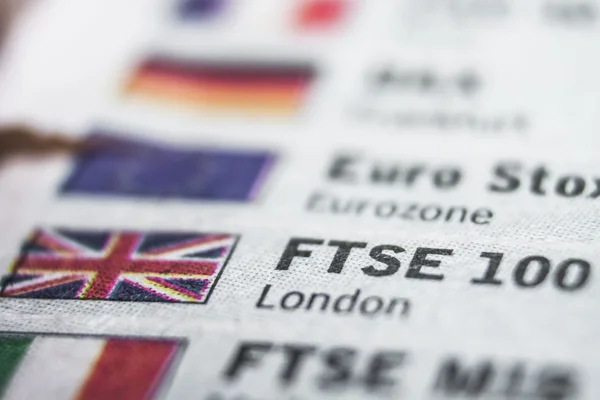
FTSE Touches Record High as Earnings Beat Geopolitical Caution
London FTSE climbed to a fresh record high on Wednesday before easing back as US sentiment soured post-negative Middle East rhetoric from President Trump. Strong corporate earnings from Standard Chartered, Weir, Sage, Glencore and Reckitt helped lift the market, although renewed Middle East escalation capped the upside. The session extended the FTSE’s powerful July run. After Monday’s rally on U.S.-Iran de-escalation hopes and Tuesday’s Unilever-led consumer staples surge, Wednesday’s move was driven more by earnings delivery and commodity strength. The index’s record high showed that investors remain willing to buy UK large caps when corporate results are strong, even as the geopolitical backdrop remains unstable. The main caution came from the Middle East. Joint strikes in Iraq by the United States and Saudi Arabia targeting Iran-backed militias raised concerns that the conflict could broaden again after the recent pause in U.S.-Iran strikes. That renewed escalation kept investors wary of a prolonged regional war, especially given the risk to oil supply routes, shipping costs and inflation expectations. Yet unlike some earlier sessions, geopolitical stress did not push the whole market lower. Instead, it supported parts of the FTSE with direct commodity exposure. Energy stocks rose as crude prices moved higher, with BP (BP) gaining 2.5% and Shell (SHEL) climbing 1.6%. The move showed again how Middle East risk can be supportive for the FTSE’s oil majors, even while it creates headwinds for consumers, travel and rate-sensitive sectors.
Miners were also strong. Glencore rallied 4.2% after reporting that earnings from trading commodities doubled in the first half of the year, highlighting the value of volatility for its marketing division. Rio Tinto (RIO) gained 2.7%, helping resources contribute meaningfully to the index’s record-setting advance. After recent rotation away from war-premium trades, Wednesday’s action showed that commodity names can quickly regain leadership when geopolitical risk and company-specific results align.
Standard Chartered was one of the standout financial performers, gaining more than 3% after announcing higher quarterly profit, a $1 billion share buyback and a sharply increased interim dividend. The bank lifted its interim ordinary dividend to 20.4 cents per share, up 66% from last year. Second-quarter profit before taxation rose 2% to $2.33 billion, from $2.28 billion a year earlier, while earnings per share increased 7% to 75.3 cents.
The Standard Chartered update was important because banks had been under pressure earlier in the week after Barclays fell on higher operating costs. Standard Chartered’s results offered a cleaner message: earnings resilience, capital returns and dividend growth. That helped offset some of the sector’s recent caution and reminded investors that internationally exposed UK banks can still generate attractive shareholder returns in a higher-rate environment.
Reckitt Benckiser climbed about 2.3% after delivering a strong second quarter and maintaining its annual forecast. The update followed Tuesday’s powerful Unilever rally and reinforced the positive tone around consumer staples. Investors are rewarding large defensive consumer groups that can demonstrate volume resilience, pricing discipline and confidence in guidance as inflation pressures ease.
Weir Group was the strongest major mover, jumping 8%, while Sage rose 5.2%. Their gains added quality to the rally because they broadened leadership beyond banks, oil and miners. The strength in software, industrial technology and engineering-linked names suggested that investors were willing to pay for earnings visibility and operational momentum, not just commodity leverage.
Other gainers included Burberry, Metlen Energy & Metals, Rentokil Initial (RTO), AstraZeneca (AZN), Experian, Compass Group, Centrica, Computacenter and Melrose Industries, which advanced between 1% and 2.3%. AstraZeneca’s gain continued the recovery in large healthcare after recent sector setbacks, while Burberry’s rise showed some relief after previous concerns about tourist spending in Europe linked to Middle East tensions.
Centrica also gained, benefiting from the renewed rise in energy prices. As with BP and Shell, the move reflected how the market is repricing exposure to energy infrastructure and supply uncertainty. The trade is not risk-free, because lower inflation and de-escalation had recently helped consumer and rate-sensitive sectors. But Wednesday’s strikes in Iraq shifted the balance back toward energy security and commodity resilience.
The losers were concentrated across selected financials, consumer staples, travel, insurers and prior outperformers. Aberdeen Group fell 4.5%, while Entain dropped about 3.2%. Diageo, Barclays, Diploma, Unilever, IAG, Admiral, Haleon (HLN), Coca-Cola HBC (CCH), Segro, Smiths Group, Lion Finance, Standard Life, 3i, Investec, Halma, Aviva (AV) and Coca-Cola Europacific Partners (CCEP) declined between 1% and 2.5%.
Unilever’s decline looked like profit-taking after Tuesday’s nearly 8% surge on its guidance upgrade and best quarterly volume growth in 16 years. Diageo and other staples were softer despite the broader defensive bid, suggesting investors were becoming more selective after the recent run. IAG’s weakness reflected the renewed rise in crude prices and Middle East tensions, both of which threaten airlines through fuel costs and travel uncertainty.
Barclays remained under pressure after its earlier cost-related disappointment, contrasting with Standard Chartered’s stronger reception. The split within banks highlighted the market’s current emphasis on earnings quality. Investors are not simply buying the sector because rates remain elevated; they are distinguishing between banks that can deliver disciplined costs, capital returns and international growth, and those where expenses or margins raise questions.
The broader macro backdrop remains supportive but fragile. Recent UK data have helped the market: CPI surprised to the downside for a third consecutive time, shop-price inflation slowed to 0.9%, public borrowing came in slightly better than expected, retail sales improved and the labour market remained steady. That has supported the view that the Bank of England can hold rates at 3.75% while waiting for more evidence on services inflation and wages.
However, Wednesday’s renewed Middle East escalation complicates the picture. Higher oil prices can quickly challenge the disinflation narrative, especially if they feed into household energy bills, food prices, transport and producer costs. The BoE remains in a more comfortable position than the ECB or Fed in some respects, but it cannot ignore the lagged impact of energy shocks if they persist. For Prime Minister Andy Burnham, the record high in the FTSE offers a favourable market backdrop early in his premiership, but the policy test remains unchanged. His early measures to lower household energy bills and reduce business rates for pubs, clubs and live music venues have been welcomed as targeted relief, yet investors will continue to watch fiscal credibility. A renewed oil shock would increase pressure on household support while also raising the risk of inflation persistence.
Finish Line: The FTSE 100 hit a new record high before easing to trade 0.05% higher, as strong earnings outweighed renewed Middle East caution. Standard Chartered rose after higher profit, a $1 billion buyback and a 66% dividend increase, while Weir surged 8%, Sage gained more than 5%, and Reckitt climbed after a strong quarter. Glencore and Rio Tinto rallied, with Glencore boosted by doubled commodity-trading earnings, while BP and Shell rose as crude prices climbed after U.S.-Saudi strikes in Iraq. The upside was capped by geopolitical risk and weakness in Aberdeen, Entain, Barclays, IAG, Diageo and profit-taking in Unilever. The market remains supported by softer UK inflation and resilient earnings, but the record high comes with a warning: if Middle East escalation keeps oil elevated, the BoE’s disinflation comfort and Burnham’s cost-of-living agenda will face a fresh test.
TECHNICAL & TRADE VIEW – FTSE100
Daily VWAP Bullish
Weekly VWAP Bullish
Above 10500 Target 11000
Below 10400 Target 9500

Comments
Log in or sign up to join the conversation.