

China Wobble, Oil Drag and a Late Risk Reversal
The FTSE 100 fell to its lowest level in more than two weeks on Thursday, hit by sharp declines in Asia-focused lenders, insurers and miners after reports of tighter offshore banking restrictions in China, before staging a sharp reversal in line with a broader improvement in global risk sentiment. The session began with a clear risk-off tone, as investors cut exposure to companies most reliant on Asian financial flows and Chinese demand, while lower crude prices added another drag through the energy sector. The sharpest pressure came from China-exposed financial names. A media report said mainland Chinese residents were facing tighter restrictions when attempting to open offshore accounts at major Hong Kong banks, raising concerns about the outlook for cross-border financial activity and wealth flows. HSBC (HSBC) fell 4.8%, while Standard Chartered dropped 6.4%, making both among the biggest FTSE 100 decliners. The selling extended to Prudential (PRU), which dropped 6.7% and was on track for its largest one-day fall since February, as investors moved away from Asia-linked financial exposure more broadly.
Mining stocks also dragged on the index as base metal prices initially softened. Antofagasta and Rio Tinto (RIO) each fell about 3%, reflecting concerns over Chinese demand, commodity sentiment and the broader implications of tighter financial conditions in the region. For the FTSE 100, the combination of weaker Asia-facing banks and miners created a powerful drag because both sectors carry significant index weight and are closely tied to global growth expectations. Energy added to the weakness after crude prices fell more than 3%. The move followed news that Israel and Lebanon had agreed to implement a new ceasefire after U.S.-mediated talks, according to the Trump administration, raising hopes for progress toward easing the broader conflict involving the U.S., Israel and Iran. Lower oil reduced the geopolitical supply-risk premium, but it also weighed directly on UK energy majors, with Shell (SHEL) and BP (BP) both down more than 1%. That left the index without support from one of the sectors that had previously cushioned Middle East-driven risk-off sessions. The UK macro backdrop did not help. Construction data showed activity in Britain’s building sector slowed at the sharpest pace in six years last month, with economic uncertainty and rising inflation linked to the Iran conflict contributing to a significant fall in new work. The figures reinforced concerns that parts of the domestic economy are beginning to absorb the cost of geopolitical disruption, higher input prices and weaker confidence. For investors, that matters because it keeps the market stuck between two uncomfortable forces: inflation risk on one side and growth disappointment on the other.
Among individual stocks, S4 Capital fell 8.7% after Chairman Martin Sorrell said progress on improving revenue growth and margins had been insufficient. He pointed to a marketing downturn driven by global macroeconomic uncertainty, highlighting the pressure on advertising budgets as companies remain cautious about discretionary spending. The update added to concerns around the media and marketing sector, where investors are still waiting for clearer signs that client spending is stabilising. The standout bright spot was CMC Markets, which surged 15.8% after forecasting annual profit ahead of market expectations. The trading platform’s update provided a sharp contrast to the broader market weakness and showed that investors remain willing to reward companies with clear earnings momentum, especially where volatility and market activity can support revenue. Despite the early slide to a multi-week low, the FTSE 100 later staged a sharp reversal as broader risk sentiment improved. That late recovery softened the damage and suggested that investors were not willing to fully abandon UK equities, even after a heavy sector-led selloff. Still, the reversal did not erase the session’s main message: the market remains highly sensitive to China headlines, oil moves and signs of domestic economic strain.
Finish Line: The FTSE 100 was knocked to its lowest level in more than two weeks as HSBC, Standard Chartered, Prudential, miners and energy majors came under pressure from China banking concerns, softer metals and a drop in crude. A late reversal helped the index claw back some ground, but the underlying tone remained fragile. The tape is still being pulled between geopolitics, China risk, oil volatility and weak UK data — and until those pressures ease, rallies are likely to remain vulnerable to another headline-driven unwind.
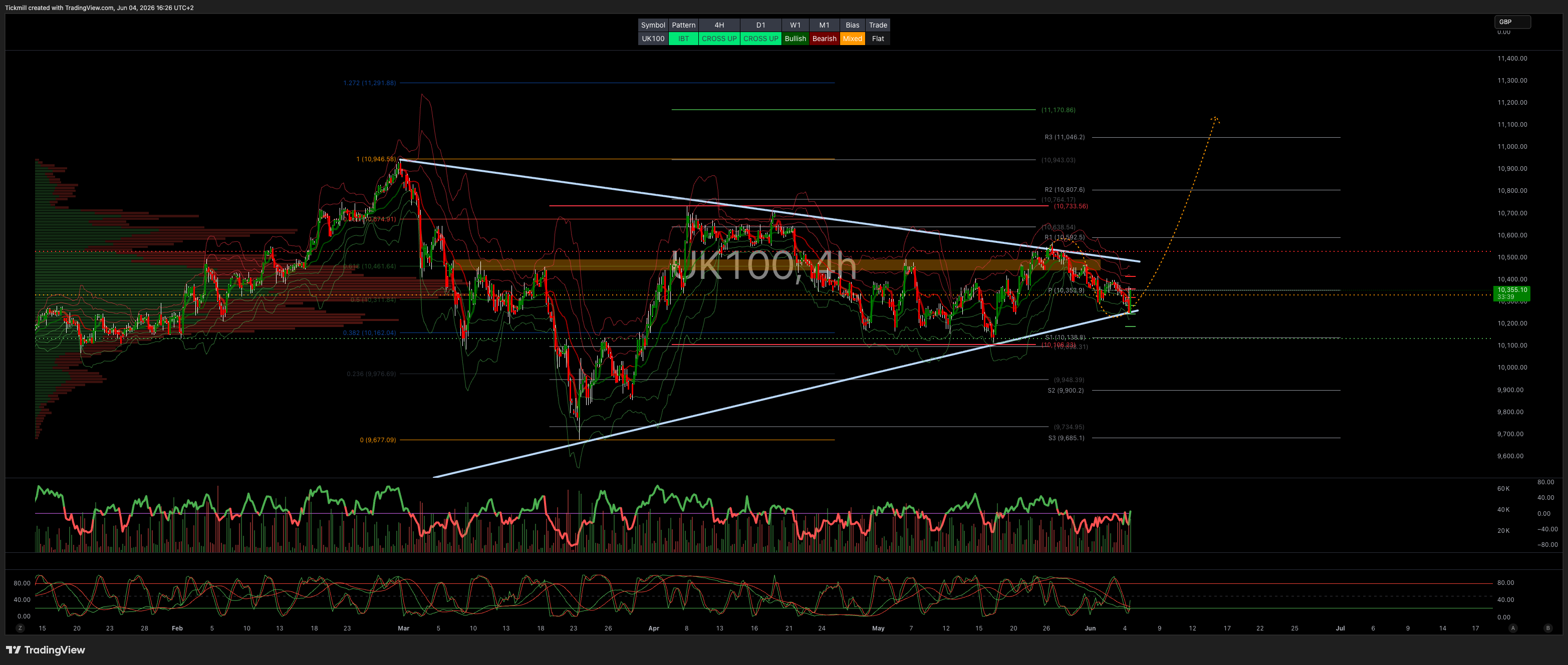
TECHNICAL & TRADE VIEW – FTSE100
Daily VWAP Bullish
Weekly VWAP Bullish
Above 10500 Target 11000
Below 10100 Target 9469
Comments
Log in or sign up to join the conversation.