

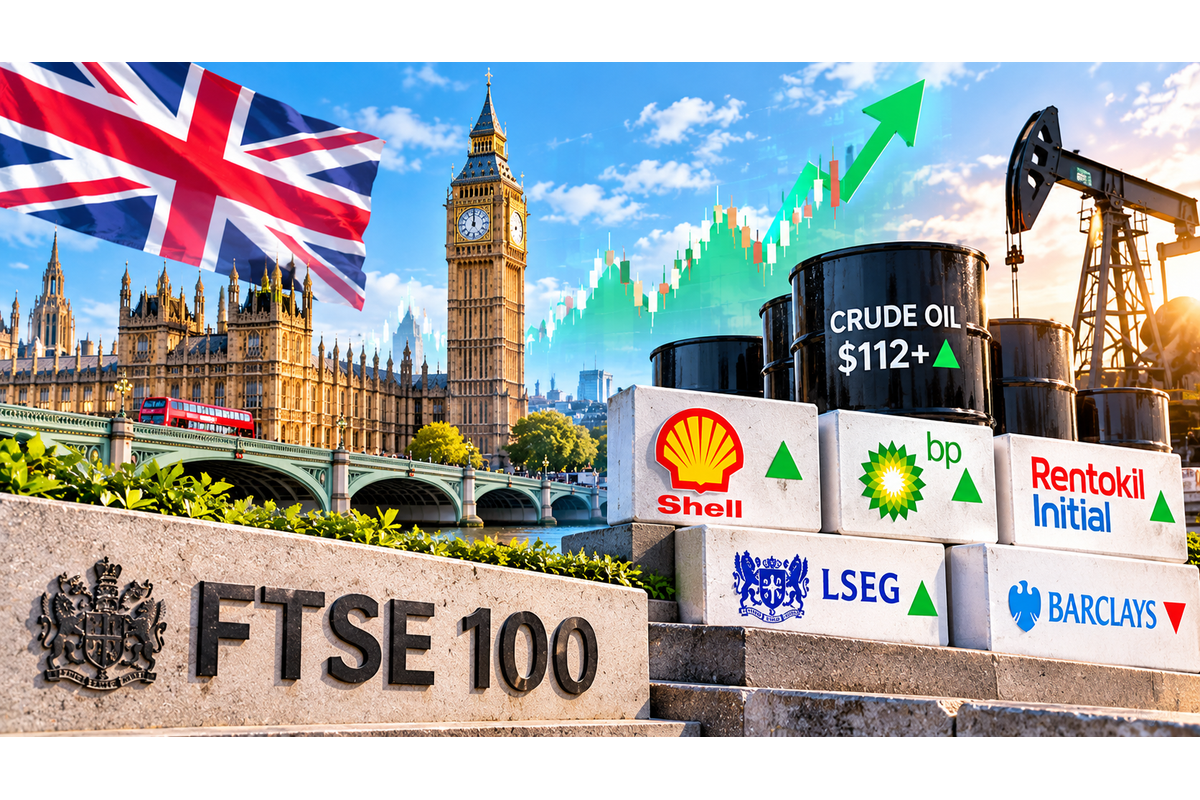
London ended the week on a flat-to-softer note, with early resilience fading into the close as both geopolitics and domestic politics moved the wrong way. The FTSE 100 was supported by energy and healthcare, but miners dragged, gilt yields rose, and risk appetite stayed capped after U.S.-Iran peace talks in Switzerland were called off. Despite early gains, the late reversal left the index down more than 0.5% on the week. The headline shock came from the Middle East. Washington and Tehran abandoned peace talks that investors had hoped would lock in lower supply risk around the Strait of Hormuz. That reversed part of the recent peace premium. Global equities softened, oil caught a bid, and traders moved back toward energy exposure after the sharp crude selloff earlier in the week. For the FTSE, that helped the oil majors. BP rose 1.7% and Shell gained 1.0%, with Brent holding near $79.50 a barrel. Energy was the main stabiliser in the index. After being punished when oil prices collapsed on peace hopes, the sector regained some ground as supply-risk pricing returned. Healthcare also helped. AstraZeneca added 1.3% and GSK rose 0.9%, giving the benchmark another defensive cushion. In a session short on conviction, the market leaned back into heavyweight quality and earnings resilience. But miners were the main offset. Anglo American fell 2.2%, Glencore lost 1.5% and Rio Tinto dropped 1.1%, keeping the index pinned. The sector remains caught between two forces: geopolitical risk can support commodities, but weaker global risk appetite, China demand worries and higher real yields continue to weigh on industrial metals.
Domestic politics added a second layer of caution. Labour mayor Andy Burnham’s victory cleared a path toward a challenge to Prime Minister Keir Starmer, raising the risk of renewed political instability. Markets are not simply trading the leadership drama; they are trading the possible fiscal consequences. A stronger Burnham mandate raises questions over whether a future policy mix could lean toward higher borrowing, more redistribution and wealth-tax proposals. That matters because the gilt market is already sensitive. UK government bond yields rose to a one-week high, moving slightly more than German yields after both the Burnham result and stronger-than-expected borrowing numbers. Public sector borrowing hit £23.3 billion in May, above forecasts. That reinforced the sense that the UK fiscal position remains tight, and that investors will continue to demand a political and fiscal risk premium in gilts.
The macro data were mixed. Retail sales rebounded 1.2%, beating expectations and suggesting the consumer still has some pulse. But stronger sales are not an unambiguous positive in the current setup. If demand proves resilient while borrowing overshoots and inflation remains sticky, it reduces the room for a dovish Bank of England pivot and keeps pressure on yields. Stock-specific moves added to the chop. Admiral fell 5% after RBC downgraded the insurer to sector perform ahead of results. Barratt Redrow slipped 0.5% after naming former British Airways finance chief Rebecca Napier as its new CFO. The muted reaction showed that management change was not enough to offset ongoing caution toward housebuilders amid elevated yields and fragile affordability. Entain ticked higher after Reuters reported that the Ladbrokes owner has begun exploring options for its Central and Eastern Europe joint venture, including a possible sale. The market read that as a potential portfolio-simplification and capital-allocation catalyst. The week’s close captured the current FTSE problem. When peace hopes rise, oil falls and energy weighs. When peace talks fail, energy helps, but broader risk appetite suffers. At the same time, UK-specific political and fiscal risk is keeping gilt yields sticky, limiting the upside for domestic cyclicals and rate-sensitive stocks.
Finish Line: The FTSE 100 could not hold early gains and ended the week down more than 0.5%. Failed U.S.-Iran talks lifted BP and Shell, while AstraZeneca and GSK added defensive support. But miners dragged, Admiral slumped on a downgrade, and rising gilt yields reflected a thicker UK political-fiscal risk premium after Burnham’s win and a £23.3 billion borrowing overshoot. The market is no longer just trading oil headlines — it is trading Westminster risk as well.
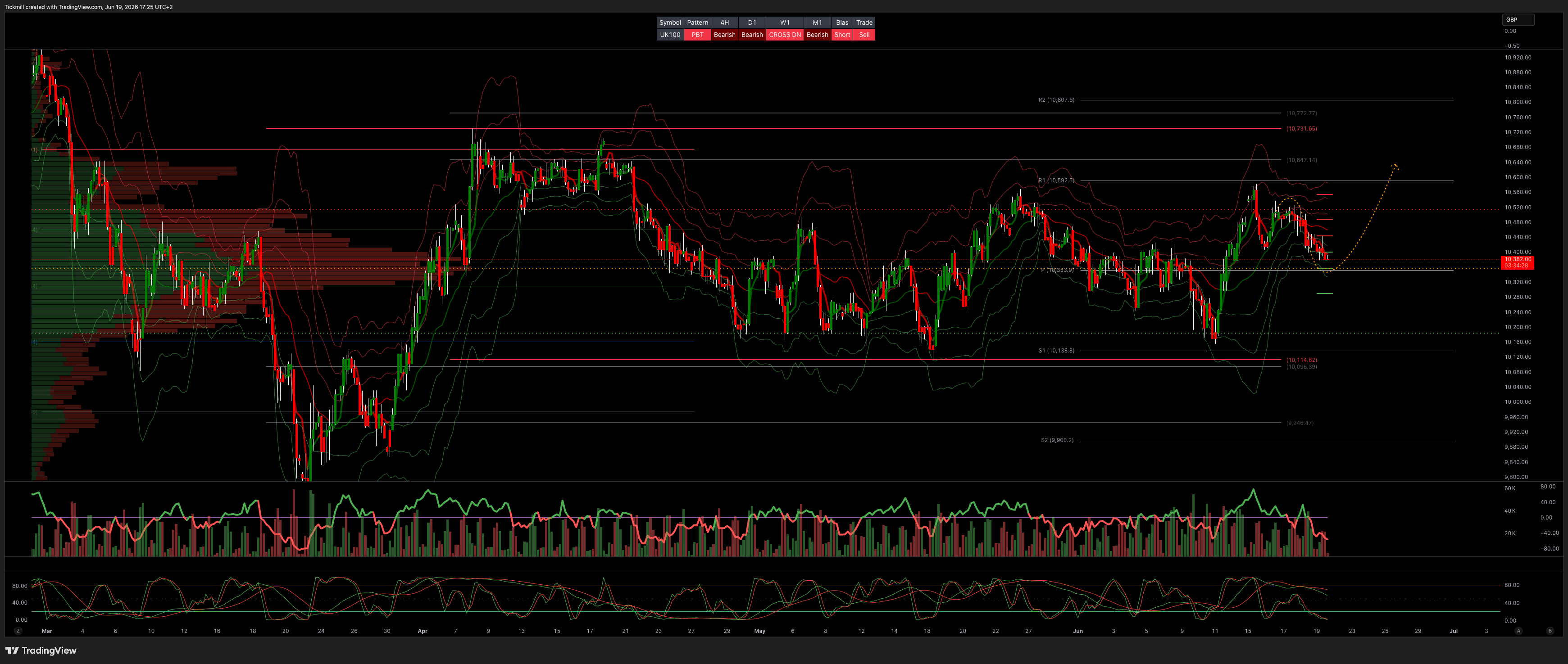
TECHNICAL & TRADE VIEW – FTSE100
Daily VWAP Bearish
Weekly VWAP Bullish>Bearish
Above 10350 Target 11000
Below 10100 Target 9469

Comments
Log in or sign up to join the conversation.