

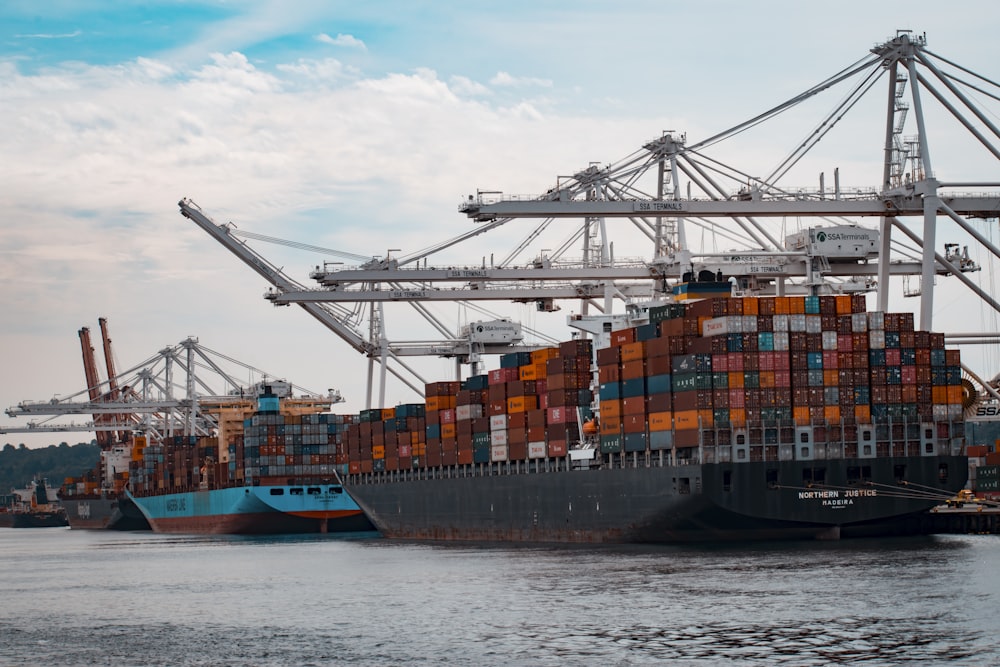
Image Source: Unsplash
As the world continues to undergo the stress and strain of the COVID pandemic, many industries are still in flux. Among the most important industries in the world to be the most severely impacted was arguably freight and transport. The moving of goods and the transport of products has become slower, stricter, and more expensive. Many freight specialists have had to find affordable ways to cut costs without lowering the service output.
This has also opened up the opportunity for more innovative companies to get ahead of the game. It has also allowed comparison platforms to help pair up those looking for logistics support with the most reliable services in their country. However, while many other major markets are beginning to open up and normalize once again, the freight market is enduring a slower upturn in performance than expected.
A recent report suggested that ‘peak season’ for freight trade, which should be happening in the summer months, has not yet taken place. Indeed, freight rates on key trades have fallen to around half what should be expected at this time of year. Even the most pessimistic suggestion before peak season began was that rising rates would be inevitable. As the world slowly rebounded from the pandemic, freight trade was expected to boom as many nations opened their borders and ports once again.
At the moment, there is no consensus as to what is driving this delay in performance. Peak season, which usually starts in July, has been extremely slow for the freight industry. Container freight rates are continuing to dip and drop. Falling rates could be seen for two reasons.
What are the reasons for current freight market performance dips?
As noted by TradeWinds, the more optimistic view is that there has been a demand reduction. As many nations rebounded from COVID, supply rates have been higher across some sectors outside peak season. For some, this was driven by an inability to procure what would usually be taken domestically, and thus international trade was needed to fill the gap. With some markets returning to normality, demand has slowly but surely reduced.
However, more negative analysis suggests that this problem could be caused by a slow but significant unwinding of supply availability. This would be problematic, but it would continue a worrisome trend that has been growing worldwide since the pandemic began. Many markets have contracted and slowed down due to an inability to meet demand, causing the slowdown. As many of these markets fail to keep up with supply and demand levels, fewer shipments are being ordered than would have been realistically expected at this time of year.
Whatever the reason or the cause, though, there is a natural concern that these problems could continue to prohibit progress and profitability for some time. Given last year's massive boom during peak season, as the world began to open up again in earnest, this year has – so far – been a sobering experience for those within the freight industry.
More By This Author:
Using SEC Form 13F to Track Warren Buffett’s Trades
Webull: A Great New Investment App Or "Cr"app?



Comments
Log in or sign up to join the conversation.