

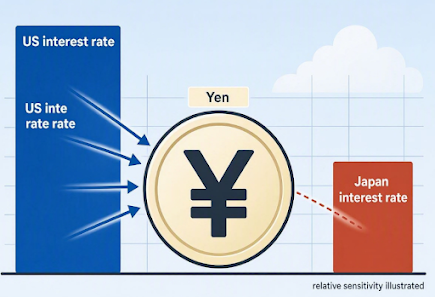
After consolidating softer yesterday, the US dollar has come back bid today. It often does better when US rates are rising unlike many of the other major currencies. However, the dollar’s strength does not reflect is successes on the various fronts the Trump administration has made a stance.
The war in the Middle East has escalated and a few ships have been attacked today in the Strait of Hormuz. October WTI is traded at its highest level since May earlier today. The long-end US yields are at new multiyear highs despite the Treasury’s plan to boost buybacks starting this week. The effort to support the yen are being rebuffed as the dollar trades above JPY160, despite high conviction that the Bank of Japan raises rates late this month. While some reports claimed Treasury Secretary Bessent told Japan’s Ministry of Finance and the central bank that its next move should be to raise rates, Japanese officials seemed to play it down, and the Minister of Finance herself cited the BOJ Act, protecting its independence. The swaps market shows high confidence in a BOJ rate hike. It is higher than the US, which has stronger growth and higher inflation.
Prices
G10
• The euro consolidated within the pre-weekend range and reached about $1.1620 in North America yesterday. After reaching $1.1625 in Asia Pacific turnover, the euro was sold slightly below $1.1590 in early European turnover. Options for 1.8 bln euros at $1.1600 expire today. A break of the $1.1575 area may target the $1.1530 area.
• The dollar climbed on rising US Treasury yields before the weekend to test JPY160.20, the highest level against the yen since intervention. Treasury Secretary Bessent told a CNBC audience that “disorderly” yen moves can destabilize global markets. While that is certainly possible, that is not the case now. Recall that before the intervention in late July, benchmark three-month implied volatility was below 7%, the lower end of where it has been since early 2022. The intervention saw implied vol surge to around 8.8%, its highest level since the first part of April. It is now back to about 7.5%. Before the intervention, the swaps market was pricing in almost six basis points of a September hike and now in a little more than 23 bp. Leaving aside theory, we note that the rolling 30-day correlation of changes in dollar-yen and changes in the two-year US yield is about 0.25. The correlation of changes in the exchange rate and Japan’s two-year yield is not even 0.05. The dollar is trading inside yesterday’s range, which was inside last Friday’s range. The consolidation looks constructive for the US dollar.
• Sterling recovered about half of its pre-weekend, Warsh-inspired losses. It reached $1.3565 in North America yesterday. It is also recording in an inside day today, trading between about $1.3530 and $1.3560. It remains within the pre-weekend range (~$1.3525-$1.3600). The intraday momentum indicators are stretched, however, which inclines us to look for downside pressure in North America. Options for al most GBP575 mln at $1.3550 expire today.
• The US dollar briefly traded at two-week high against the Canadian dollar yesterday, slightly above CAD1.3910. It surrendered its gains and recorded a session low near CAD1.3855 in North America. It tested the pre-weekend low, seen before Warsh and the firm Q2 GDP, near CAD1.3845 today. The US dollar recovered and reached the session high in Europe slightly above CAD1.3875. Resistance is seen near the highs from the last two sessions around CAD1.3910.
• After reversing lower before the weekend, the Australian dollar traded quietly yesterday in less than 1/5 of a cent range, mostly between $0.7155 and $0.7170. The Aussie is recording a bearish outside day. It reached slightly above $0.7080 before being sold to about $0.7140. The daily momentum indicators look set to turn lower from over-bought territory. The next chart area to note is near $0.7100, which seems a little far today, given the intraday momentum indicators. The $0.7100-level holds nearly A$665 mln in options expire today and more before the end of the week.
EM
• The Mexican peso consolidated its pre-weekend losses and traded quietly in a narrow range yesterday. The greenback traded between almost MXN16.99 and a little above MXN17.05. It is straddling the MXN17.00 level tightly today. The consolidation looks constructive for the dollar and a close above the MXN17.0350 area lends credence to our near-term favorable dollar outlook. The dollar reached its best level against the Colombian peso since August 4 yesterday. It was the sixth consecutive decline in the Colombian peso. Last week, the new government unveiled a preliminary fiscal deficit for next year of 9.4% of GDP, relying on more borrowing from abroad. Its estimate of borrowing this year is $11 bln higher than anticipated and almost a quarter is expected to be borrowed from abroad. President de la Espriella’s withdrawal of negotiations with some of the rebel groups that began under the former president. Last week the government bombed a position and ordered alleged drug traffickers to be extradited to the US. Separately, Colombia reported that urban unemployment jumped to 8.5% in July from 8.0% in June. A break of the COP3244 area could signal a move toward COP3300.
• The offshore yuan was largely confined to the pre-weekend range and settled firmly yesterday. The US dollar traded between about CNH6.7175 and CNH6.7320. The G20 finance ministers’ meeting yesterday did not appear to give a formal endorsement to US Treasury’s call to review the terms of trade with China. Moreover, the Trump-Xi meeting later this month is seen to lay the groundwork for an extension of the tariff truce that expire in September. At the same time, the Shanghai Cooperation Organization meeting ended today, and it appears many members, including Pakistan and India, do not appear obliged to support the US-touted “Economic D-Day” against Iran. The PBOC shaved the dollar’s fix today to CNY6.7809 (from CNY6.7828 yesterday).
• Despite higher oil prices, the Indian rupee rose to its highest level since July 1 today. The central bank reportedly continued to intervene in the offshore and onshore markets. The dollar gapped lower today and briefly fell below INR94.80. It settled at INR94.50, its lowest close since late June.
Other Markets
• Equities are beginning the month heavily. The S&P 500 and Nasdaq composite gapped lower yesterday, and while the Nasdaq’s gap was closed, the S&P’s was not. In the futures market, both are trading broadly lower. Asia Pacific equities are mostly lower. Japan’s Topix, South Korea’s Kospi, and Taiwan’s Taiex are notable exceptions. Europe’s Stoxx 600 is off nearly 0.8%, and if it is sustained, it would be the largest drop since late July.
• Higher oil prices weighed on bond prices yesterday. Benchmark 10-year yields in Europe and the US rose 3-5 bp yesterday. New high yield levels were reached. Asia Pacific bonds played catch-up today. The generic 10-year JGB traded and settled above 3% yield. Benchmark yields in the region were up 5-8 bp. European yields are up mostly another 3-4 bp today. The 10-year US Treasury yield is up 3-4 bp and is nearing 4.80%. The 30-year benchmark yield is up more than three basis points to slightly above 5.27%.
• Gold extended its pre-weekend loss yesterday and fell about $4397 in the Asia Pacific session. It recovered to around $4464 in Europe before it consolidated in North America, mostly below $4450. Gold recorded its first back-to-back loss in over a month and is off to a poor start in September. It frayed our initial target today near $4365 and looks headed lower. Silver fell to a seven-day low and frayed the 20-day moving average (~$65.90 today) for the first time since early August. It has been sold slightly below $64.50 today and also is poised to fall further.
• The new hostilities in the Middle East saw the October WTI contract gap higher yesterday. It reached almost $86.80 before stalling. Morre ships have been attacked in the Strait of Hormuz today and oil prices are higher. October WTI reached a little more $88 to test July’s high. The August high was about $87.70.
Data
• The preliminary US August manufacturing PMI slipped to 53.2 from 53.9. It implies the slowest growth since March. It is subject to revision today. The August manufacturing ISM is expected to have eased from the 55.6 reading in July, which was its strongest reading since May 2022. Yet the sectors that received the most tariff protection are not the source of the strength in the US manufacturing sector, which is AI and tech related. The July JOLT report will draw some attention. Job openings are projected to decline for the third consecutive month but are expected to remain well above year-ago levels (7.089 in July 2025). Construction spending slipped by 0.1% in June and looks flat in July. Auto sales will trickle in over the course of the session and are projected to slow slightly from the 16.33 mln annual pace in July. If so, it would be the first back-to-back decline since May-June 2025.
• Canada sees its August manufacturing PMI. It rose to a marginal new high of 53.5 in July. It is a busy week for Canada. The Bank of Canada meets tomorrow and there is little doubt but that rates are on hold at 2.25%. July trade figures are due Wednesday and the August jobs report on Friday. Separately, Canada’s Liberal Party won all three elections yesterday and this increased its parliamentary majority to 173-166. It will be seen by many as endorsing Prime Minister Carney’s stance vis a vis the US.
• Mexico’s favorable external balances are bolstered by worker remittance. They are expected to have risen to $5.53 bln in July from $5.47 bln in June. Mexico’s August manufacturing PMI is due (51.3 in July), but the IMEF surveys are weaker. The manufacturing and non-manufacturing readings are expected to have remained below the 50 boom/bust levels.
• The eurozone’s August aggregate manufacturing PMI was slipped to 52.7 in the final reading from the preliminary estimate 52.8, its strongest reading since in a little more than four years. The preliminary August CPI rose 0.4% and lifted the year-over-year rate to 3.3% (from 2.9%). It has not been highest since September 2023. The core rate ticked down to 2.4% from 2.5%. The July unemployment rate was unchanged at 6.4% because the June’s 6.3% was revised to 6.4%.
• The UK’s final manufacturing PMI stands at 51.5, up from the preliminary 51.5. However, new consumer credit data was made available today. July consumer credit expansion accelerated slightly but net mortgage lending and approvals slipped. Prime Minister Burnham will speak to parliament today for the first time as PM as the summer recess ends. Tomorrow is the question session.
• Australia’s final August manufacturing PMI was confirmed at 52.0. The Q2 current account deficit widened to A$27.2 bln from A$25.4 bln in Q1 26. Australia’s current account deficit was 2.7% of GDP in 2025. The IMF expects it to narrow to 2.3% this year, while the OECD projects it to widen to 2.8%. The A$57 bln c/a deficit in H1 26 compares with a A$26 bln deficit in H1 25. Tomorrow, Australia reports Q2 GDP. A 0.3% quarterly expansion would show the year-over-year rate to 1.9% from 2.5%. Separately, the Reserve Bank of New Zealand is widely expected to hike its overnight cash target rate at the second consecutive meeting tomorrow to 2.75%. The swaps market is fully discounting another hike in Q4 26. The market is pricing in another 50 bp of hikes in H1 27.
• Japan reported strong corporate profits (24.6% year-over-year in Q2) but stronger than expected capex, which rose 1.6% year-over-year (after a flat Q1). Excluding software, capex rose 3.6% year-over-year after contracting by 1.4% in Q1. The final August manufacturing PMI slipped to 54.9 from the initial estimate of 55.1.
• Yesterday, India reported solid 7.8% year-over-year growth in Q2 (8.6% in Q1). The economy is expected to slow in H2. Earlier today, the August manufacturing PMI was reported at 52.8, after a preliminary estimate of 52.9. It is the third consecutive monthly decline and the weakest reading it at least three years.
• The “official” Chinese PMI showed a slowed contraction in China’s manufacturing sector, but today’s RatingDog iteration ticked up to 51.5 from 50.9. The RatingDog methodology reportedly gives more weight than the “official” measure to small and medium-sized businesses.


Comments
Log in or sign up to join the conversation.