

“Long, long time ago..
I can still remember how that music used to make me smile
And I knew if I had my chance that I could make those people dance
And maybe they'd be happy for a while..”
They were certainly happy. They were downright euphoric. They partied like it was 1999 again. Prince was smiling, the money was flowing, but the cracks were showing. The denial, it was epic. We’ve been hearing all the normal things you hear when reality takes a long vacation:
“This time it’s different”
“There’s no bubble in tech stocks”
“The fundamentals are sound”
“These PE multiples are in line with future expectations”
“This isn’t the late 90s”
Is that right?
And on and on. No, you didn’t miss some big news event, The DJIA, SPX, and NDX (The Three Stooges) will probably make more all-time highs. Who knows what the other indexes will do. Who cares? If the top isn’t in, then it’s pretty close.
We flash back to May of 2008; a top in the DJIA. We all know what happened a few months later. Warning bells were clanging like klaxons but nobody cared. The euphoria was too much. It was infectious. It was contagious. It was ridiculous. And it was unhinged and insane. All at the same time. Even Alan Greenspan didn’t bother to exit the mothballs long enough to utter some completely insipid line like the ‘irrational exuberance’ comment from the late 90s. Leave it to a central banker. These guys could be in a firefight and come out with some thoroughly obvious and useless line. Greenspan and his successor Bernanke were like human piñatas. They were bludgeoned almost daily by reality, yet kept spitting out candy.
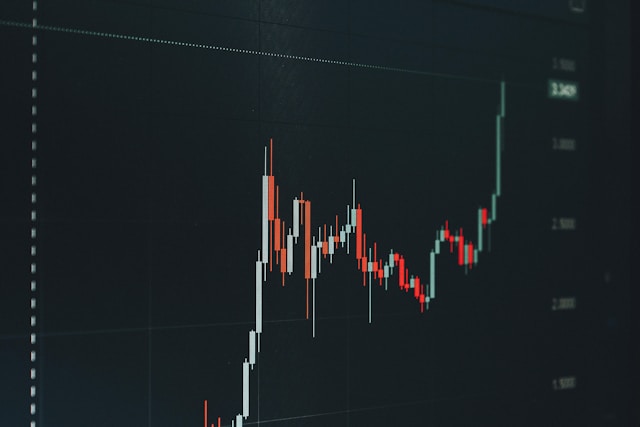
The old adage goes along the lines of those who don’t know their history are doomed to repeat it. So after seeing the price action and the complete indifference to the 5/20/26 NVDA earnings print, well, we got to digging. Looking at history. You know, that subject you’re supposed to study, but is so easily tossed out in favor of anything more convenient. And since when did earnings and economic reports become ‘prints’? We just caught ourselves. Even the terminology changes from bubble to bubble.
It can’t be over. It’s too soon. Surely, someone somewhere will pull a rodent out of a hat and push the sun up one more day on what has been the grandest of ludicrous experiments. The biggest money pump in the history of the world. About to become the biggest money dump.
Come on, guys - aren’t you being just a little dramatic?
We don’t think so - and the reasons why will be laid out in our next piece. We felt this one deserved its own place.
When you’re in a euphoric bubble, you buy, you trade, you take profits, you double down, you triple down. And when that’s not enough, you get into margin to do all those things even bigger. What you don’t do is NOT CARE. And that’s precisely what we’re seeing with NVDA. The shares continue to bleed after the company exceeded expectations. Consensus was $1.70/share. Reported earnings were $1.87. Given the nature of sharemarkets these days, that should have been good for a 10% or high bump.
“Stop getting excited, those earnings were already priced in”
Which is precisely the point. NVDA has been climbing since the end of March. From $165 to $236. Granted, not as massive a leap as some, but 43% in two months isn’t too shabby either.
NVDA isn’t a hyperscaler. They’re one of the companies who sell the hyperscalers the stuff under the hood that makes the whole thing work - in theory anyway. Notice we said ‘work’, not ‘generate profits’. This is one of those instances where being at the bottom of the pile is actually a good thing. Granted, the Cerebras IPO has taken a bit of the pie away from other chipmakers. Granted, this is a highly competitive space.
But something is wrong.
There may well be lots of all-time highs still to come. But it’s broken. The whole thing. MIT wasn’t waxing dramatic when it reported that 95% of AI companies haven’t made a penny. Neither were any of the news outlets that report the ever-increasing amounts of capex being poured into the AI black hole. We wrote about what we thought would be the result of all this, so we’re not going to rehash that.
That day of reckoning is getting closer.
“But February made me shiver
With every paper I'd deliver
Bad news on the doorstep
I couldn't take one more step”
Consider China. China used to make up around 20% of NVDAs datacenter revenue. That has effectively dropped to zero. NVDA’s H20 has been at the center of the mess, thanks to pernicious trade policies undertaken by Washington, DC. The government flip-flopped and now the H20s aren’t even allowed into China. At all.
While the above issue is NDVA-specific, there are other issues which the entire AI hypothesis faces - structural constraints. You can’t snap your fingers and whip up electricity generation capacity. Can’t just whip up ample supplies of water. Can’t just whip up anything and that includes financing. The $700 billion in capex for 2026 is only going up in the future.
It would seem at least a few people are starting to ask that annoying question - where is all this money going to come from? And the corollary to that - where are all the other resources going to come from?
If this sounds familiar, it should. The global Internet buildout in the 1990s ran into many of the same problems, but at a 1/10 to 1/15 scale to what we’re dealing with now. Let’s admit it; the world is heading towards another energy crisis - if we’re not already in one. And this doesn’t have as much to do with Hormuz as it does with infrastructure. In typical fashion, we’re trying to build a skyscraper from the top down. The neat little chatbots, agents, and all the other tools are at the top of the pile. What most people seem to be forgetting is you need the infrastructure to support it and just from doing a little research on our own, it is very obvious that almost no one truly understands the massive resources required to get a single ‘answer’ from a GPT.
“I can't remember if I cried
When I read about his widowed bride
But something touched me deep inside
The day the music died”
People are worried about AI replacing them in their jobs and they probably should be, but the silver lining just might end up being that there just isn’t enough stuff to make the visions dancing in the technocrats’ heads a reality. At least not in the foreseeable future. Or even if there is enough stuff; it’s not available on the timeline needed to scale this train crash.
NVDA is part of this hypothesis that is being seriously tested. Add to it the China problem and you’re likely looking at a company has all the potential, but can’t realize it because - like everything else - the ‘stuff’ side of the equation is seriously getting bogged down.
Is NVDA dying? Absolutely not. However, expectations of future performance - like Jensen Huang’s assertion that NVDA is sitting on a trillion dollar revenue bolus - need to be introduced to reality - and that’s not just a NVDA issue. It’s everyone. The next question becomes how much of these pie in the sky, outlandish expectations are already priced in across the board? The performance of some of these stocks is enough to take one’s breath away. Have ‘the markets’ even considered NVDA’s China pipeline death? It’s not something you’re hearing about in mainstream articles, that’s for sure.
Given that we started this article when the latest NVDA earnings were released and and now go back and look - $236 —> $214. A correction is in progress. But not across the board. INTC continues to rise in chunks. AMD continues to rise in chunks. SpaceX, while not an AI company is certainly techish enough for this discussion is going public. The anticipated capital raise is $50 - $75 billion putting the valuation somewhere between $1.75 and $2 trillion. For an IPO. That’s 125X revenue. Not earnings. Revenue. Top line. Ridiculous. Neither of us would be surprised to see the initial valuation come in closer to $2.5T.
Where is all the money coming from?
Money works in mysterious ways. As in you don’t need the money supply to be $40 trillion to pay off the national debt - not that anyone’s thinking of doing it. You don’t need $2T in money supply to value a company that high. You just need one party who is willing to buy a single share that results in a $2T market cap ONE time. If volume drops to zero after that, the company is still worth $2T. It’s a point-in-time calculation. But if you’re going to lend someone $700B for CAPEX, then you darned well need to have the $700B - or be able to create it.
This capex is another problem. If it comes through new loans, well that’s highly inflationary. Oh wait, we’ve got another bubble? Hmmmm. Two pieces of the puzzle should have just clicked into place unless you’re a Keynesian, a central banker (same thing) or haven’t had your morning coffee yet. Seriously though, debt begets debt. Debt also begets monetary inflation. As long as the fresh stuff goes into assets, everyone is happy. Let it spill into consumer prices - say gas? Ooooh, not so good. Yes, we know there are supply and demand issues involved, but it’s the point.
We’re digressing. Again. We apologize, but this is just too rich to let pass without at least a few barbs. Especially since we’ve seen this before - several times. At some point that 95% of AI companies that remain unprofitable - and soon to be insolvent - will matter. At some point we’ll all look back and wonder just how the heck we all got spoofed - again. Until then, enjoy a little Don McLean; the day the music died isn’t here just yet.
"Now, the half-time air was sweet perfume
While the sergeants played a marching tune
We all got up to dance
Oh, but we never got the chance
'Cause the players tried to take the field
The marching band refused to yield
Do you recall what was revealed
The day the music died?"


Comments
Log in or sign up to join the conversation.