

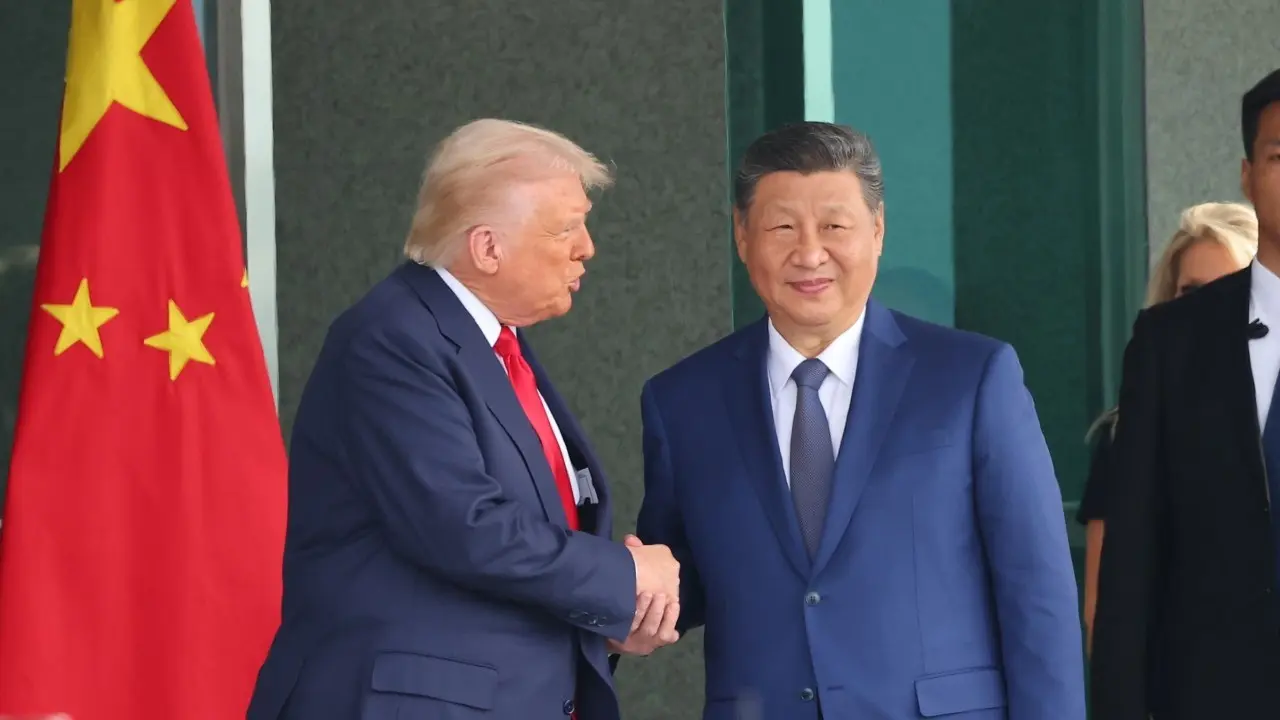
The oil market is eagerly awaiting the outcome of the meeting between President Trump and President Xi, and whether it could yield some positive results on the Iran war
Energy - Further pressure on oil demand
Oil prices are in a wait-and-see mode ahead of President Trump and President Xi’s meeting in Beijing. The market could be pinning too much hope on the US-China talks yielding some positive results on Iran. Some hope that China could exert pressure on Iran to reach a deal with the US, to end the war and lead to a resumption of energy flows through the Strait of Hormuz.
The IEA released its latest monthly oil market report yesterday. It once again aggressively revised its demand forecasts for 2026 downward. The IEA now expects global oil demand to fall by 420k b/d year-on-year, leaving it 1.3m b/d below pre-war level forecasts for 2026. This decline is predominantly driven by the petrochemical and aviation sectors. Global oil supply is estimated to have fallen by 1.8m b/d in April, bringing supply losses since February to 12.8m b/d. As a result, oil inventories continue to decline. They are estimated to have fallen by 129m barrels in March, and preliminary numbers suggest a further 117m barrels decline in April.
OPEC’s monthly oil market report, released yesterday, showed the group’s crude oil production fell by a further 1.73m b/d month-on-month to 18.98m b/d in April. Persian Gulf production continues to trend lower due to the disruption of oil flows through the Strait of Hormuz. This data includes UAE production, as the country officially left the group only on 1 May. OPEC is more constructive on demand; it still expects global demand to grow by 1.17m b/d in 2026.
In the US, EIA weekly data continued to show a tightening in the domestic oil market. Total commercial crude oil inventories fell by 4.31m barrels over the week. When SPR releases are taken into account, total crude inventories declined by 12.91m barrels. The draw is driven by continued strength in crude oil exports, which grew by 742k b/d week-on-week. Refiners also increased their utilisation rates by 1.6 percentage points as we head closer towards the stronger demand period through the summer months. Despite the increase in refinery runs, gasoline inventories still fell 4.1m barrels over the week. This will be a concern as we head into the summer driving season. Meanwhile, distillate stocks rose by just 190k barrels.
Metals – Copper trades near record highs
Copper extended gains above $14,000/t in Wednesday’s session, trading close to its all‑time high of $14,527.50 set in late January. Supply-side risks continue to dominate price action. Firmer spot demand in China and tightening conditions across refined markets are underpinning prices. Limited sulphur availability in the Middle East continues to constrain parts of the supply chain.
The move above $14,000/t highlights just how tight the copper market has become. Low inventories outside the US and ongoing disruptions across key producing regions leave prices increasingly sensitive to any incremental demand growth.
While metals markets have been relatively resilient following the escalation of Middle East tensions earlier this year, higher energy prices and broader macro uncertainty continue to weigh on manufacturing activity and global growth expectations. At the same time, supply-side risks linked to the conflict are supporting several industrial metals.
Copper has become more closely linked to broader macro sentiment. Recent strength in US equities and renewed optimism around technology demand have supported momentum, even amid elevated geopolitical uncertainty. The reopening of the COMEX-LME arbitrage has encouraged additional metal flows into the US, further tightening availability in other regions.
That said, current price levels appear to be driven more by supply concerns than underlying consumption. Elevated oil prices and tight financial conditions are likely to continue weighing on demand, leaving copper vulnerable to a pullback should supply disruptions ease or arbitrage-driven flows normalise. Market focus will likely remain on inventory trends, Chinese demand signals, and the extent to which geopolitical disruptions continue to constrain refined metal supply.
Positioning has also become more supportive. The latest COTR report shows speculative net long positions in copper rose for a second consecutive week, increasing by 611 lots to 60,576 lots in the week ending 8 May, the highest level since December 2025. Net long positions also increased in zinc, while aluminium saw a modest further reduction in speculative length.
In other industrial metals, aluminium surged to the highest level since March 2022 after a jump in requests to withdraw aluminium from LME warehouses. Orders jumped by 27,750 tonnes to 47,025 tonnes, the biggest increase since March.
In precious metals, India, the world’s second-largest gold consumer, has more than doubled import tariffs on gold and silver. This is part of efforts to support the rupee and ease pressure on foreign exchange reserves as the Iran conflict drags on. The government raised the tariff on gold and silver imports from 6% to 15%.
The move follows recent appeals from Prime Minister Narendra Modi urging consumers to curb gold purchases, overseas travel and fuel consumption. India meets most of its gold demand through imports, with gold and silver accounting for nearly 11% of total imports. The tariff hike is likely to be a near-term headwind for physical gold demand in India, potentially tempering local buying and weighing on import flows.
Agriculture – India bans sugar exports
The Indian government has banned sugar exports until the end of September to ensure adequate domestic supply. Indian sugar output estimates for this season have edged lower, while there are concerns that next season’s output could come under further pressure with expectations for a below-normal monsoon this season. This will provide some support to the sugar market, which has also benefited from higher oil prices. It’s likely to push producers in CS Brazil to allocate more sugarcane to ethanol production at the expense of sugar.
London cocoa declined for a second consecutive session, falling more than 5% amid profit-taking and heightened volatility. The two-day drop has largely erased Monday’s nearly 12% gain. Volatility in the market has picked up as attention increasingly turns to the outlook for the 2026/27 season.



Comments
Log in or sign up to join the conversation.