

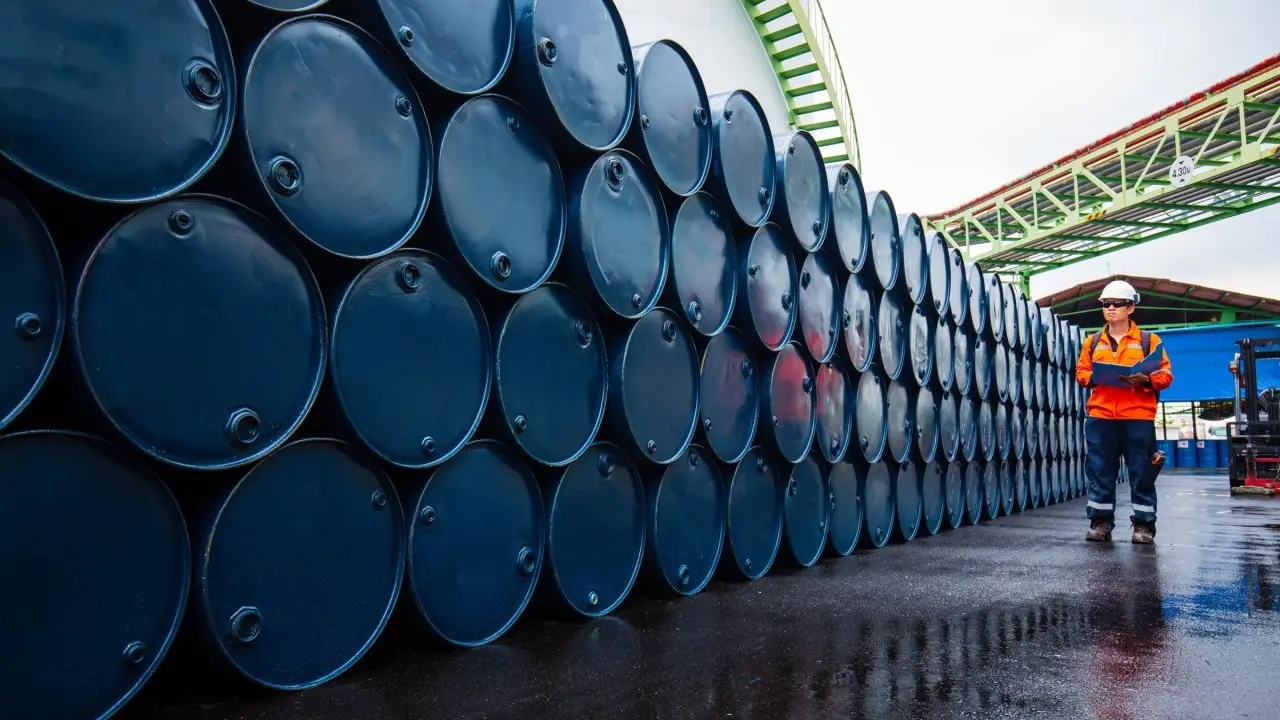
Oil prices remain tightly bound to events in the Middle East. Without a normalisation of regional oil flows, the market is increasingly exposed to sharp upward swings as inventories continue to thin
Energy - US crude inventories continue to decline
Re-escalation in the Persian Gulf pushed oil prices higher yesterday, with fresh attacks once again casting doubt over a resumption of energy flows through the Strait of Hormuz. There also appear to be mixed messages about the progress in negotiations between the US and Iran. President Trump says talks are moving in the right direction; Iranian media reports that no tangible progress has been made. News that Israel and Lebanon agreed on a ceasefire could potentially open the door for talks to advance. Iran has been adamant that any ceasefire with the US is dependent on a halt in fighting in Lebanon. Every day that passes without a resumption of oil flows leaves the market increasingly vulnerable. This increases the pressure to strike a deal.
Inventories have provided a cushion for the oil market. However, even if we see an imminent restart of oil flows through the Strait of Hormuz, the recovery will be slow and gradual. This suggests inventories are likely to continue to tighten into the third quarter, leaving upside risk to prices. This ties in with comments from Kuwait Petroleum, which said it would take 6-8 weeks to get Kuwaiti output back to 70% of normal levels once the strait reopens. Then, it would take another month for output to return to normal.
Weekly inventory numbers from the EIA show that US commercial crude oil inventories fell by 7.97m barrels over the last week. This leaves the total inventory draw over the last month and a half at 32m barrels. While inventories do fall seasonally as refiners ramp up operating rates, the pace of decline has been faster than usual. When taking into consideration releases from the strategic petroleum reserve, total crude inventories fell by 15.97m barrels over the last week. Refined product inventories increased over the week, with gasoline and distillate fuel oil stocks increasing by 3.36m barrels and 1.5m barrels, respectively. It was largely driven by weaker domestic implied demand.
Positioning data for TTF continues to show that investment funds have been somewhat unfazed by ongoing LNG supply disruptions in the Middle East amid optimism over a resumption of LNG flows through the Strait of Hormuz. Funds sold 17.9TWh in TTF last week, leaving them with a net long of 262.2TWh. Clearly, this leaves a fair amount of upside risk if we do not see an imminent resumption of LNG flows.
Metals – Copper drops back below $14,000/t
Copper retreated on Wednesday, pulling back from a three-week high, as rising US-Iran tensions shifted focus to demand risks. LME copper fell back below $14,000/t after gaining around 3% over the previous two sessions.
Despite ongoing supply risks, concerns over weaker global growth, higher energy costs and inflation weighed on sentiment. The move also reflects profit-taking after the recent rally, driven by expectations of tighter supply ahead of potential US import tariffs.
Separately, the US adjusted its metals tariff framework. It maintained elevated tariffs on certain copper products while tightening coverage across downstream goods. At the same time, rules of origin were eased. The threshold for qualifying as a US-origin metal lowered from 95% to 85%, making it easier for importers to access preferential treatment. The scope of tariffs was also broadened to include additional semi-fabricated products such as electrical conductors and cables, extending protection further into manufacturing supply chains. Market attention is now shifting to the ongoing review of refined copper imports. Any additional duties could have a more material impact on US supply dynamics, given the strong reliance on imported refined metal.
Market fundamentals remain broadly supportive, with tariff-driven trade distortions and structural demand linked to electrification and grid investment. However, the near-term price direction is likely to remain sensitive to macro risks, with uncertainty in the Middle East acting as a headwind.
In precious metals, gold saw central banks return to net buying in April, with purchases of around 17 tonnes following net sales in March, according to the World Gold Council. Poland remained the largest buyer, adding 14 tonnes and bringing year-to-date purchases to 45 tonnes. The People’s Bank of China extended its buying streak to 18 consecutive months, adding 8 tonnes - its largest increase since December 2024. The Czech Republic maintained its accumulation strategy, purchasing 3 tonnes in April and taking total additions to 8 tonnes so far this year.
In contrast, Russia remained a net seller, reducing holdings by 6 tonnes in April. This marks a fourth consecutive month of net sales, with total divestment reaching 22 tonnes year to date.
Agriculture – Arabica coffee drops on ample supply projections
Arabica coffee prices declined for a fourth consecutive session, reaching their lowest level since November 2024. The drop reflects expectations of a record 2026/27 harvest and global surplus. Brazil’s CONAB recently raised its arabica production forecast to 45.8m bags (+28% year‑on‑year), up from 44.1m bags previously.



Comments
Log in or sign up to join the conversation.