


This week, I introduced you to the concept of Sovereign AI.
Its basic premise is simple. Instead of depending entirely on outside AI providers, companies can bring artificial intelligence inside their own organizations, where they control the infrastructure, the data and ultimately what the AI learns.
But that creates another challenge.
You see, AI is improving so quickly that today’s best model almost certainly won’t be tomorrow’s best model.
And if you’ve spent months or years teaching an AI how your business works, you don’t want to have to start over again every time a better model comes along.
That’s why Microsoft believes that learning should remain separate from the AI model itself.
But Microsoft isn’t the only company heading in this direction.
Anthropic, Apple and OpenAI all appear to be solving this same problem in very different ways.
The Universal Adapter
Anthropic has been developing a technology called the Model Context Protocol, or MCP, that creates a standard way for AI models to connect with outside information and software tools.
Anthropic compares it to a USB-C port.
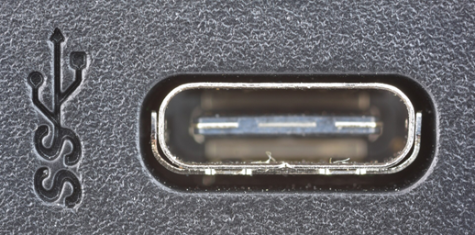
Image: D-Kuru/Wikimedia Commons
Before USB-C, different devices required different plugs and cables. But once a common standard emerged, the same port could connect a laptop to monitors, storage drives, phones and dozens of other accessories.
MCP is trying to do something similar for AI.
Instead of building a new custom connection every time an AI model needs access to Slack, Google Drive, GitHub or an internal database, a company can create one standardized connection that multiple models can use.
That technology has spread remarkably quickly.
Anthropic says there are now more than 10,000 active public MCP servers. And the protocol has been adopted by ChatGPT, Google’s Gemini, Microsoft Copilot, Visual Studio Code and other major AI products.
Anthropic even donated MCP to a foundation backed by OpenAI, Google, Microsoft, Amazon Web Services, Block, Cloudflare and Bloomberg so that it could remain an open industry standard rather than something controlled by one company.

Now that those connections exist, they don’t have to be rebuilt every time a company changes AI models. Today they might be used by Claude. Tomorrow they could be used by ChatGPT, Gemini or a smaller specialized model.
This way, even if the model changes, a company’s data, tools and workflows can stay exactly where they are.
We’ve already seen an early version of this approach from Apple.
As I wrote about earlier this year, the company appears to be moving toward treating Siri as an intelligence concierge, routing different requests to whichever AI is best suited for the job.
Behind the scenes, multiple AI models could be doing the work. But to the customer, it feels like one assistant.
OpenAI is approaching the problem from a different direction.
Its enterprise agents, for example, can now be given company files, specialized instructions, custom skills and connections to outside applications. They can also be scheduled to perform recurring workflows and retain memory files that help them complete those jobs consistently.
The important point is that more and more of what makes an AI useful is being built around the model rather than permanently locked inside it.
And that could change the economics of artificial intelligence.
OpenAI, Anthropic, Google and xAI are spending enormous amounts of money trying to build the smartest general-purpose models.
But if companies can switch among them without losing their accumulated knowledge, these models may eventually compete more like suppliers.
According to Stanford’s 2026 AI Index, the performance gap between the world’s leading AI models has narrowed dramatically.
That’s pushing competition toward cost and reliability.
At the same time, AI is getting dramatically cheaper. Stanford found that the cost of running a model with roughly GPT-3.5-level performance plunged over 99% in about 18 months.
Which brings us back to Sovereign AI.
Companies want greater control over the GPUs, storage and networking equipment that run their artificial intelligence.
But owning the machines is only the beginning.
The ultimate goal is to make sure they can control what their AI learns about them. That includes the processes it develops, the tools it connects, the feedback employees provide and the accumulated context that allows an agent to understand how work actually gets done.
If companies can keep all that knowledge while switching between models, then they gain leverage.
If OpenAI builds a better model, they can use it. If Anthropic offers better reasoning, they can switch. Or if Google cuts its prices or offers a smaller model that can perform the same task for a fraction of the cost, they can use that instead.
The AI giants will still continue competing against each other.
But now the customer gets to benefit from that competition without starting over every time a better model for their business comes along.
And the faster AI improves, the more valuable that leverage becomes.
Here’s My Take
Sovereign AI isn’t just about keeping sensitive data private.
It also gives businesses the freedom to use the best AI for each job.
That means businesses can take advantage of every breakthrough in AI without having to start from scratch.
Instead of depending on one giant AI to do everything, businesses could use the best intelligence available while keeping their data, workflows and accumulated knowledge under their own control.
That’s where I believe Sovereign AI is ultimately headed.

Comments
Log in or sign up to join the conversation.