

Chart: Stocks vs Bonds Long-Term Cycles
Stocks beating Bonds should be no surprise for those paying attention.
Stocks are in a raging bull market.
Bonds are in brutal a bear market.
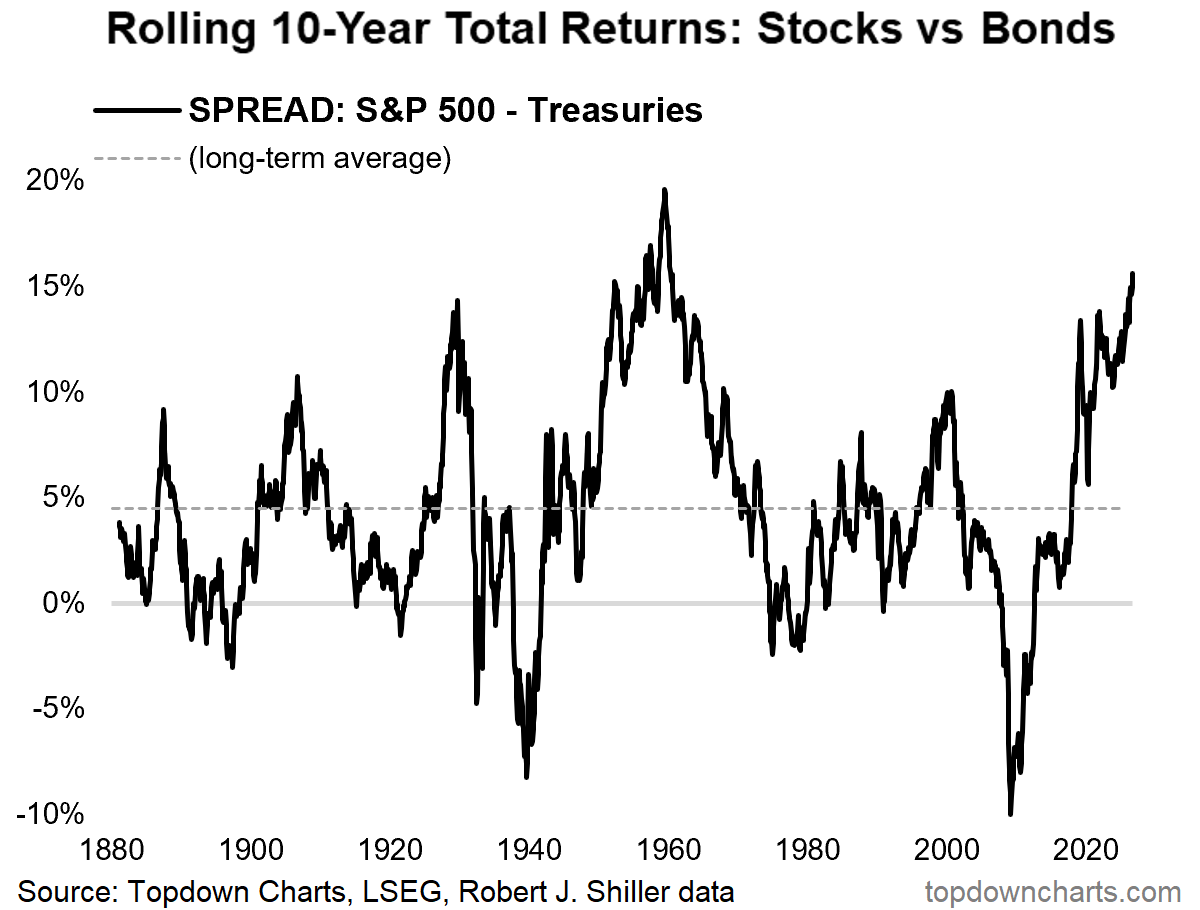
But you might be surprised by the extent of it (see chart below).
The rolling 10-year annualized total return spread (i.e. including interest for bonds, dividends for stocks) of stocks vs bonds just cracked 15% —the highest since 1960 (and eclipsing the 1929 high).
Looking at the two series separately (below) we can see bonds making long-cycle lows, and stocks making long-cycle highs in real (CPI-adjusted) total returns.
I think it’s important to emphasize the word cycle, because there does appear to be some rhythm and recurrence in the peaks vs troughs for both series.
But words matter, and there is a key implication of using that word…
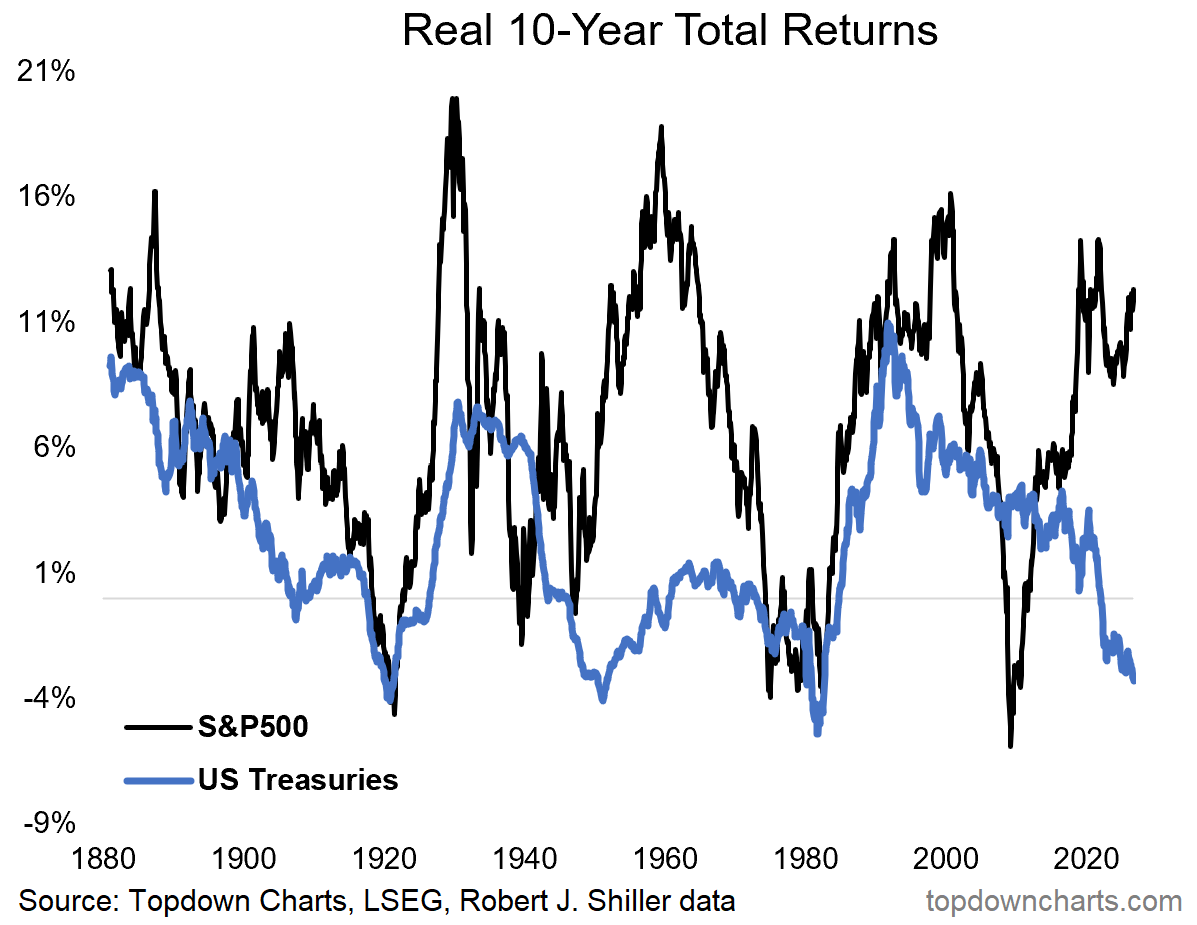
If you believe that returns for stocks and bonds go in cycles (as the chart above appears to show), then the time to be wary of downside on stocks is when they are at their best (e.g. now), and the time to be watching for upside in bonds is when they are at their worst (also now).
This is a deeply contrarian assessment.
And as with most contrarian viewpoints, a few things would need to go right for bonds to break the bear —and likewise a few things would need to go wrong for stocks to lose their shine.
But the purpose of zooming out to the bigger long-term historical picture like this is perspective building. It helps provide a data-driven check against the consensus of the day, and assists in imagining what might be sitting over the horizon…
Bonus Chart: the tactical horizon
From a practical and tactical standpoint, detecting a turn in the stock/bond ratio (i.e. relative performance of stocks vs bonds) requires more precision and insight than just holding a loose view or belief about the longer-term outlook.
Practically speaking what I look at to detect a possible regime shift in stocks vs bonds includes: technicals, positioning/sentiment, valuations, policy, and cycles/macro — ultimately, it’s that last one that weighs the most here.
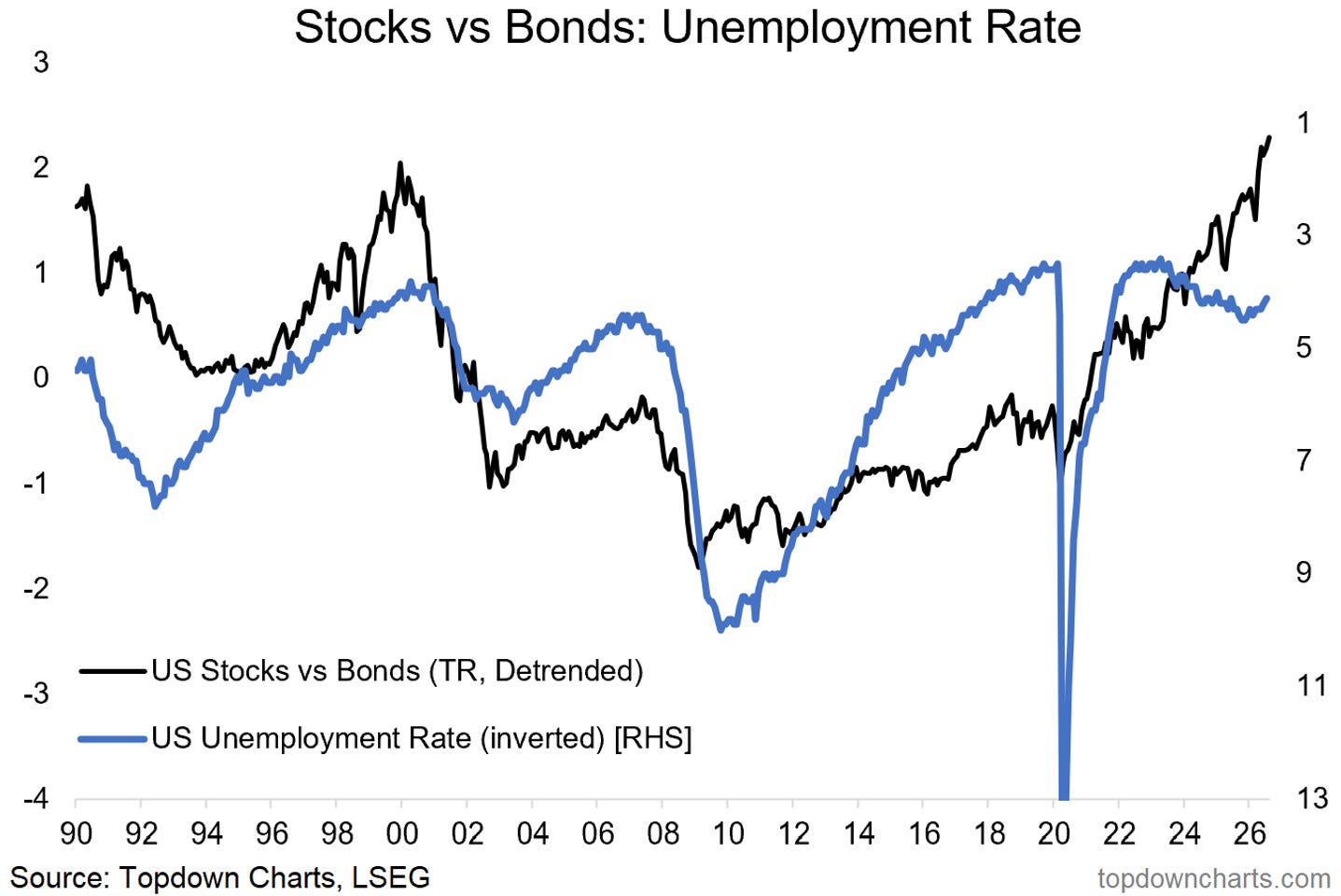
The chart below shows the unemployment rate inverted vs the stock/bond ratio — the key implication being that stocks tend to beat bonds when unemployment is falling/low, while bonds beat stocks when unemployment is high/rising.
This makes sense conceptually: stocks do well when earnings go up, earnings go up during economic expansions, and down during recessions. Meanwhile bonds do well when inflation is falling and central banks are cutting rates, and do poorly when inflation and interest rates are rising.
(aka “it’s the economy, stupid“)
Right now the macro is basically benign/supportive for stocks vs bonds (but of course, that can change, and can change quicker than you think).
Weekly Report Notes
Here’s the topics & takeaways from my latest report —it should give a good sense of what I tend to cover in the Topdown Pro service as well as providing some high-level insights into how I am currently seeing Macro & Markets:
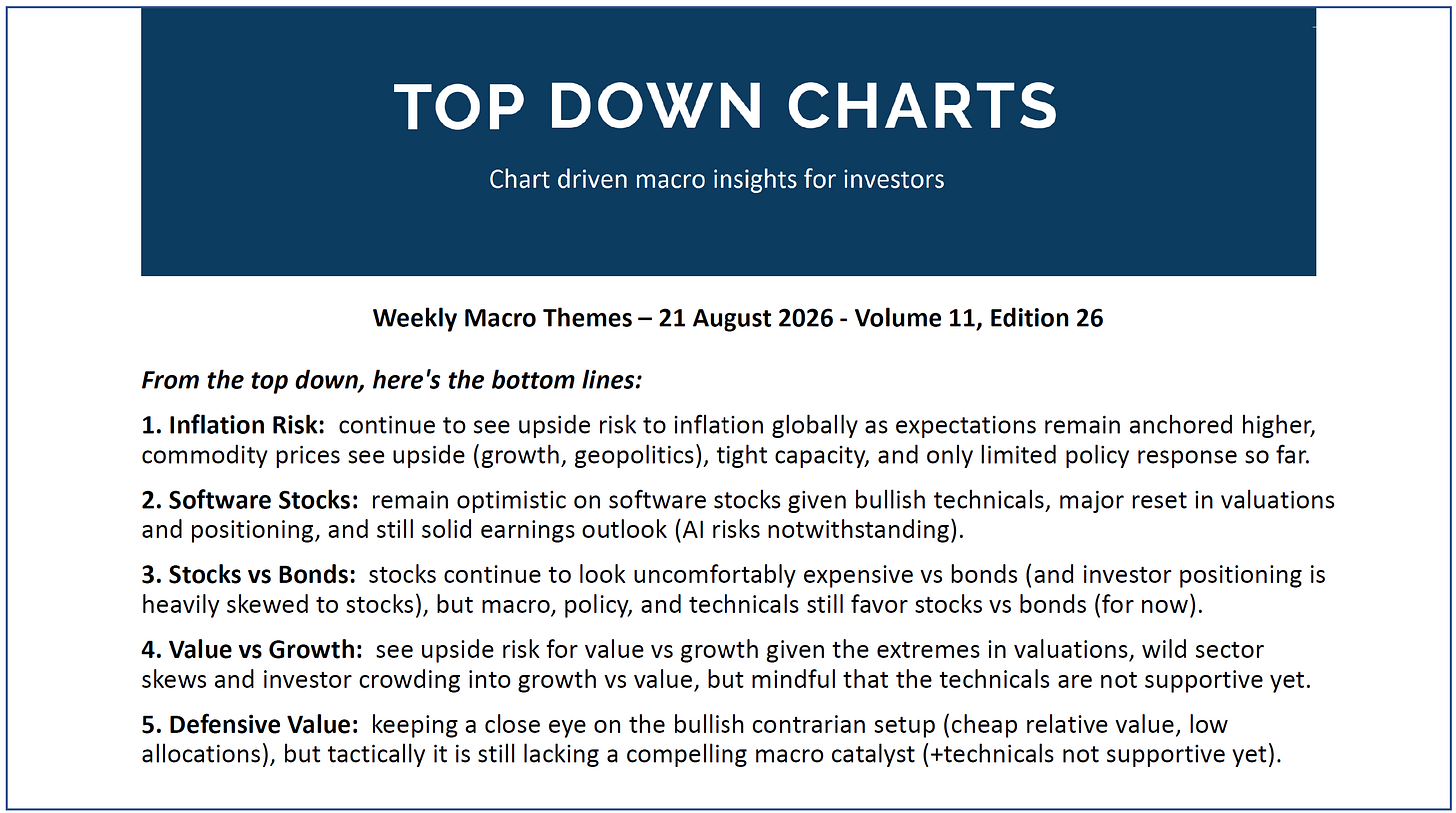
1. Inflation Risk: continue to see upside risk to inflation globally as expectations remain anchored higher, commodity prices see upside (growth, geopolitics), tight capacity, and only limited policy response so far.
2. Software Stocks: remain optimistic on software stocks given bullish technicals, major reset in valuations and positioning, and still solid earnings outlook (AI risks notwithstanding).
3. Stocks vs Bonds: stocks continue to look uncomfortably expensive vs bonds (and investor positioning is heavily skewed to stocks), but macro, policy, and technicals still favor stocks vs bonds (for now).
4. Value vs Growth: see upside risk for value vs growth given the extremes in valuations, wild sector skews and investor crowding into growth vs value, but mindful that the technicals are not supportive yet.
5. Defensive Value: keeping a close eye on the bullish contrarian setup (cheap relative value, low allocations), but tactically it is still lacking a compelling macro catalyst (+technicals not supportive yet).


Comments
Log in or sign up to join the conversation.