


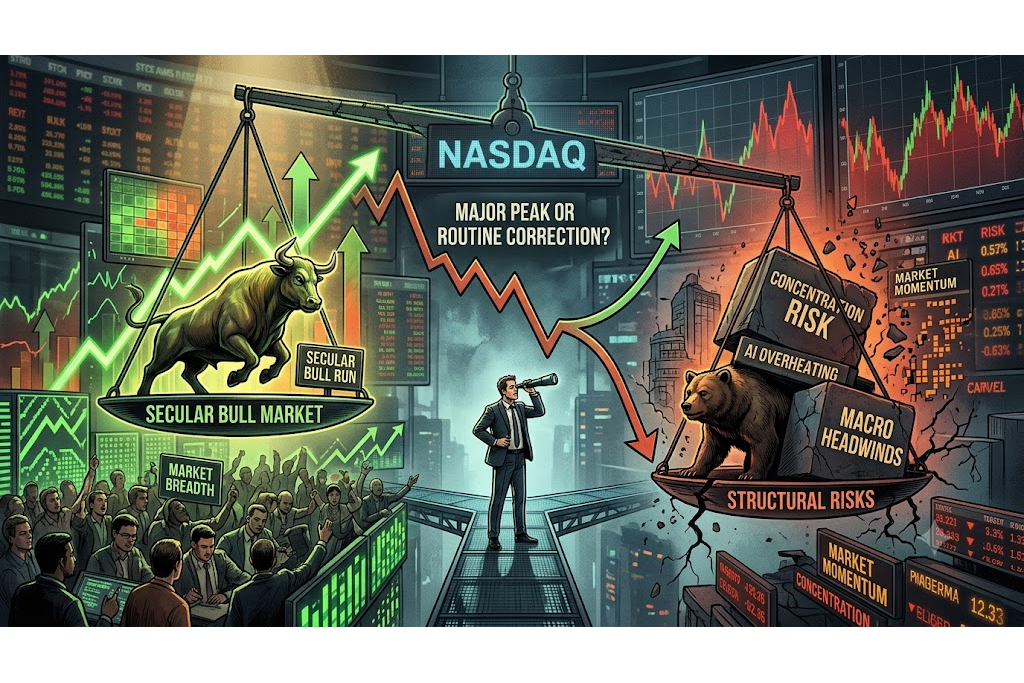
After several weeks of selling pressure, growing volatility, and significant declines in technology and AI-related stocks, investors are facing an important question: Is this a normal correction, the beginning of a cyclical bear market, or something much worse, similar to what unfolded after the major stock market peaks in 2000 and 2007?
Recent developments involving NVIDIA (NVDA) have added to uncertainty surrounding the AI trade. Despite reporting strong earnings and providing upbeat guidance, NVIDIA shares struggled as investors weighed leadership changes, regulatory scrutiny, and questions about the sustainability of massive AI-related investments.
Meanwhile, inflation remains a concern. Recent Federal Reserve communications suggest additional interest rate hikes may be necessary, raising questions about the potential impact of tighter monetary policy on economic growth, corporate earnings, and stock market valuations.
This week's video examines the weight of the evidence across multiple timeframes, including:
The S&P 500's recent correction and important technical support levels.
Historical drawdowns during the secular bull markets of 1950–1968 and 1982–2000.
Key distinctions between normal corrections, cyclical bear markets, and major secular trend changes.
Comparisons with the stock market peaks in 2000 and 2007.
The latest developments in the Nasdaq, semiconductors, and large-cap growth stocks.
Volatility, oversold conditions, market sentiment, and the potential for a sustained rebound.
Corporate earnings expectations and the longer-term outlook for stocks.
The importance of aligning investment decisions with our objectives and time horizon.
While recent market action has been unsettling, history reminds us that meaningful corrections can occur within powerful secular bull markets. At the same time, protecting capital during periods of prolonged secular stagnation remains an important consideration.
Is the long-term bullish case still intact, or is the market beginning to provide evidence of a more significant change?
We'll examine the charts, historical precedents, and current market evidence to better understand the probabilities and the guideposts that could help us navigate the weeks and months ahead.


Comments
Log in or sign up to join the conversation.