


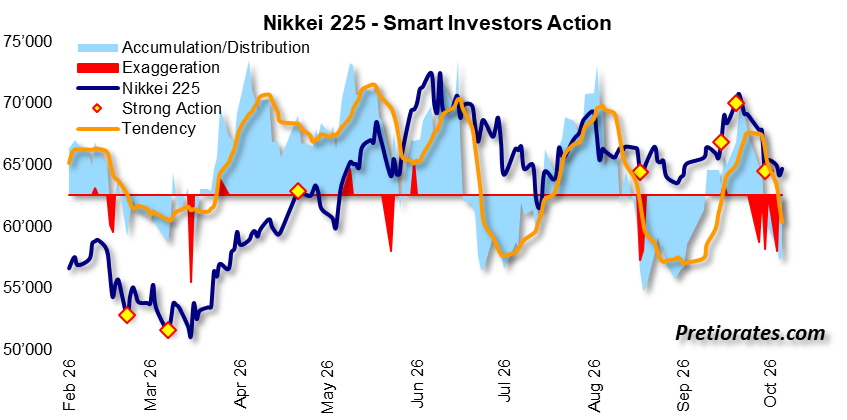
Global stock markets have continued to show their volatile side over the past few weeks. The Japanese stock market, in particular, took another hit, even though savvy investors have recently been stepping up their buying activity. The red areas on the chart also indicate that the pullbacks in the Nikkei Index were accompanied by a significant “exaggeration.” This is usually a harbinger of a technical rebound—especially when it’s accompanied by “strong action.” The odds of a counter-movement are therefore quite good.
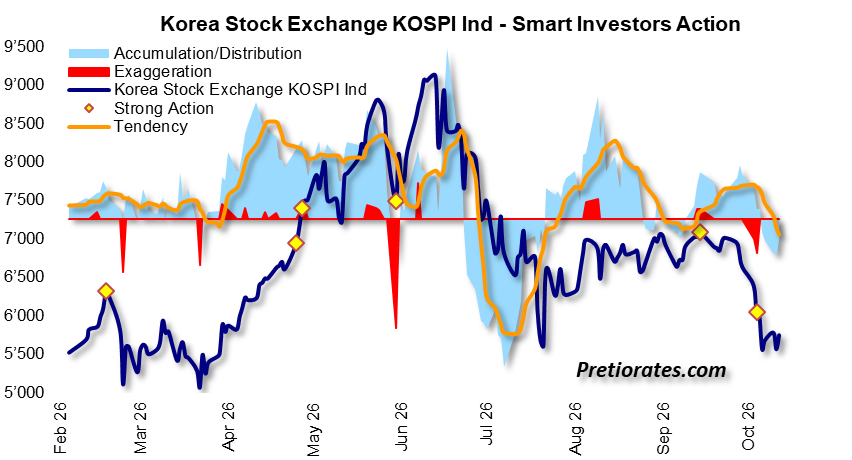
As we mentioned in last week’s thoughts, it’s worth paying special attention to the Korean stock index. It has since emerged as a true trendsetter for the AI sector. Unsurprisingly, it, too, has taken a significant hit recently. Unlike the Nikkei, however, our indicators here are not yet fully convinced that a technical rebound is on the horizon.
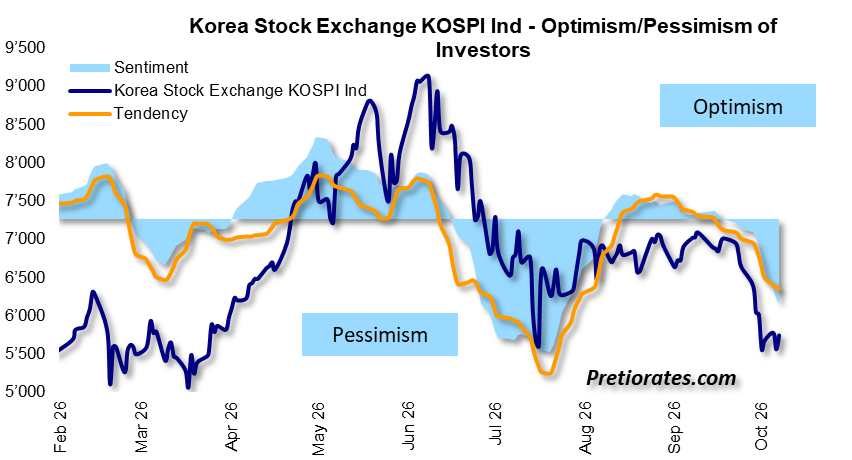
Although sentiment is deep in the valley of pessimism—usually a promising contrarian indicator—the risk that the index will slip below its July low is by no means off the table. And that would be yet another sell signal that investors would likely prefer to do without.
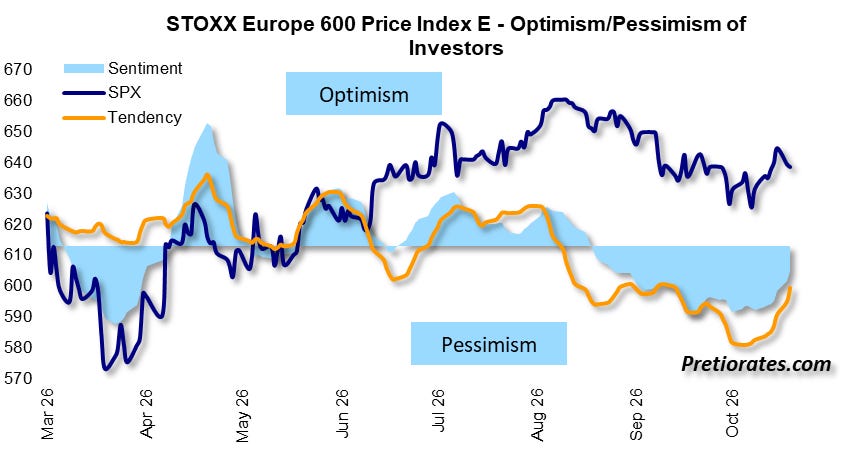
Turning our attention to Europe, developments in France naturally take center stage—and not just those in the financial markets. The spread between market yields on French and German government bonds has widened once again and now stands at a hefty 160 basis points, or 1.6%. Très inquiétant!
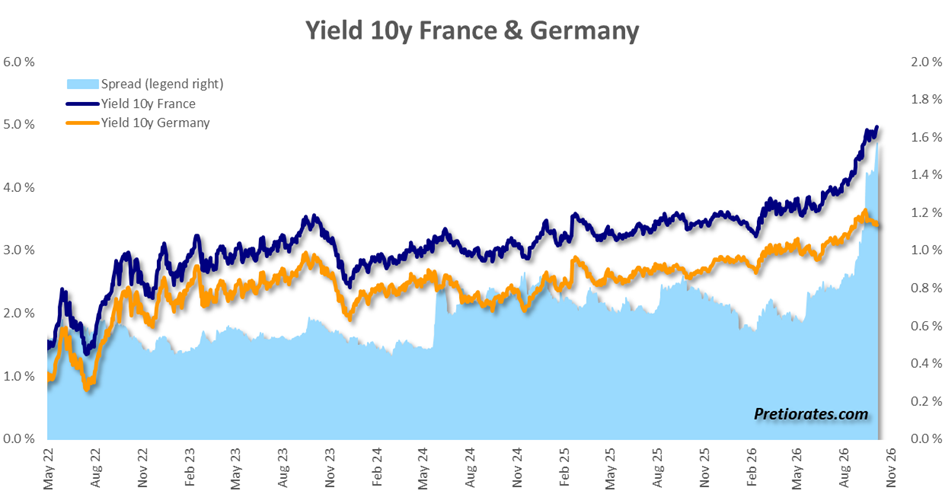
So far, however, the stock markets seem to care very little about this. Many investors even interpret this composure as a sign of strength. We wouldn’t necessarily agree with this view, however, and continue to approach the situation with due caution. Even so, there is certainly some merit to the theory circulating among stock traders that capital is fleeing government bonds and seeking a new home in the private sector—and thus also in stocks. At the very least, the sentiment indicator is now showing a more positive side again.
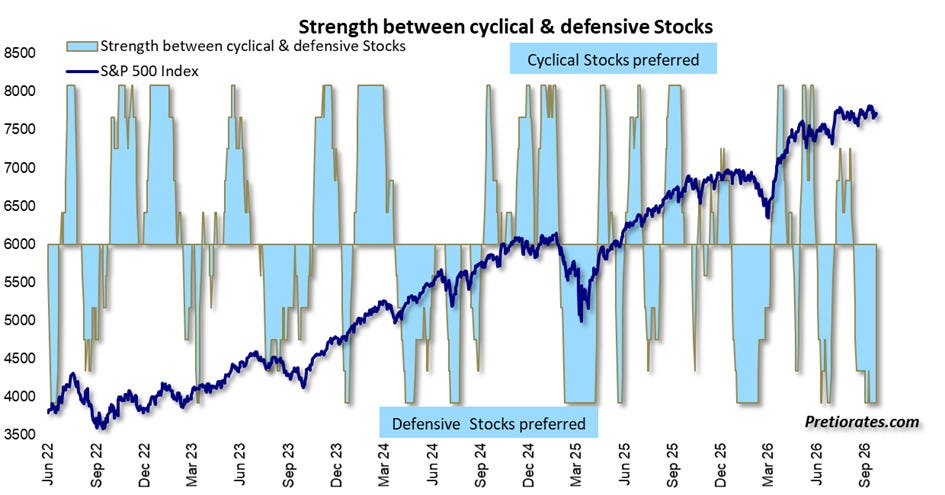
The Swiss stock market has put on a remarkably strong performance over the past few days. Compared to other stock exchanges, it has been playing in the “Champions League,” so to speak. The reason is obvious: The Swiss market is dominated by defensive heavyweights: Nestlé, Novartis, and Roche account for nearly 50% of the SMI Index. But a similar preference is evident across the Atlantic as well: On Wall Street, defensive companies are currently also being favored over their cyclical counterparts.
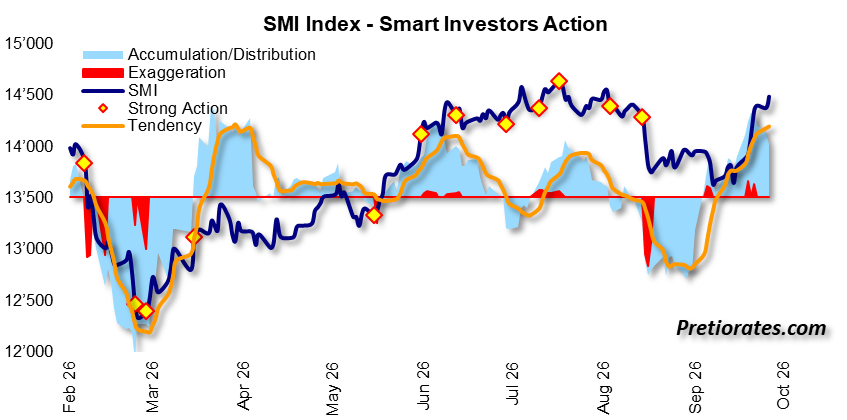
On the Swiss stock market, savvy investors have been buying heavily of late—and without any significant overvaluation. This is a thoroughly healthy mix that points to a continuation of the positive trend…
There are now less than two weeks until the U.S. midterm elections. We stand by our assessment that these elections are unlikely to proceed as quietly as in previous years. Regardless of who wins the House of Representatives and/or even the Senate, the other party is likely to present a decidedly “dissatisfied” front.
Actually, the stock market should have been suffering from nervous jitters long ago: turbulent bond and energy markets, geopolitical tensions, and the flood of quarterly earnings reports are all testing investors’ nerves at the same time. Yet, in the face of this turmoil, the U.S. stock markets are displaying an almost stoic calm—almost suspiciously so.
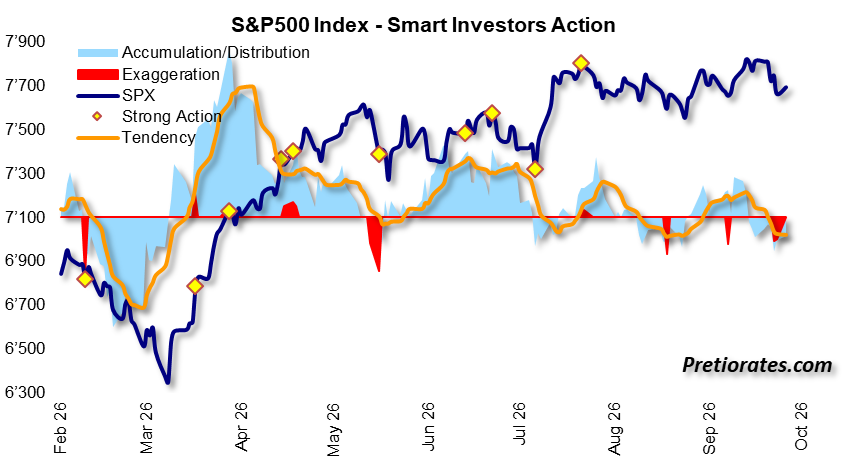
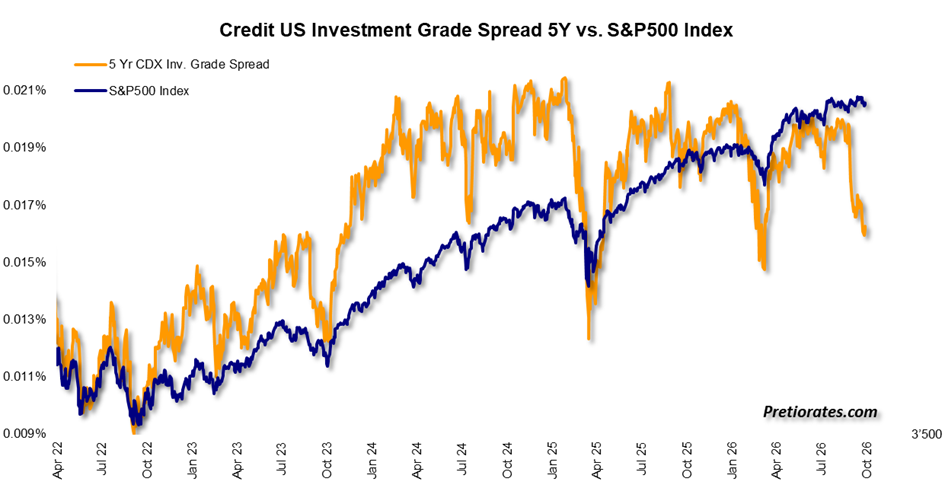
For beneath the seemingly mirror-smooth surface of the water, things continue to bubble violently. The swap market offers a warning signal: When credit investment-grade spreads there narrow significantly, it usually doesn’t take long before the stock market marches in the same direction.
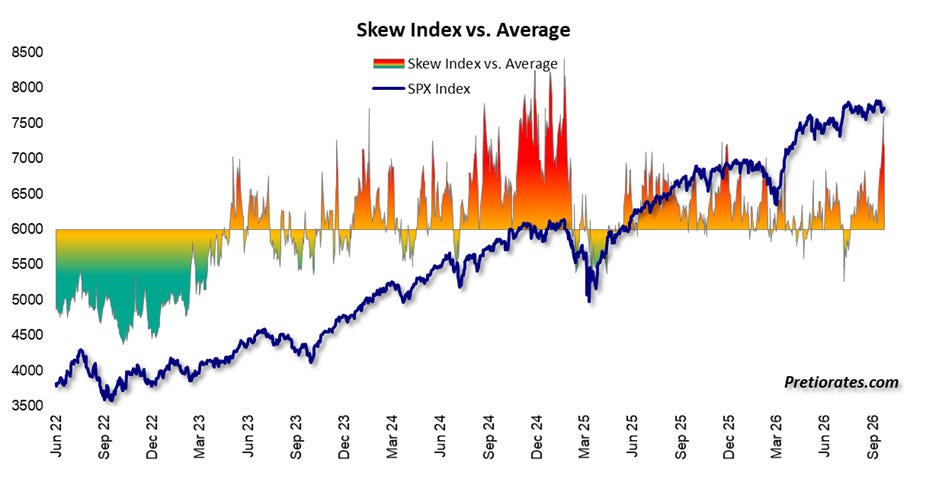
This almost eerie calm also has an interesting side effect: Investors apparently no longer feel it’s necessary to hedge against price losses. The skew index—which reflects the valuation of long-term put options with strike prices well below the current market level (so-called out-of-the-money puts)—speaks volumes here. These hedges are now strikingly inexpensive. Or to put it another way: the demand for this “safety belt” is surprisingly low. Apparently, hardly anyone expects the ride to suddenly get bumpy.
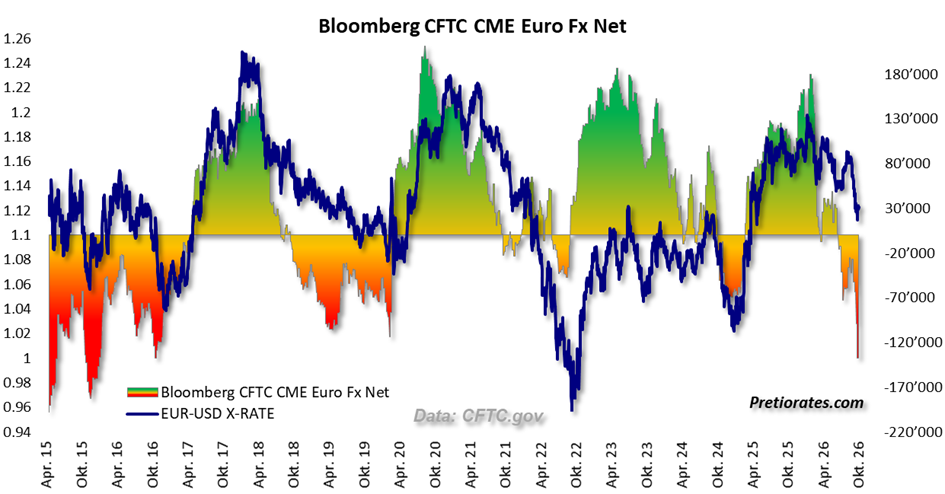
A particularly intriguing—yet also somewhat unsettling—development can currently be observed in the currency futures market: Short positions in the euro have been massively expanded over the past few days. Apparently, more and more market participants are betting that the European single currency will come under further pressure …
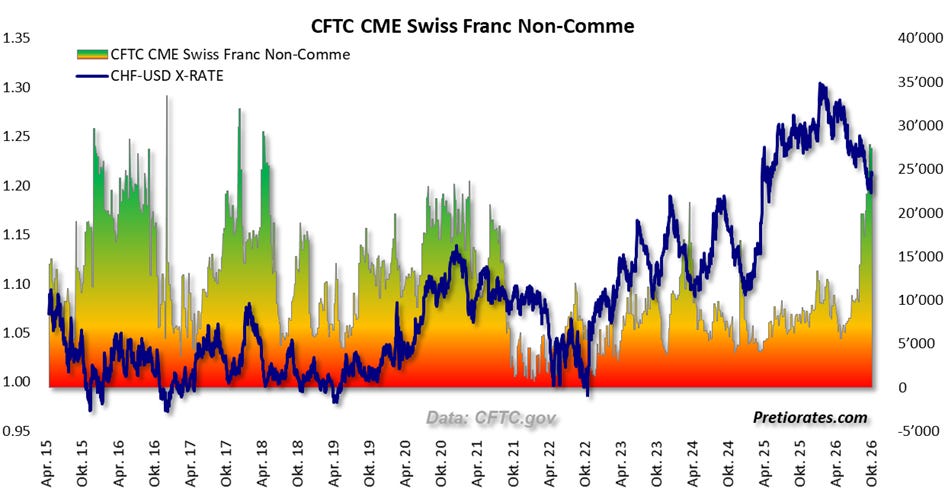
At the same time, long positions in the Swiss franc—the classic safe-haven currency—have been increased quite dramatically. And with this, an individual or group of investors is sending a pretty unambiguous message: While the stock markets are still basking comfortably in the sun, some investors with particularly deep pockets are already taking precautionary steps to secure their positions. They clearly expect that this deceptive calm could soon come to an end…


Comments
Log in or sign up to join the conversation.