


AI stocks have taken another heavy hit since our Thoughts last week—only to stage an equally impressive recovery on the trading floor shortly afterward. Anyone who remains invested in this sector currently needs not just strong nerves, but ideally nerves of steel. However, since last week, our assessment has become even more firmly established: The Democrats’ victory in the midterm elections is unlikely to seriously derail the AI industry’s prospects. Additional safeguards and stricter controls are certainly possible, and the construction of new data centers is likely to come under closer scrutiny in the future. Not a bad development, actually. But AI is here to stay. After all, AI also creates jobs and makes a significant contribution to economic growth. The U.S. economy is reported to have grown by 3.4% in the past quarter. According to the latest estimates, about one-third of this growth was attributable to this still-young sector. We therefore view sell-off prices, such as those we observed last week, as buying opportunities.
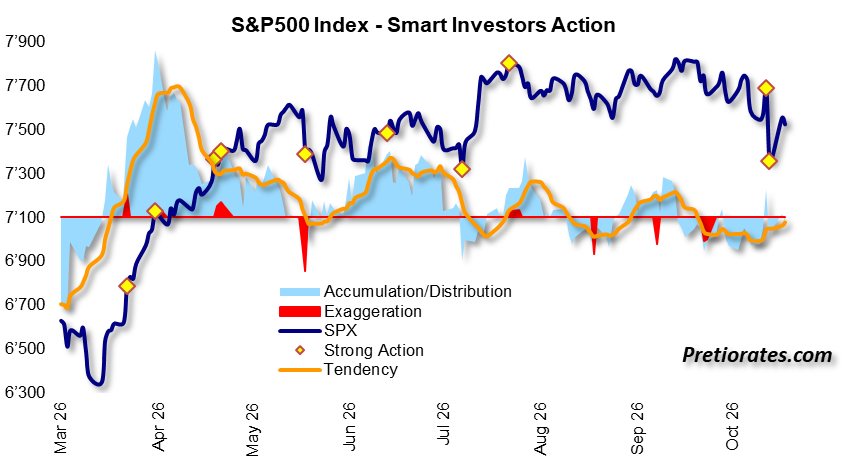
Naturally, the sharp price fluctuations are also leaving their mark on the broader stock markets. In the case of the S&P 500, however, it appears that smart investors are currently making headlines neither for heroic buying nor for panic selling. The motto seems to be: wait and see. A clear trend? Not at all.
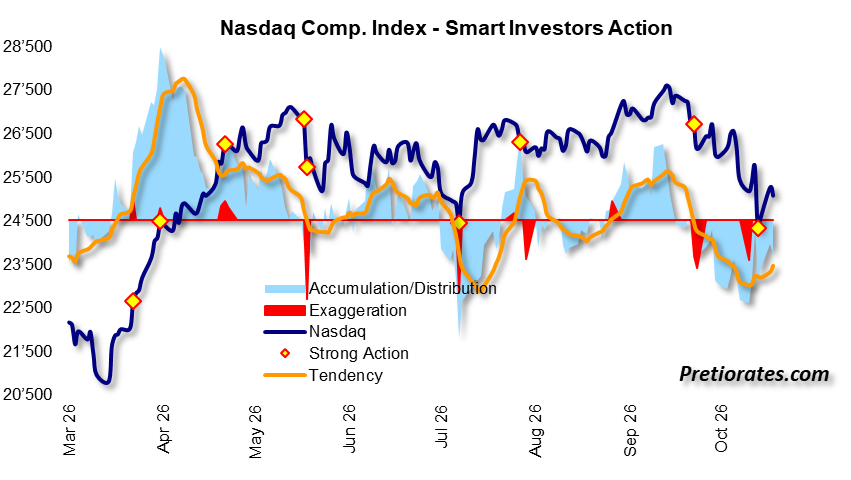
Unsurprisingly, the situation on the Nasdaq Index is significantly more turbulent. Over the past few weeks, there has been heavy selling of Nasdaq stocks—distribution on a grand scale. Most recently, an “Exaggeration” (red area) and a “Strong Action” (yellow dot) even appeared together. When they occur simultaneously, this usually amounts to a short-term buy or sell signal.
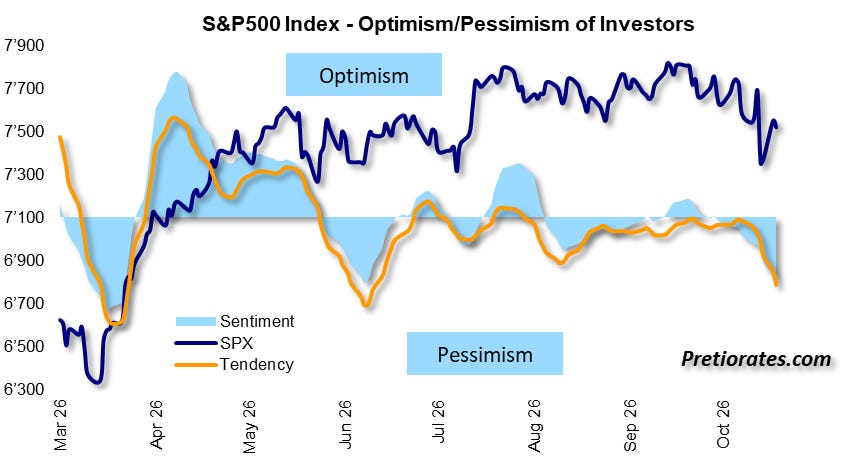
There are also clear differences in investor sentiment: While sentiment for the S&P 500 only plummeted in the last few trading days,
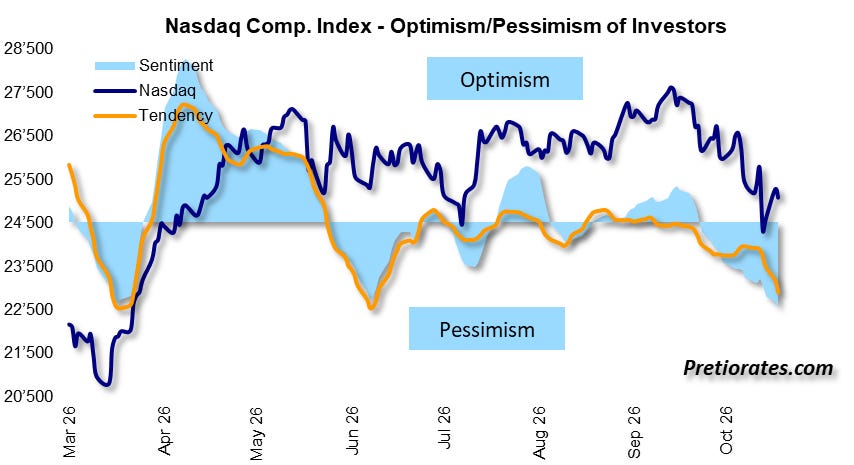
investors in the Nasdaq indices had already left their optimism at the door several weeks ago. In the meantime, however, pessimism has reached a level that suggests a mood improvement is on the horizon. And as we know, the stock markets are particularly likely to see a ray of sunshine when most investors see nothing but rain clouds.
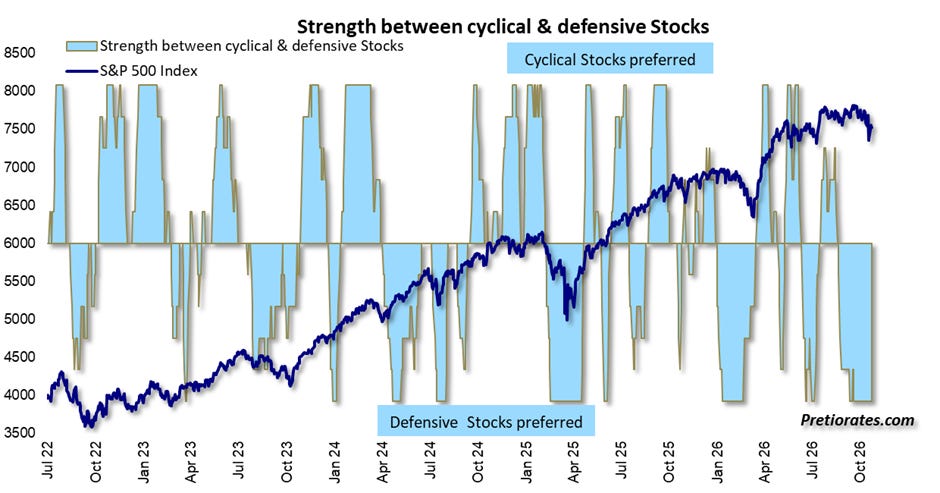
Investors continue to seek refuge primarily in defensive sectors and stocks. Given the nervous sentiment and recent turbulence, this is hardly surprising. Safety is once again the order of the day.
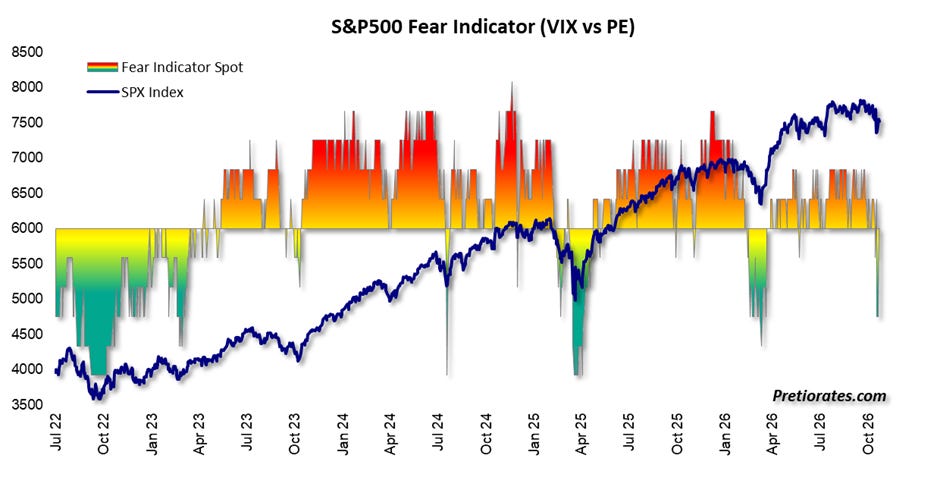
But our fear indicator has already swung significantly downward. And for once, that’s good news: It signals a high probability that we’ve already passed the low point of the current correction. So fear may have already peaked.
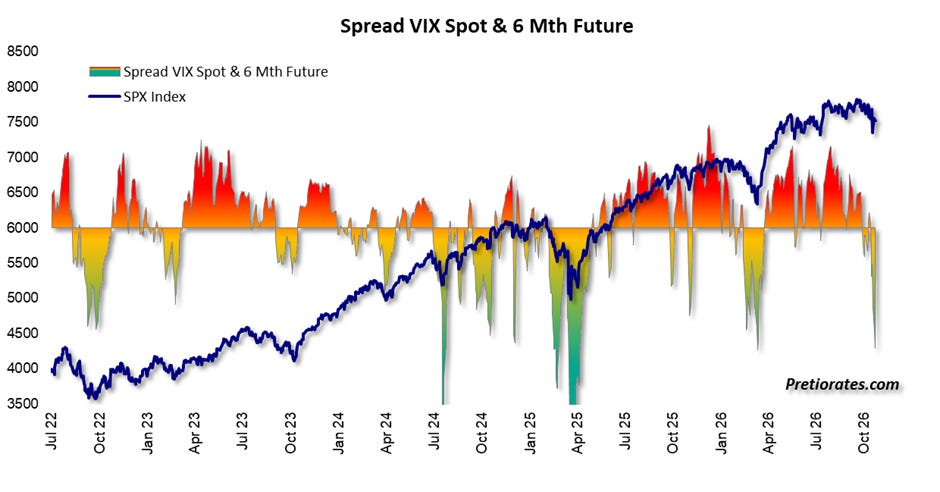
The spread between the spot volatility index and the corresponding six-month futures contract also proves invaluable in identifying relevant index lows. If the difference becomes too large, the early warning system is triggered. Historically, such a scenario strongly suggests that a significant short- to medium-term low has been reached. This is yet another indication that the bears may have already made their big move.
The odds are therefore good that the U.S. stock markets—and with them, virtually all other stock markets—are near an important interim low. We therefore view further sell-offs as buying opportunities. Does this mean we should put on our bull horns again for the long term? By no means. Unfortunately, the spiraling national debt, persistent inflation, and the tense situation surrounding Iran have still not been resolved. The foundation for a sustained shift in sentiment is still lacking.
Are there any exciting developments beyond this stock market drama? You bet! It’s particularly worth taking a closer look at the uranium and copper markets right now.
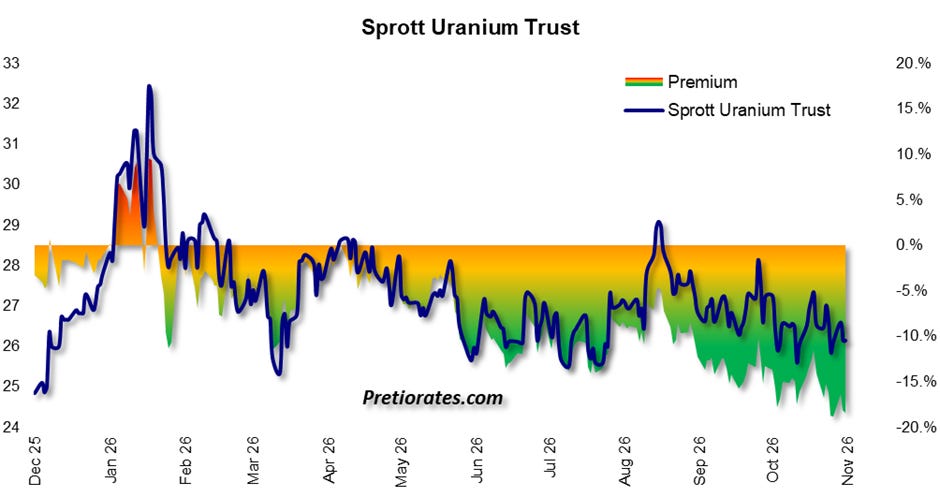
As is well known, data centers have an energy problem—one that has now become a politically charged issue. Because electricity prices in their immediate vicinity have recently skyrocketed in some cases, numerous Republican politicians were forced to step down during the elections. This makes the trend in Sprott’s uranium ETF—which is trading at an ever-widening discount—all the more surprising. It doesn’t really make sense. After all, nuclear energy is experiencing a renaissance in the wake of Fukushima, particularly due to the increased construction of smaller reactors. At the same time, a growing supply shortage is emerging in the global uranium market. Rising demand, tighter supply—and a widening discount on the ETF? Really?
Things are currently just as exciting on the copper market. Originally, the Trump administration planned to decide by the end of July 2026 whether copper imports would also be subject to import tariffs in the future. Since then, physical copper has been shipping into the U.S. at a brisk pace. The logic behind this is simple: better to have the red metal in American warehouses in time, before potential tariffs drive up costs.
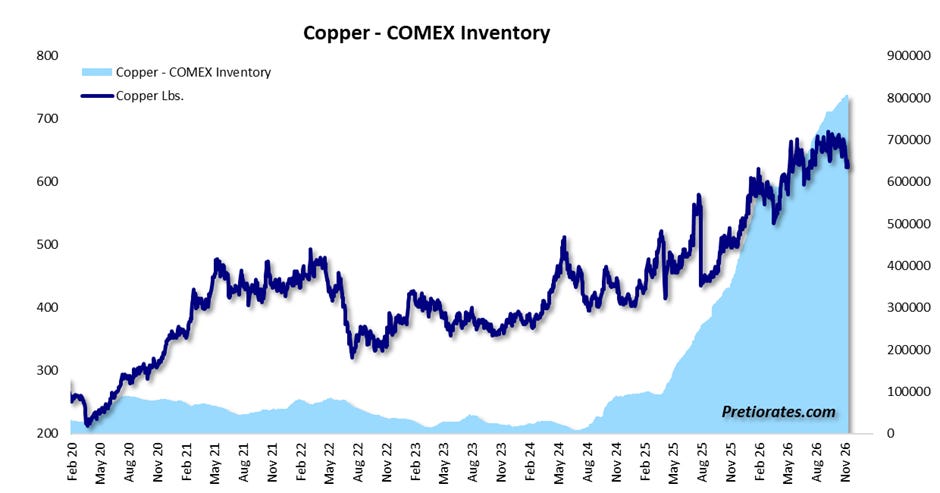
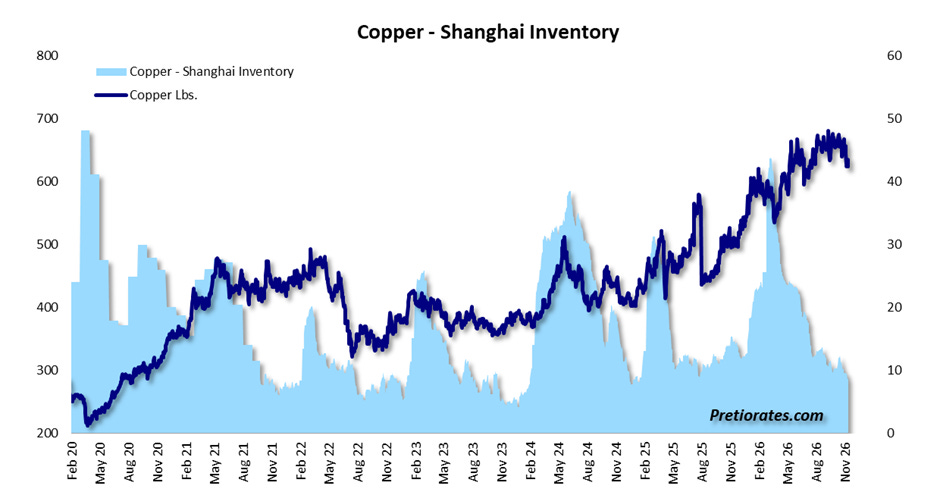
But there’s a catch to this precautionary copper migration: what’s sitting in American warehouses is missing elsewhere. This is now particularly noticeable in Shanghai. Copper inventories there are hovering near the lows of recent years. This means nothing other than that the Chinese are likely to re-emerge as major buyers on the global market in the coming weeks. And when the world’s largest copper consumer goes on a buying spree, it usually has consequences for prices.
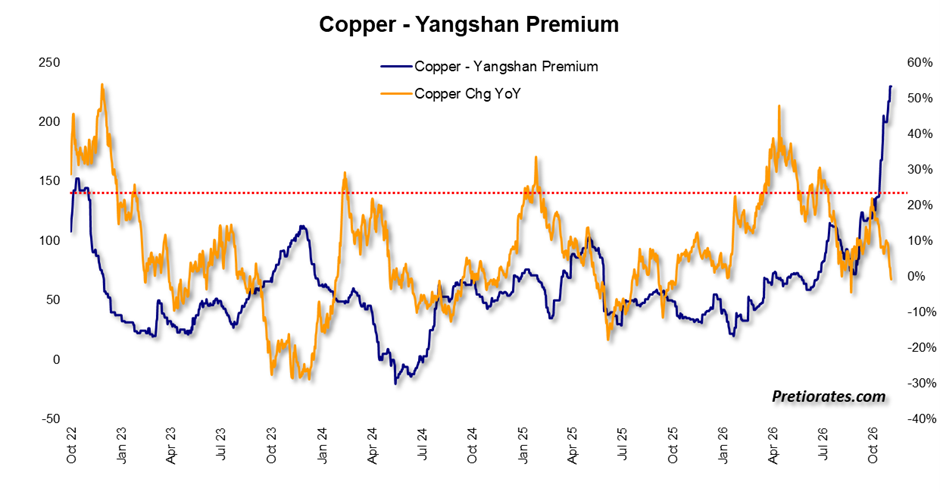
The market has already sent a clear warning signal: Yangshan premiums have literally skyrocketed! Whenever these import premiums rise so sharply, it indicates a growing shortage of physically available copper for the Chinese market. Most recently, Yangshan premiums climbed to a whopping $220 per metric ton—far surpassing the previous all-time high of $146 set four years ago. You should therefore keep a particularly close eye on the copper market in the coming weeks.
We wish you successful investments!



Comments
Log in or sign up to join the conversation.