

The S&P 500 (Index: SPX) recovered a portion of what it had lost in the aftermath of the anti-AI technology reaction that sent the index sinking in the previous week following the outcomes of the U.S. midterm elections. The index rose 2.5% above its previous week's close to end the trading week at 7,561.67.
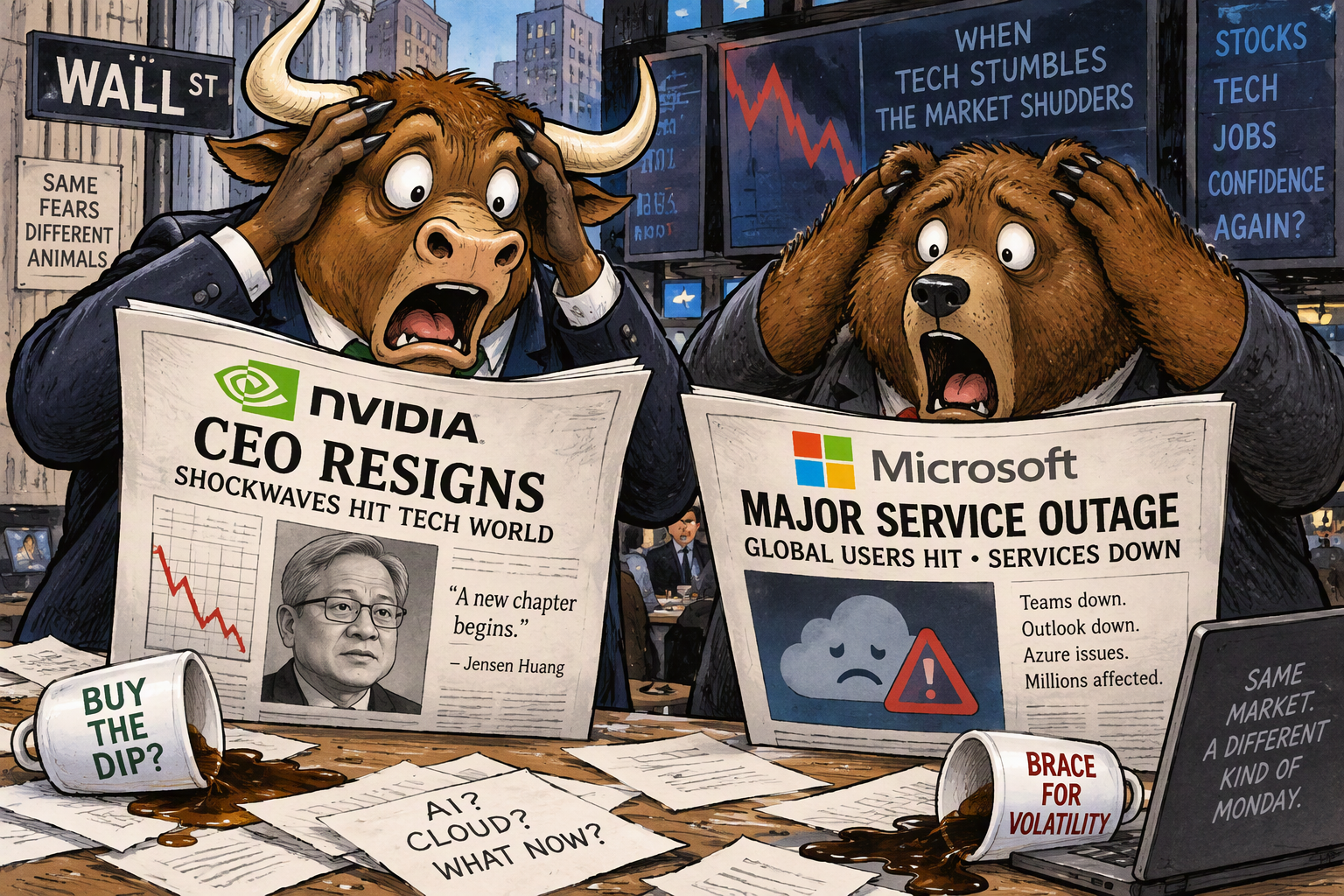
It could have been a better week for investors than it was, but two events late in the week sent two of the index' biggest components lower, draining energy out of the rebound. Jensen Huang, the CEO co-founder of Nvidia (Nasdaq: NVDA) announced his resignation on Thursday, 11 November 2026 after news broke of an extramarital affair he had with Nvidia's vice-president of healthcare Kimberly Powell, which followed the previous week's news of Huang's extramarital affair with Alice Huang (no relation), who is alleged to be involved with China's foreign spy service. News of a third extramarital affair with an unnamed Nvidia employee also came out in the last week.
Huang's two alleged extramarital affairs with Nvidia employees signals a serious problem with the company's governance, which would have compelled its board of directors to fire Huang, with Huang choosing to resign rather than be fired. In any case, NVDA's stock has lost one-fifth of its value since the 2026 U.S. midterm elections, with much of that decline taking place in the last week after Huang's continued leadership of NVDA came into question.
Microsoft (Nasdaq: MSFT) also saw its share price drop following the election outcome, though here, a major cloud service outage affecting many of its largest customers on Thursday, 11 November 2026 that continued through much of the following day weighed on the stock.
Looking beyond the negative developments affecting the S&P 500's second and third largest components, the rebound in stock prices all but eliminated the prospect of a change in market regime was taking place following the midterm election outcomes. The latest update of the alternative futures chart reveals the S&P 500's trajectory remains consistent with investors focusing on the near term future of 2026-Q4 in setting current day stock prices.
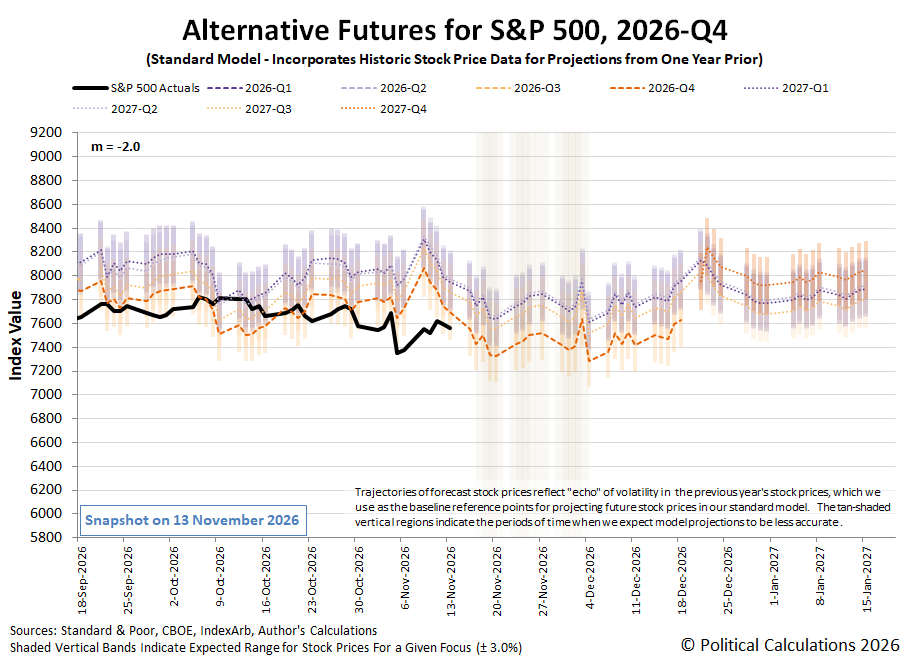
That outcome is consistent with investors absorbing a high potential for political gridlock developing in Washington, D.C., which would mute the potential for a fully adverse regulatory environment for the index' megacap AI-tech companies. Outside of the noise of NVDA's and MSFT's specific problems, much of the market-moving information of the week that was focused on inflation data and how it changed expectations for the timing and number of Federal Reserve interest rate hikes.
The CME Group's FedWatch Tool still anticipates the Fed will hike the Federal Funds Rate by a quarter point on 9 December (2026-Q4), but now anticipates an additional quarter point increase in the first quarter of 2027, coming on 27 January (2027-Q1), which would be in addition to the quarter point rate hike it projected for 17 March (2027-Q1) before this week's Consumer and Producer inflation data was released.
The Atlanta Fed's GDPNow tool's projection of annualized real GDP growth in the U.S. for 2026-Q4 ticked up to +3.5% from the +3.4% growth rate it estimated a week earlier.


Comments
Log in or sign up to join the conversation.