

The S&P 500 (Index: SPX) has dropped for four consecutive weeks, coinciding with the market-moving geopolitical event of the Iran war that began on 28 February 2026. In the fourth week since the Iran war began, the index dropped 2.1% to close out the week at 6,368.85.
Through these four weeks, the S&P 500 has been the strongest of the three major U.S. stock market indices in losing 7.4% of its value since the close of trading on 27 February 2026. The S&P 500 is the only one that hasn't yet confirmed a correction, defined as a 10% decline from its last peak. The index last peaked at 6,978.59 on 27 January 2026 and is now a little over 8.7% below it.
The market moving headlines during the fourth week of March 2026 highlighted the problems Federal Reserve officials are having in reading the state of the U.S. economy to determine the path they will take in setting U.S. interest rates. For its part, the CME Group's FedWatch Tool cut through the Fed's foggy analytical clutter to anticipate no interest rate changes through the end of 2026. Instead, the tool indicates a low probability of rate hikes, giving about a 3 out of 10 chance of a quarter point rate hike in the Federal Funds Rate being announced after the Fed's Open Market Committee meets on 28 October (2026-Q4).
The latest update of the alternative futures chart whose the S&P 500 continued a downward trajectory below the redzone forecast range we added to the chart at the end of February 2026. The centerline of that forecast range is effectively functioning as a counterfactual, indicating where the trajectory the S&P 500 would have taken in the absence of the ongoing geopolitical event.
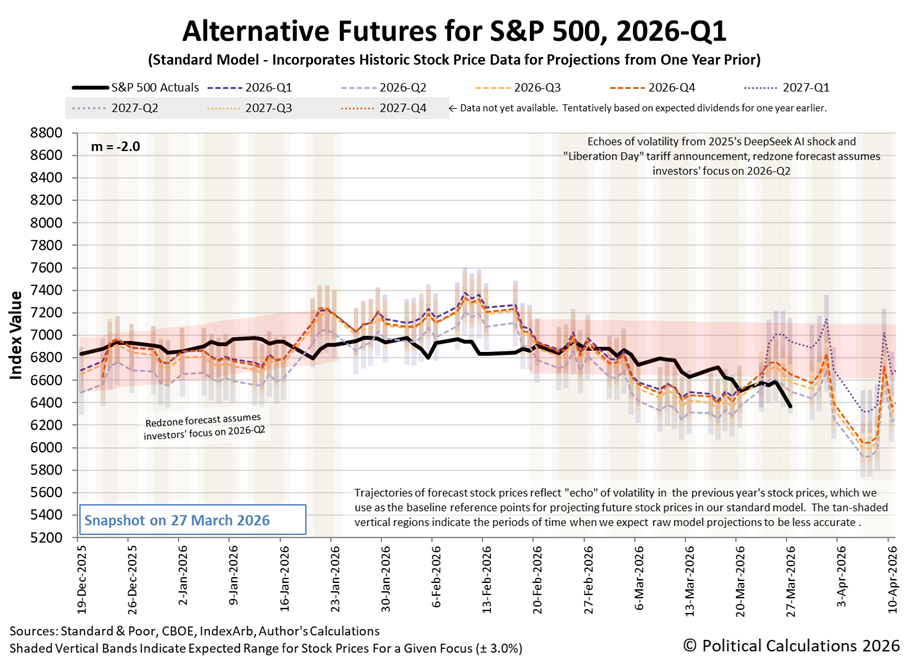
Through the close of trading on 27 March 2026, the S&P 500 is about 7.3% below that level.
Here are the week's market moving headlines:
Monday, 23 March 2026
Signs and portents for the U.S. economy:
Fed minions fear inflation, worry about jobs as they debate direction for U.S. interest rates:
Bigger trouble, stimulus developing in China:
BOJ minions not getting the inflation they want, but still want to hike rates:
Bigger trouble developing in Eurozone, ECB minions claim they'll snap into action if they think they need to fight inflation:
Stock market ends higher as Trump says deal with Iran could be soon
Tuesday, 24 March 2026
Signs and portents for the U.S. economy:
Bigger trouble, stimulus developing in China:
BOJ minions not sweating small contributors to inflation:
Bigger trouble developing in Eurozone:
Wall Street ended lower as Iran tensions weighed on market sentiment
Wednesday, 25 March 2026
Signs and portents for the U.S. economy:
Fed minions thinking they've set interest rates just right for now, report they're losing less money:
Bigger trouble, stimulus developing in China:
U.S. equities closed higher on talks of a possible U.S.-Iran peace plan
Thursday, 26 March 2026
Signs and portents for the U.S. economy:
Fed minions thinking about maybe cutting rates later in 2026, but are less likely to do so:
Bigger trouble, stimulus developing in China:
BOJ minions excited to see higher inflation developing in Japan:
ECB minions standing by to maybe change their perfect monetary policy:
Nasdaq dropped more than 2% as investors react to rising Middle East tensions
Friday, 27 March 2026
Signs and portents for the U.S. economy:
Fed minions worried about inflation arising from Iran war, even though their crystal ball is foggy:
Bigger trouble, stimulus developing in China:
BOJ's former chief minion still excited about more interest rate hikes in Japan:
ECB minions stay they're ready to keep standing by as long as they can before raising Eurozone interest rates:
Dow tumbles almost 800 points and enters correction, S&P 500 posts fifth straight losing week
The Atlanta Fed's GDPNow tool forecast of real GDP growth in 2026-Q1 fell to +2.0%, declining from the +2.3% growth anticipated a week earlier.
The upcoming trading week will be short with the Good Friday market holiday on tap.
Comments
Log in or sign up to join the conversation.