

No one has mentioned this yet, but let’s get ahead of the question. Since we’re in the thick of the presidential election campaign and ideas we might call “original” are starting to pour in, it’s best to take the initiative.
Let’s consider, for example, the proposal put forward by Jean-Luc Mélenchon — and also supported by several economists — which involves canceling the portion of the national debt held by the European Central Bank (ECB), specifically by the Bank of France (20% of the total debt), as part of quantitative easing during the COVID-19 pandemic, though this policy had actually begun with the subprime crisis and the Greek debt crisis. This debt was acquired by the Bank of France, which is 100% owned by the government. It is, therefore, in a sense, money that the government owes to itself. Consequently, from a purely accounting standpoint, it might be tempting to write it off with the stroke of a pen — even if the ECB would oppose it. The Bank of France would then record a loss, but a central bank can operate with negative equity.
The real risk lies elsewhere: trust. Because if it’s that easy, why not do it again? Let’s create new debt, have the Bank of France buy it all up, and in a few years, write it off again! The printing press would then be running at full speed, inflation could skyrocket, and foreign investors might flee French debt, causing interest rates to soar.
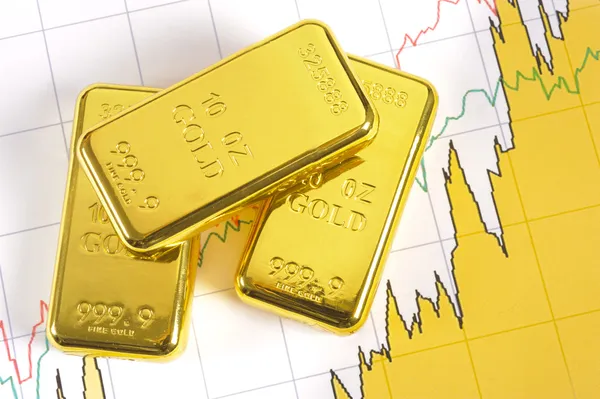
From there, it’s only a short step before a candidate proposes selling the Bank of France’s gold reserves to repay — at least in part — the public debt. So let’s answer that right away (spoiler: the answer is no).
We must remain vigilant. In 2019, we had reported a risk that Sylvie Goulard — a former minister who had been promoted to deputy governor — might call into question the sanctity of the Bank of France’s 2,437 metric tons of gold, in connection with an agreement signed with J.P. Morgan. The gold was then to be “mobilized” to back gold-for-currency swaps and gold leasing transactions. There hasn’t been much talk of this since then, and Sylvie Goulard has left the institution.
At current prices, these 2,437 metric tons of gold are worth approximately 300 billion euros — less than one-tenth of the public debt, which stands at 3,536 billion euros. Selling the gold would therefore have only a limited impact on total debt. This argument alone should be enough to consign the idea to oblivion.
But other arguments can be made. The government simply does not have the right to “dip into the central bank’s balance sheet to cover its deficits. Such an operation would constitute direct financing of the government by the central bank — the modern equivalent of “printing money” — a practice strictly prohibited by Article 123 of the Treaty on the Functioning of the European Union,” as explained by La Tribune.
Furthermore, the article continues, “such a sale would be interpreted by international investors as an admission of financial distress. The French risk premium would immediately skyrocket on the bond markets, raising the yield on new OAT auctions and correspondingly increasing the cost of interest payments.” The debt burden would then strangle France even further, as we recently explained.
And we wholeheartedly agree with the rest of the article: “Physical gold is a sovereign asset with no counterparty risk. It does not depend on the solvency of any foreign government or any third-party banking system. In times of major geopolitical crisis, hyperinflation, or global monetary instability, the precious metal remains the internationally recognized ultimate safeguard. Separating the country from its strategic assets would destroy its creditworthiness abroad and its ultimate safety net in the face of global financial upheavals. Selling the Bank of France’s gold would essentially amount to liquidating the family jewels to pay off a current debt: the move would do nothing to resolve the structural deficit in public finances, while depriving the nation of its sovereign guarantee.”
In short, this idea is as foolish as selling the Mona Lisa or the Eiffel Tower to reduce public debt. Come up with something else, ladies and gentlemen, candidates!


Comments
Log in or sign up to join the conversation.