


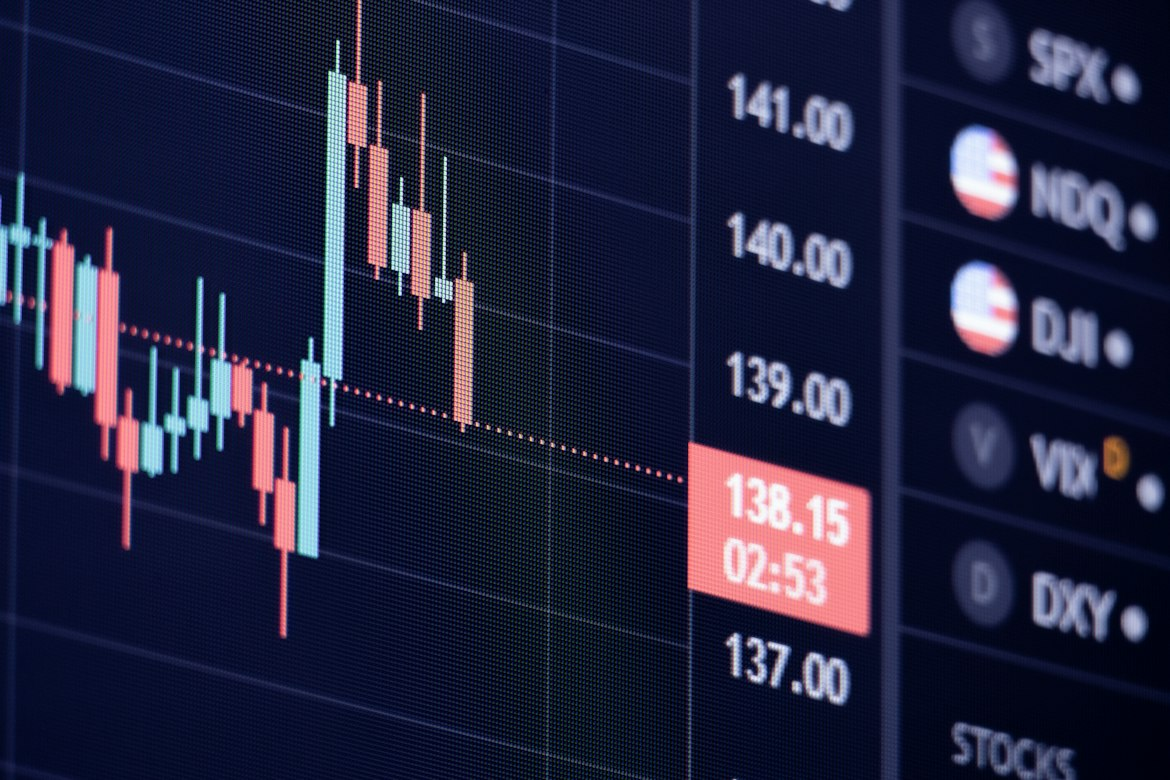
Photo by Jason Briscoe on Unsplash
Although the benchmark indices opened lower, they traded negatively throughout the session and ultimately closed red.
Indian equity benchmarks, Sensex and Nifty50, settled off lower as the US-Iran conflict intensified.
At the closing bell, the BSE Sensex closed lower by 1,836 points (down 2.4%)
Meanwhile, the NSE Nifty closed 601 points lower (down 2.6%)
HCL Tech, Power Grid Corp, and Tech Mahindra are among the top gainers today.
Trent, Titan Company, Bharat Elec, on the other hand, were among the top losers today.
The GIFT Nifty was trading at 22,845, lower by 291 points at the time of writing.
The BSE 150 Midcap index is trading 3.8% lower, and the BSE 250 Smallcap index is trading 3.8% lower.
Sectoral indices are trading negatively today, with stocks in the realty sector and metal sector witnessing selling pressure.
The rupee is trading at Rs 94 against the US$.
Gold prices for the latest contract on MCX are trading 7% lower at Rs 134,355 per gram.
Meanwhile, silver prices were trading 8% lower at 2,06,884 per 1 kg.
Six reasons why Indian share markets are falling:
#1 High Oil Prices:
Brent crude is trading near $113 per barrel due to supply concerns. This is negative for India as it increases inflation, weakens the rupee, and puts pressure on the overall economy.
#2 Foreign Investors Selling:
Foreign portfolio investors (FPIs) are continuously selling Indian equities due to global uncertainty. This ongoing selling is weakening market sentiment and adding pressure on stock prices.
#3 Market Volatility Rising:
India VIX has surged sharply, indicating higher fear and uncertainty among investors. This usually leads to sharp market swings and increased selling pressure.
#4 Global Tensions:
Rising tensions between the United States and Iran are increasing concerns about disruptions in the global oil supply. The uncertainty around the situation is keeping markets on edge.
#5 Weak Global Markets:
Stock markets across Asia and the US have declined sharply, signaling weak global sentiment. This negative trend is also affecting Indian markets.
#6 Rupee Weakness:
The Indian rupee has fallen to a record low against the US dollar. This decline is driven by high oil prices, foreign outflows, and weak domestic equities.
Union Bank Bond Issue Sees Strong Demand
State-owned Union Bank of India raised Rs 30 billion (bn) by issuing long-term bonds to investors through a private deal on March 20, 2026.
The bank had planned to raise Rs 30 bn, with an option to increase it up to Rs 75 bn, but it finally accepted only Rs 30 bn.
The bonds offer an interest rate of 7.16% per year and were highly in demand; investors placed bids worth about Rs 93.8 bn, which is more than 3 times the amount the bank wanted.
Out of 48 bids received, only 14 were accepted. The bonds will be officially allotted on March 24, 2026.
The money raised will be used to fund infrastructure projects and affordable housing.
Tata Motors Hikes PV Prices From April
Tata Motors Passenger Vehicles (TMPV) said it will increase car and SUV prices from 1 April 2026.
The price hike is mainly to deal with the rising costs of raw materials and parts. On average, prices for petrol and diesel (ICE) vehicles will go up by about 0.5%, but the exact increase will depend on the model.
The company said this step is needed to continue production smoothly and maintain quality despite higher costs.
Earlier, Tata Motors had also announced up to a 1.5% price increase for commercial vehicles starting April 1 for the same reason.
This is not just one company; many automakers are raising prices.
Overall, car prices are going up across the industry because of higher input costs, global commodity price changes, and economic uncertainty.
Comments
Log in or sign up to join the conversation.