

Asian shares are trading on a mixed note today. The Nikkei 225 is down 0.26% while the Shanghai Composite is trading up by 0.17%.
Back home, India share markets opened the day marginally higher. The BSE Sensex is trading up by 24 points (up 0.1%) while the NSE Nifty is trading up by 7 points (up 0.1). The BSE Mid Cap index is trading up by 0.1%, while the BSE Small Cap index is trading up by 0.2%.
Sectoral indices have opened the day on a mixed note with healthcare stocks and realty stocks witnessing maximum buying interest.
The rupee is trading at 71.91 to the US dollar.
Bharti Infratel share price will be in focus today as the company yesterday announced that its consolidated revenue, including that from Indus Towers, is expected to take a hit of around Rs 7.8 billion on annual basis, due to the exit of Vodafone and Idea Cellular from co-located mobile towers.
In the news from global financial markets, US President Donald Trump yesterday said that the United States was not yet ready to come to an agreement over trade disputes with China.
However, as per a leading financial daily, Trump said the trade talks would continue.
Note that last month, the Trump administration announced to impose 25% tariffs on imports of 279 items from China amounting to US$ 16 billion.
Both the countries have now slapped tariffs on US$ 50 billion of each other's goods in a tit-for-tat trade war, and Trump is considering imposing tariffs on another US$ 200 billion in Chinese imports. The US Trade Representative said that the move is a part of the US' response to China's unfair trade practices related to the forced transfer of American technology and intellectual property.
How this trade war pans out remains to be seen.
In the news from currency markets, the Indian rupee extended downtrend for the sixth consecutive session on Wednesday and hit yet another closing low of 71.75 against the US dollar.
Losses were seen on the back of rising crude oil prices and a weak trend in emerging financial markets.
The domestic currency also hit its intraday historic low of 71.97 against the dollar yesterday.
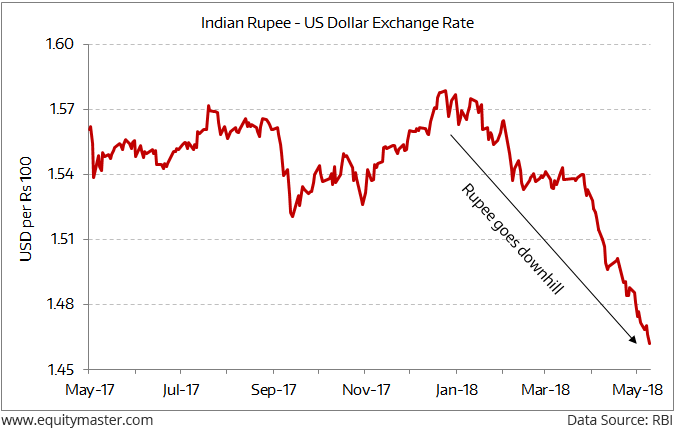
Note that the rupee has been witnessing selling pressure against the US dollar since the start of this calendar year. This is evident from the chart below, which shows the quantum of US dollars a 100-rupee note can buy and how this rate has been declining over the past few months:
Indian Rupee in a Steep Decline
What does the fall in rupee mean for the Indian economy?
A depreciation in rupee means importers buying goods and services at a higher rate than earlier. This doesn't bode well for a developing economy that relies heavily on imports.
Also, India imports most of its oil requirements. So, a fall in rupee leads to a consequent rise in the import bill. The depreciation of the rupee will also add to crude oil's rising cost.
On the corporate side, companies who have taken foreign loans from abroad will be impacted. The repayment obligations in terms of principal and interest will rise, leading to a dent in the cash flows and financials.
Further, companies who import a majority of their raw material requirements will get impacted provided they have not hedged their foreign currency exposure.
Looking at the brighter side, rupee depreciation brings a cheer on the exports front.
A depreciating rupee will provide a much-needed cushion to falling exports. However, a falling rupee will not be the only factor to boost exports. There are certain structural issues too which the government needs to address.



Comments
Log in or sign up to join the conversation.