

Indian share markets continued to witness volatility during the closing hours of the trading session and ended the day on a flat note. Gains were largely seen in the consumer durables sector and metal sector, while energy stocks and telecom stocks witnessed selling pressure.
At the closing bell, the BSE Sensex stood lower by 26 points (down 0.1%) and the NSE Nifty closed higher by 2 points. Both, the BSE Mid Cap index and the BSE Small Cap index, ended the day down by 0.2%.
Asian stock markets finished on a positive note as of the most recent closing prices. The Hang Seng stood up by 1.5% and the Nikkei was trading up by 0.7%. The Shanghai Composite stood higher by 2.7%.
European markets were also trading on a positive note. The FTSE 100 was up by 0.88%. The DAX, was up by 0.89% while the CAC 40 was up by 0.77%.
The rupee was trading at 68.67 to the US$ at the time of writing.
In the news from macroeconomic space, the government in a statement today said that India has doubled the import tax on 328 tariff line of textile products from the existing 10% to 20%. The tariff has been raised under Section 159 of the Customs Act, 1962.
The above move is aimed at boosting the manufacturing of these items in domestic markets.
The above development will provide the much-needed relief to the domestic textile industry which has been hurt lately by rise in imports of certain products. It will also help create jobs in the domestic textile sector. This is also the second time in a month where the duty on fabric-related commodities has been increased.
Note that the government had last month doubled import duty on over 50 textile products including jackets, suits and carpets to 20% to promote domestic manufacturing.
What effect this increase in the import tax have on textile companies as well as textile stocks remain to be seen. Meanwhile, we will keep you updated on all the developments from this space.
In the news from pharma sector, Glenmark Pharmaceuticals share price was in focus today as the company said its partner Elite Pharmaceuticals Inc has received approval from the United States Food and Drug Administration (USFDA) for generic opioid analgesic methadone hydrochloride tablets used for the treatment of severe pain.
The company in a statement said that the abbreviated new drug application (ANDA) approval by the USFDA is for the tablets in the strengths of 5 mg and 10 mg and Glenmark Pharmaceuticals Inc, Elite's marketing alliance partner, will sell and distribute methadone for which Elite will receive manufacturing and license fees.
At the closing bell, Glenmark Pharmaceuticals share price stood down by 1.6% on the BSE.
Speaking of drug approvals, Indian pharma companies catering to the US markets are breathing a sigh of relief. After being adversely affected by import bans and the suspension of new drug approvals from manufacturing facilities in the past three years, there has been a sharp pick-up in new drug approvals in FY17.
Generic Drug Approvals Hit the Roof
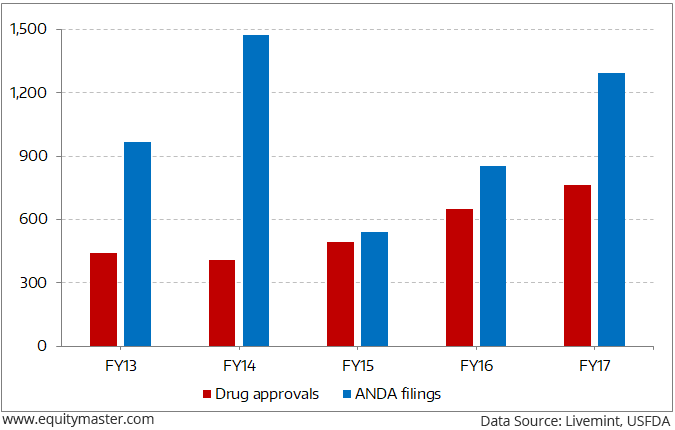
Even the total filings of abbreviated new drug applications (ANDAs) for generic drugs rose to 1,292 in FY17 from 852 in FY16. While faster approvals expedite the commercialization of product pipelines of domestic pharma companies spurring growth, at the same time, however, it has raised the intensity of competition resulting in pricing pressures. The price erosion has been further compounded by a consolidation among US distributors and the decline in the number of products going off-patent over the past few years.
In other words, acceleration in generic drug approvals is like a double-edged sword. The growth boost can be quickly offset by the ensuing pricing pressures. Pharma companies that invest in creating a pipeline of complex generics or building competencies in alternative dosage forms are better equipped to tackle the changing dynamics in the US generics market.


Comments
Log in or sign up to join the conversation.