

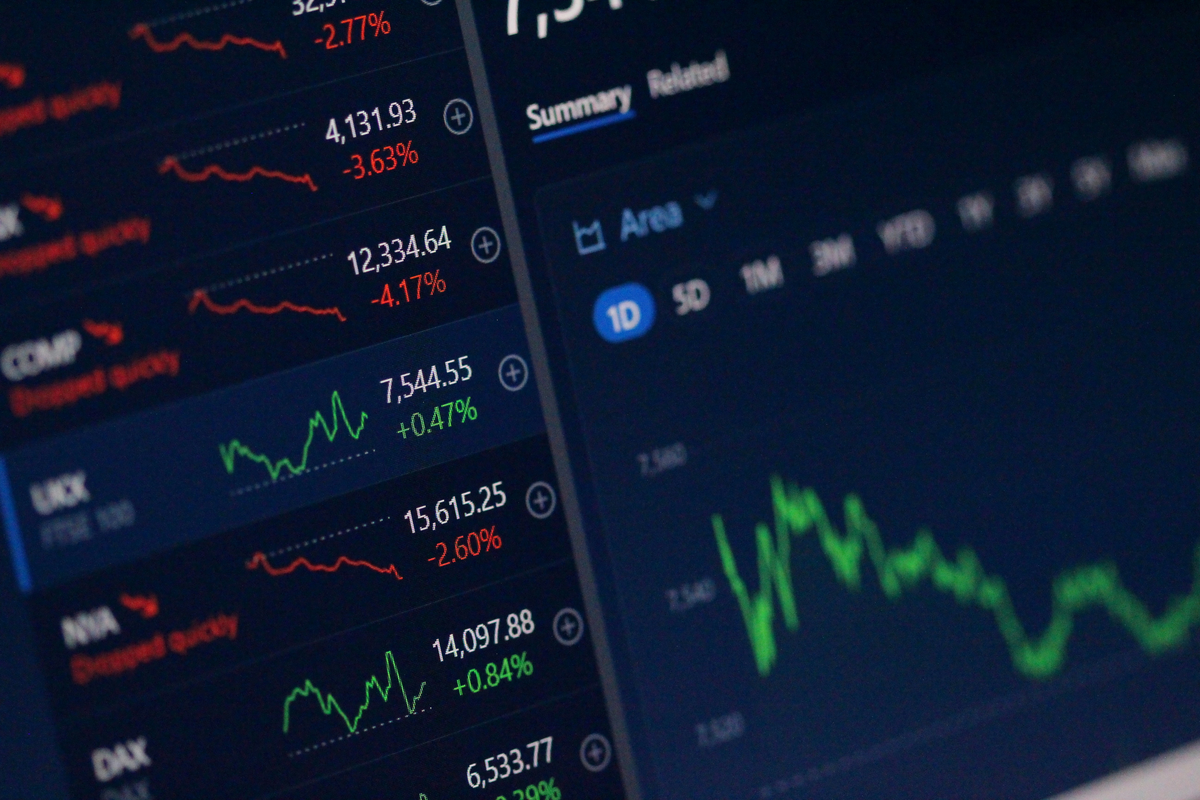
After opening the day in the green, share markets in India witnessed volatile trading activity throughout the day and ended the day on a negative note. Sectoral indices traded on a mixed note, with stocks in the banking sector and stocks in the pharma sector, leading the losses.
At the closing bell, the BSE Sensex stood lower by 216 points (down 0.6%) and the NSE Nifty closed down by 55 points (down 0.5%). The BSE Mid Cap index ended the day down 0.4%, while the BSE Small Cap index ended the day down by 0.3%.
The rupee was trading at Rs 67.80 against the US$ in the afternoon session. Oil prices were trading at US$ 75.75 at the time of writing.
Asian stock markets too finished in red. As of the most recent closing prices, the Hang Seng was down by 1% and the Shanghai Composite was down by 0.5%. The Nikkei 225 was down by 1.2%. Meanwhile, European markets, were trading on a negative note. The FTSE 100 was down by 1.7%, The DAX, was down by 1.4% while the CAC 40 was down by 1.2%
Infra lender recovered over Rs 2.8 billion from the debt-ridden Bhushan Steel, recently acquired by Tata Steel under the insolvency process. ICFI has also been allotted 579,000 shares of Bhushan Steel.
IFCI was one of the creditors of Bhushan Steel, and has been allotted the shares after it filed its claim with the resolution professional appointed under the Insolvency and Bankruptcy Code (IBC).
India Lags in Resolving InsolvenciesThe company, however, did not share the total outstanding amount. In June last year, RBI's internal advisory committee (IAC) identified 12 accounts, each having more than Rs 50 billion of outstanding loans and accounting for 25 per cent of total NPAs of banks. Tata Steel had won the bid to acquire debt-laden Bhushan Steel in an insolvency auction, and the process reached its fruitful end, showcasing the success of the IBC. However, there's a lot to build on this success.

Last year, India jumped up 30 places and into the top 100 on the World Bank's 'ease of doing business' index.
However, when it comes to resolving insolvency, India's rank is still low at 103, much below our neighboring countries.
On both factors (i.e. recovery rate and the time to resolve a bankruptcy), India is slower than even its poorer neighbors.
However, going forward, the IBC framework will change India's position as it is a time-bound process.
Cases once admitted are to be resolved within 270 days; if not, companies go into liquidation.
We already had a taste of success with the successful conclusion of the Bhushan steel case.
Enthused by this success, the finance ministry expects banks to write back more than Rs 1 trillion after the resolution of all 12 big NPA cases that have been referred for insolvency proceedings by the RBI.
We believe this can be a big boon for the banking sector and the Indian economy. This will not only help banks recover bad loans to an extent but also help bring back credit growth.
Moving on to news from the telecom sector. Telecom regulator, Telecom Regulatory Authority of India (TRAI) plans to implement the blockchain technology to eliminate spam calls and messages.
TRAI has proposed regulations that plan to use blockchain technology to safeguard the privacy of telecom consumers and also track offending telemarketers engaging in unsolicited commercial communications (UCC).
The draft regulations propose that explicit consent should be taken from a consumer regarding UCC and the consent should be reviewed periodically.
There will be various methods to take the consent and TRAI is currently deliberating those. Stakeholders can submit their comments on the draft rules by June 11 after which the authority give will the final regulations
Despite the earlier regulations from TRAI which were in place, the menace of UCC was not checked. The latest phenomenon of fraudulent calls relating to financial deals like buying of shares has created another headache for telecom consumers.
TRAI now seeks to leverage blockchain technology to offer a faster and efficient process to deal with the UCC problem. However, it did not explicitly define how exactly it plans to use blockchain technology.
Speaking of blockchain...
Corporations and Governments around the world are not only warming up to the blockchain technology but are racing to adopt it in their processes. The blockchain revolution is just around the corner, and you wouldn't want to miss out.
And here's a note from Profit Hunter
Mahindra and Mahindra Financial (M&M Fin) is among the most active stock in the market today - down 6%. Let's have a look at its chart.
The stock bottomed out at 173 in February 2016 with the border market indices. Since then, it has been trading in an uptrend. It touched a new lifetime high of 405 in October 2016. After the government rolled out the demonetization plan, the broader markets faced a decent correction. At that time, M&M financial plunged nearly 40% from its October 2016 high.
However, the stock resumed its up-move after touching the low of 244 in December 2016. It traded in a smooth uptrend tracking the rising trendline and touched a new lifetime high of 534 in April 2018. It corrected for a while and found a strong support near 450 level from the rising trendline and horizontal support line (previous resistance now support).
But the stock did not make a new life high and today, it is down 6%.
So does this indicate that the stock will now break the rising trendline and start a new downtrend? Let's wait and watch...
M&M Finance Plunged 6% for the Day
(Click on image to enlarge)

Comments
Log in or sign up to join the conversation.