

- Shutdown optimism lifts early market sentiment
- Tech strength drives gains in major indexes
- Semiconductor rally boosts investor morale
- Valuations high, caution urged by analysts
The S&P 500 index advanced in early trading as investors focused on two key drivers: optimism over a potential resolution to the government shutdown and renewed strength in major technology and mega-cap earnings.
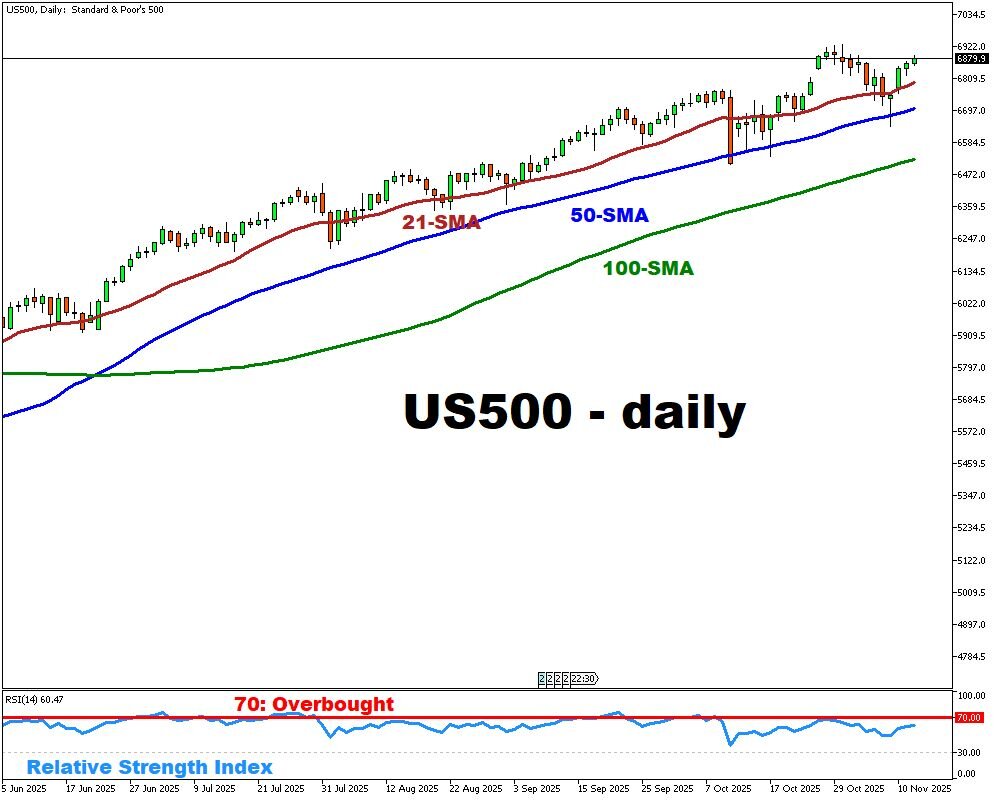
The benchmark rose about 0.2%, supported by solid gains across leading technology names. Semiconductor shares led the advance, with AMD shares jumping around 5% after forecasting faster-than-expected sales growth.
Market sentiment was buoyed by signs that the prolonged government shutdown could soon end, as lawmakers prepared to vote on a funding deal to restore federal operations.
The prospect of political progress, coupled with broadly positive corporate results, reinforced confidence across equity markets and lifted investor appetite for risk assets.
Still, a note of caution remains. Valuations across the broader market remain elevated, and several strategists have warned of the potential for short-term pullbacks. The rally driven by enthusiasm for artificial intelligence and high-growth sectors also faces growing scrutiny as investors assess the durability of recent gains.
Overall, with constructive legislative developments and resilient earnings momentum, the US500 appears well-positioned in the near term.
However, persistent macroeconomic uncertainties and lofty valuations suggest that maintaining a measured stance may be prudent as markets navigate the next phase of recovery.
More By This Author:
This Week: GBPUSD, EURUSD & CHINAH Index In Focus
XAUUSD Climbs On Rate-Cut Odds
Silver Shift: Safe-Haven Flow Meets Dollar Drag



Comments
Log in or sign up to join the conversation.