


At 8.2%, Romania’s CPI inflation eased less than expected in July, as elevated energy prices and persistent services inflation continued to weigh on the disinflation process. We revise our year-end inflation forecast from 6.00% to 6.50%.
Pockets of upside pressure remain
Non-food and services inflation came in firmer than we had expected at 7.9% and 13.7%, respectively. Electricity prices picked up 4.4% on the month, similar to the diesel fuel increase. Within services, airfares and TV subscriptions stood out, rising by 18.7% and 5.2%, respectively, likely reflecting a delayed FX pass-through. More importantly, underlying price pressures remain remarkably broad-based. Services inflation continues to display widespread stickiness despite a marked slowdown in wage growth during the first half of the year, suggesting that disinflation on the domestic side remains slow and uneven.
Wage growth points to weak demand
The wage data released today reinforces the picture of subdued domestic demand. Average net earnings grew by just 3.5% year-on-year in June, while growth averaged 3.7% during the first half of 2026, a significant moderation compared with previous years.
The continued weakness in wage dynamics points to ongoing softness in household consumption and is consistent with a wider negative output gap. This aligns with the National Bank of Romania's latest assessment that the aggregate demand deficit has widened further amid stagnating economic activity and weakening household consumption, adding to medium-term disinflationary pressures from the demand side.
That said, the 6.8% increase in the minimum wage effective from 1 July 2026 should help stabilise wage growth in the coming months. While unlikely to fundamentally alter the macroeconomic landscape, the minimum wage increase could help draw a line under the recent weakness in household consumption, supporting a stabilisation in retail sales, and potentially sowing the seeds of a gradual recovery in consumer demand.
What lies ahead
August is likely to mark another sharp decline in headline inflation, with favourable base effects expected to bring inflation to somewhere around 6.5%. After that, inflation should broadly plateau before resuming a gradual downward path in 1Q27. That said, the improving headline profile somewhat masks the fact that underlying inflation pressures remain persistent. Continued volatility in energy markets, uncertainty over oil supply and prices, and the effects of this year's severe drought are adding to upside inflation risks while simultaneously posing headwinds to economic growth.
Consumer price index (YoY, %) and components (ppt)
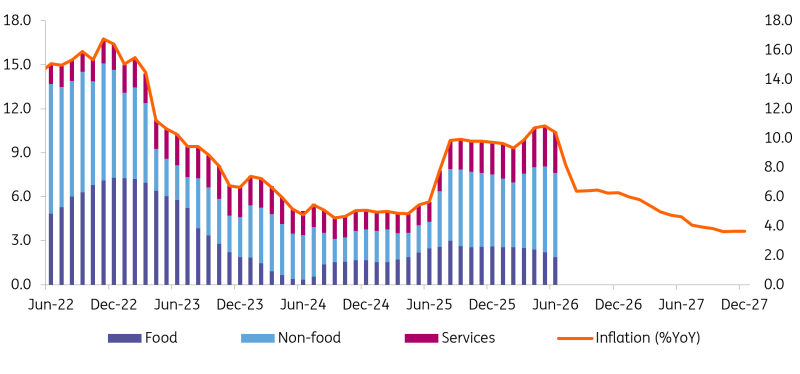
From a medium-term perspective, however, the disinflationary effects of weak aggregate demand should become increasingly visible. With economic growth having remained in negative territory on an annual basis for some time and domestic demand depressed, demand-side fundamentals should gradually reassert themselves as a key driver of lower inflation.
Monetary policy implications
We expect the National Bank of Romania to continue to highlight both sides of the stagflationary narrative in its communication and statements. On the one hand, the weak growth backdrop would justify easier monetary conditions. On the other, supply side inflation shocks and the risks associated with possible global risk-off driven outflows in the presence of Romania’s still large macro imbalances, leave little room for near-term easing. We continue to expect a first rate cut of 25bp at the January 2027 meeting, with a total of 100bp of rate cuts through the year.



Comments
Log in or sign up to join the conversation.