


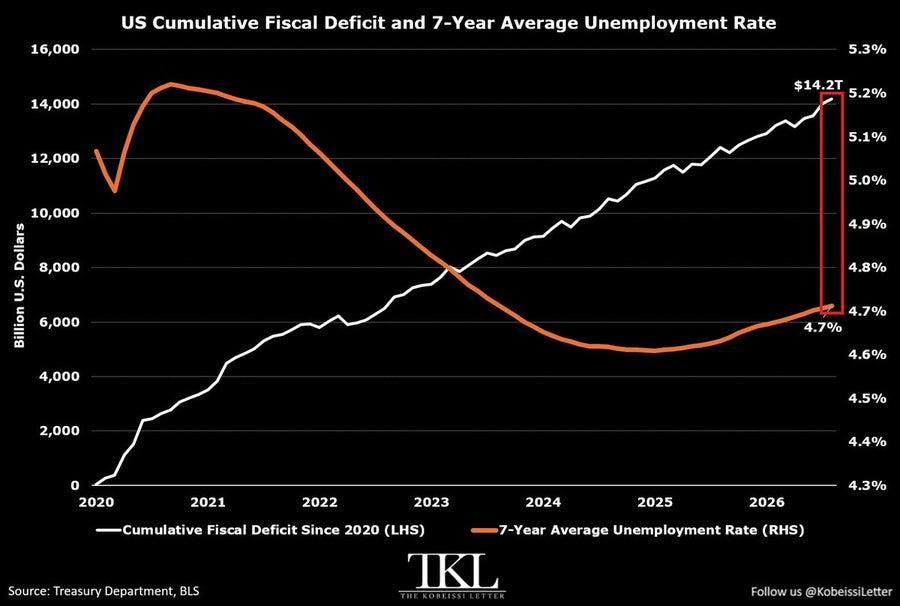
Back when fiscal policy was rational, a low unemployment rate meant a shrinking deficit, as gainfully employed workers paid taxes and didn't draw on social safety net programs.
But those days are apparently over, as US debt surges despite low unemployment.
Since 2020, the cumulative US deficit has been a massive $14.18 trillion, while the 7-year average unemployment rate has fallen dramatically. In other words, we’re now running a structural $2 trillion annual deficit, regardless of how many of us are working.
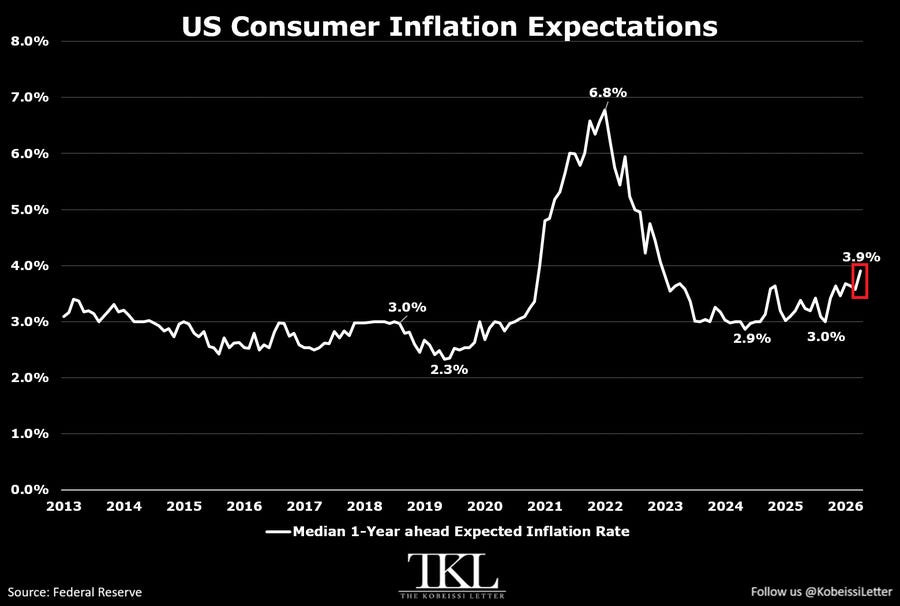
4% Inflation?
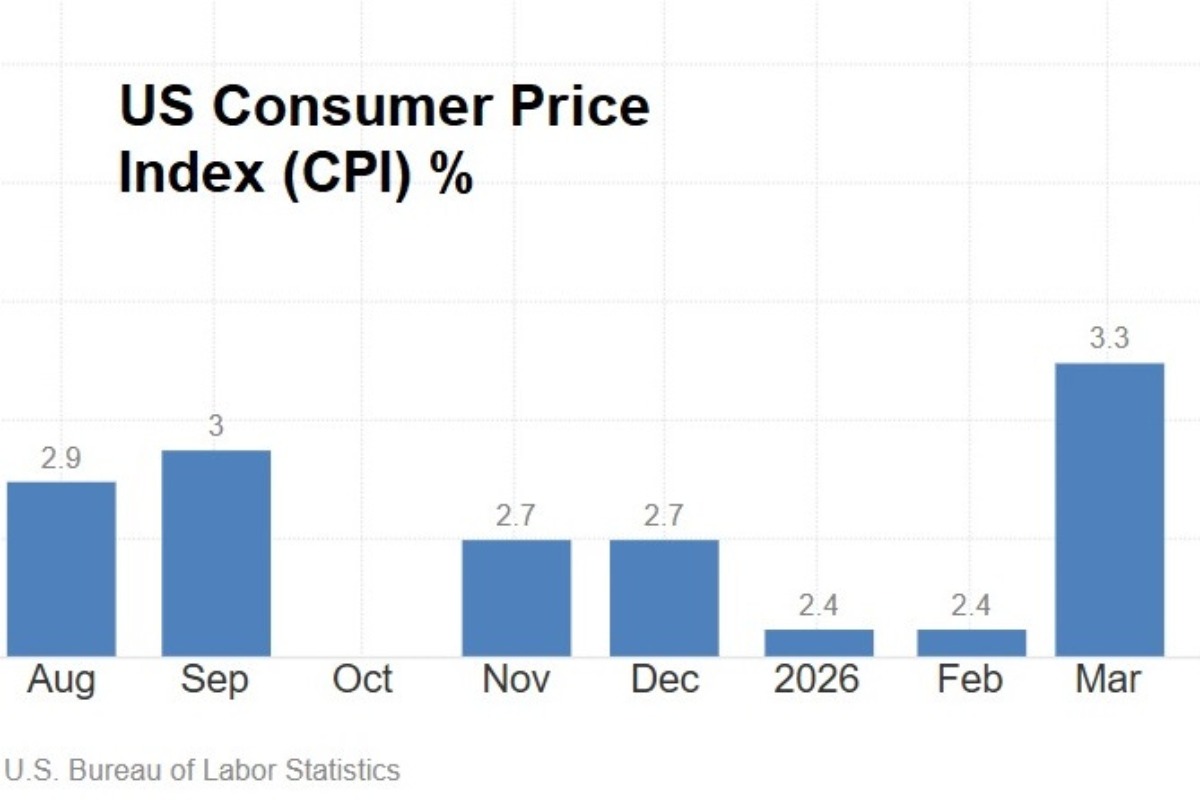
Consumers are doing the above math, and now foresee inflation running at twice the Fed’s target rate:
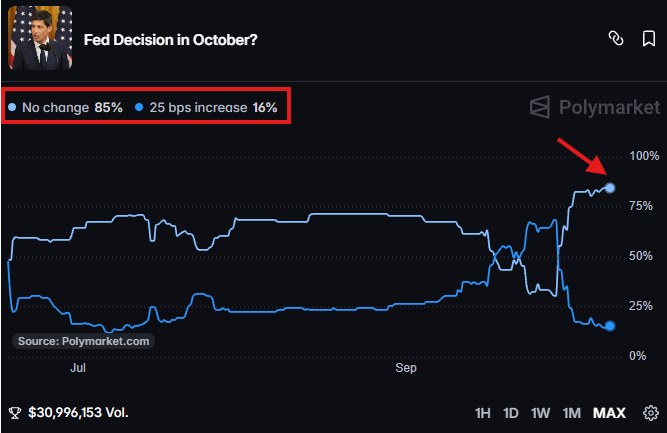
So the Fed Raises Rates, Right?
With near-record deficits and rising inflation expectations, someone should probably rein in this financial system. If not fiscally, with spending cuts and tax increases, then via monetary policy, with a higher Fed Funds rate.
Nope. The odds of the Fed standing pat in October are now 85%.
The result: A US economy on autopilot, dependent on a tech bubble, an increasingly chaotic Middle East war, and crisis-level fiscal deficits. I’m sure everything will be fine.
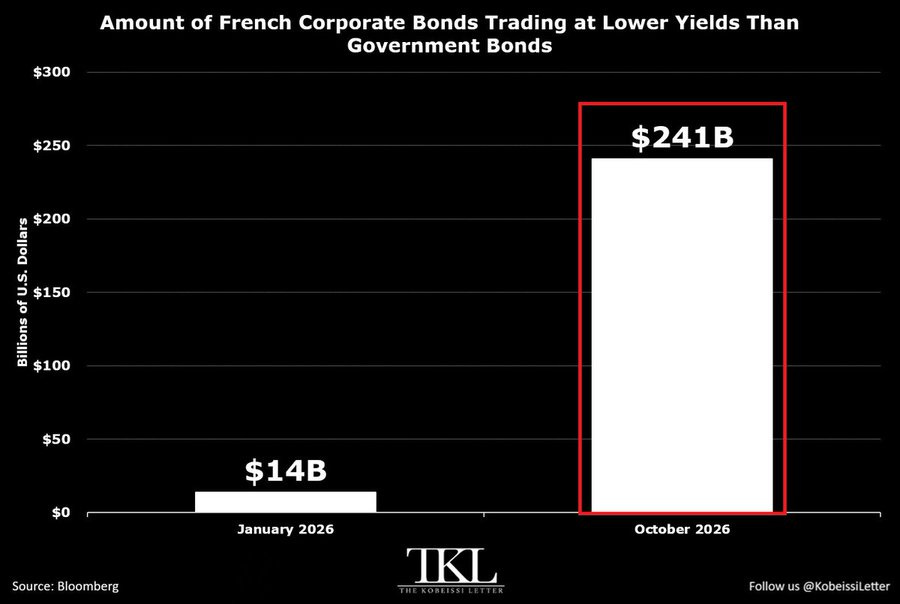
Meanwhile, Over In Europe…
38% of French corporate bonds are now trading at lower yields than French government bonds. The implication is that civil unrest and out-of-control fiscal deficits make French government paper a suddenly very bad bet.
China Looks Much Smarter
Now contrast the above with China’s recent gold buying.
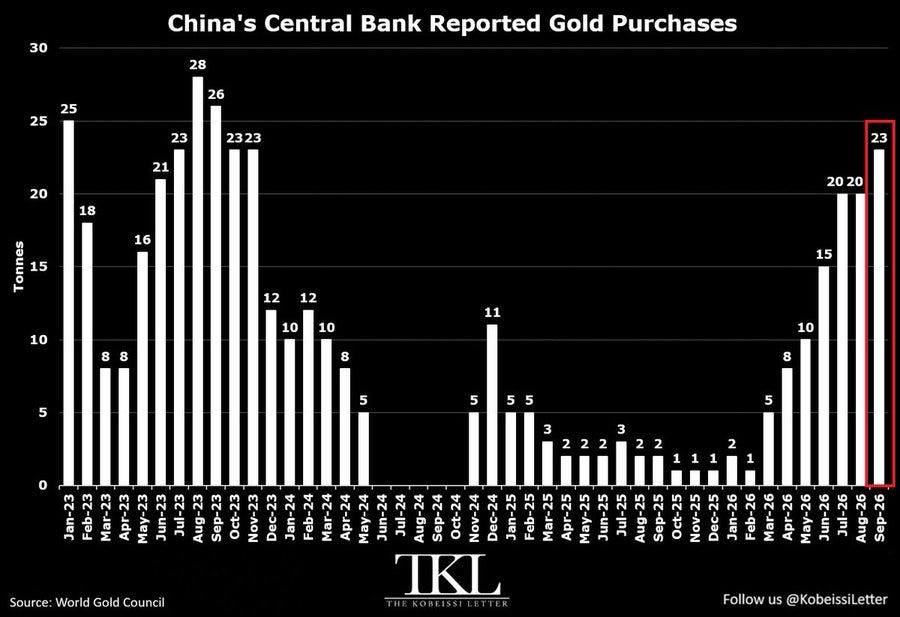
The crucial difference between its 2023 purchases and those of 2026 is price. China paid around $2,000/oz back then and is paying twice as much per ounce today. And it doesn’t seem to care.
So…Monetary chaos in the US and Europe, combined with a deep-pocketed, price-insensitive gold buyer, implies bad times for Western investors who trust their governments, and good times for those who don’t.


Comments
Log in or sign up to join the conversation.