

The Pound Sterling trades lower against its major currency peers, is down 0.22% around 1.3340 against the US Dollar (USD), during the Asian trade on Thursday. The British currency faces selling pressures amid fears that the United Kingdom (UK) economy could face stagflation risks due to higher energy prices, a situation in which inflation accelerates with economic growth and employment conditions remaining stagnant.
Pound Sterling Price Today
The table below shows the percentage change of British Pound (GBP) against listed major currencies today. British Pound was the weakest against the Japanese Yen.
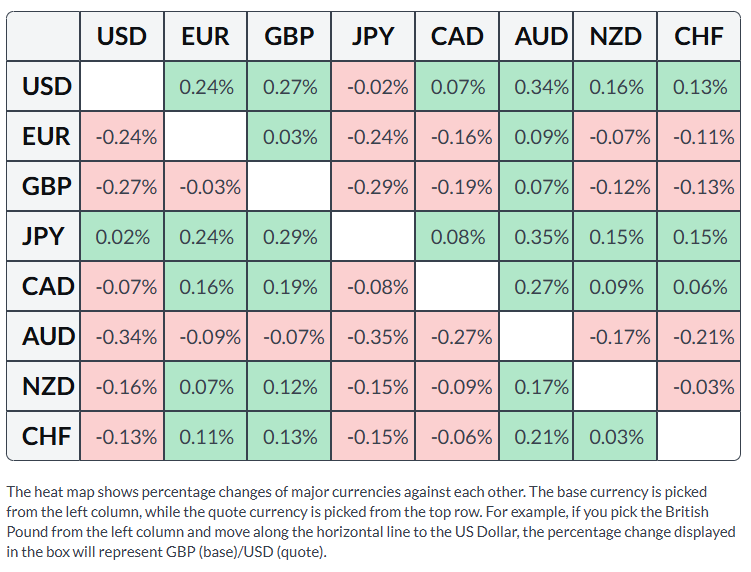
The ongoing war between the United States (US), Israel, and Iran, which has disrupted the global oil supply chain by choking the Strait of Hormuz, has prompted energy prices.
Given that the UK imports a significant chunk of energy to fulfil its needs, rising energy prices could fuel inflationary pressures that are already running above the Bank of England’s (BoE) 2% target for a long period. In January, the UK headline inflation arrived lower at 3% Year-on-Year (YoY).
On Tuesday, the GBP/USD pair rebounded after posting a fresh three-month low of 1.3253, and took its recovery to near 1.3400 on Wednesday. The interim recovery move came as the US Dollar’s rally hit pause after a report from the New York Times (NYT) signaled that Iran has expressed openness to the US Central Intelligence Agency (CIA) to discuss terms for ending the war, which has entered its sixth day.
However, the Pound Sterling seems to be struggling to hold the recovery move against the US Dollar, as the latter could resume its upside journey, following statements from Tehran denying negotiation talks with Washington, with threats of a prolonged war.
Meanwhile, in the US, improving employment conditions are expected to force traders to pare dovish Federal Reserve (Fed) bets. The ADP Employment report showed on Wednesday that the US private sector created 63K fresh jobs in February, significantly higher than 50K estimates and the prior reading of 11K.


Comments
Log in or sign up to join the conversation.