

Headline inflation rose above the National Bank of Poland's target in July but remains within the bounds of acceptable deviations. The upswing was driven by more expensive fuel amid higher VAT rates and a renewed spike in crude oil, but general price pressure remains contained. We see no room for rate changes this year.
Inflation back to 3% again in July
According to Statistics Poland’s flash estimate, CPI inflation accelerated to 3.0% year-on-year in July from 2.5% in June. The main driver was a 13.9% month-on-month surge in fuel prices following the end of the government's fuel price support programme. The standard 23% VAT rate on motor fuels was reinstated at the start of the month, replacing the temporary 8% rate, while fuel price caps were also scrapped. As a result, higher fuel prices are estimated to have added around 0.5-0.6 percentage points to annual inflation compared with June.
July marked the third consecutive month of falling food and non-alcoholic beverage prices on a monthly basis (-0.8% MoM). This contrasts with signals from several eurozone economies, where food prices surprised on the upside. Energy prices increased by 0.1% MoM, most likely reflecting higher prices of LPG and heating fuels.
No signs of broad-based price pressures
We estimate that core inflation excluding food and energy edged up to 3.1% YoY in July, from 3.0% YoY in June. Geopolitical developments and volatile global oil prices have been the main source of inflation fluctuations in recent months, feeding into domestic fuel prices.
Experience from the first phase of the conflict suggests that domestic demand conditions are not strong enough to allow for a broader inflationary impulse. Higher fuel prices have so far had only a selective impact on other components of the inflation basket.
In July, inflation excluding fuel prices remained low at 2.2% YoY, unchanged from the previous month. The latest low readings were supported by the recent fall in food prices. In addition to pronounced seasonal declines in selected fruit and vegetable prices and favourable conditions in some agricultural markets, including meat and dairy products, the latest round of price war among major retail chains has continued to restrain food inflation.
CPI boosted by fuels, but not much more
Consumer prices, % YoY
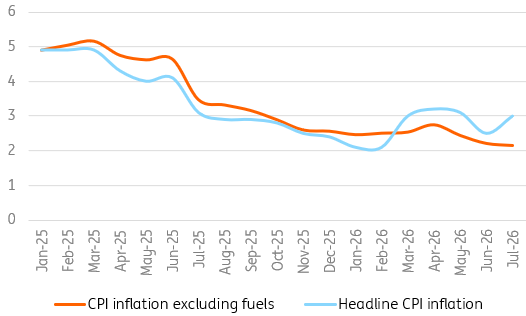
Our baseline scenario assumes that, as in the initial phase of the Middle East conflict, higher fuel costs will have only limited spillover effects on the prices of other goods and services, with no significant second-round inflationary pressures emerging. The key uncertainty remains the duration of the conflict and the associated fuel shock.
The longer fuel prices remain elevated, especially in the absence of meaningful government support measures, the greater the risk that businesses will seek to pass higher costs on to consumers. That said, slowing nominal wage growth and the squeeze on household purchasing power from higher fuel spending should continue to restrain demand and limit the scope for broader price increases.
Interest rate outlook
In the current circumstances, we do not see conditions that would warrant discussions of post-summer monetary easing by the National Bank of Poland. We expect NBP policy rates will remain unchanged by the end of this year. Limited rate cuts may become possible in 2027, provided inflationary pressures remain contained and economic conditions evolve in line with our expectations.



Comments
Log in or sign up to join the conversation.