


The S&P 500 finished down for a fourth straight week, putting the index roughly 7% below its recent high. From a technical standpoint, the market is in oversold territory on both the weekly and daily charts, with momentum readings flashing levels that have historically suggested a bounce is due. There’s a decent setup for a rally early next week—volatility tends to deflate on Monday mornings as over-weekend hedges get unwound—but we saw the exact same thing play out last week, and it fizzled by Tuesday afternoon.
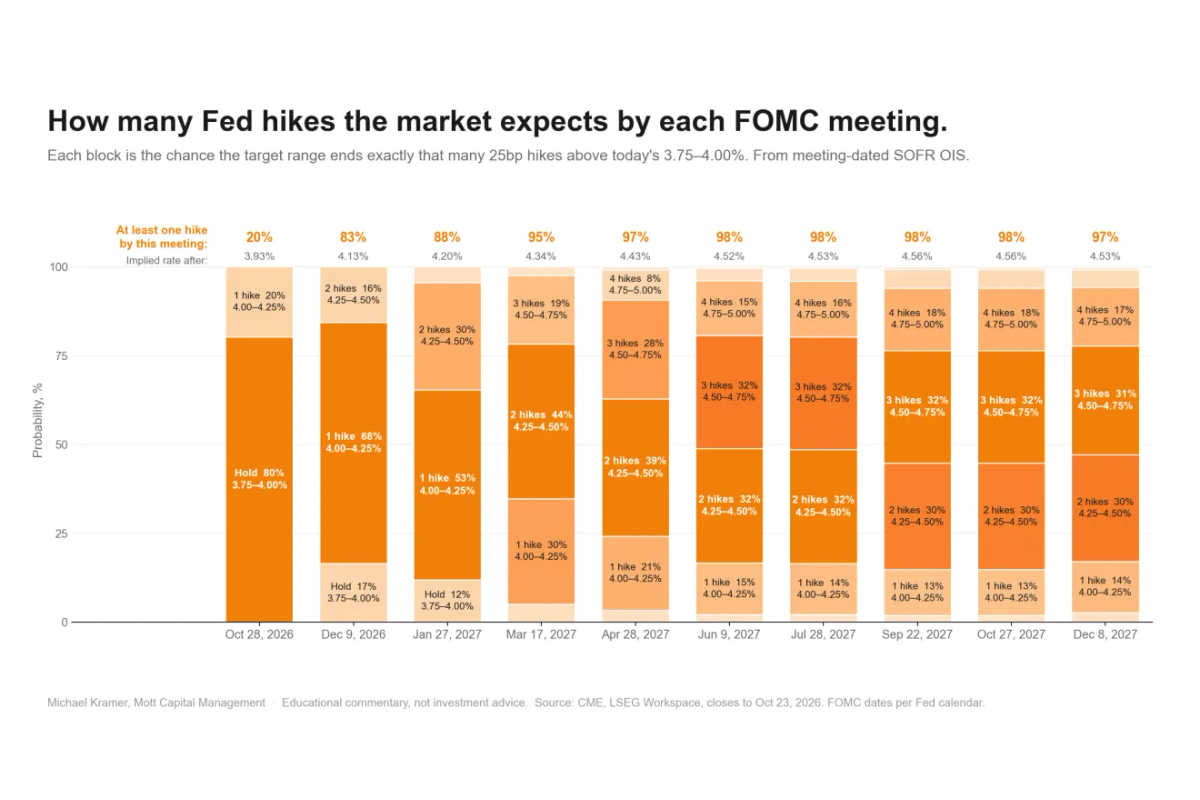
The bigger picture hasn’t changed: oil is driving everything. Crude continues to trend higher, and until that changes, the downstream effects are going to keep pressuring risk assets. Rising oil prices are pushing rates sharply higher across the curve—both here and abroad. Look at what’s happening in Britain, where short-term rates have gone nearly vertical over the past week. Markets are repricing inflation expectations fast, and for good reason.
Gasoline prices have surged dramatically since late February—up over 50%. When you think about how that feeds into CPI calculations, even a rough back-of-the-envelope estimate suggests headline inflation could be heading back toward levels we haven’t seen in a while, potentially approaching the kind of readings that completely take rate cuts off the table. That’s ultimately what’s driving the move in rates, and it’s why the long end of the curve is also climbing back toward levels last seen over the summer.
Financial conditions are tightening across the board. Rising oil, higher rates, a firmer dollar, and—critically—credit spreads starting to widen. Credit spreads are still relatively tight compared to where they got in 2022, and that’s actually the more worrisome part. If they continue to widen toward those prior stress levels, the implied compression in equity valuations could be significant. There’s a lot of room for the market to reprice lower if financial conditions keep deteriorating.
Systematic flows are also starting to shift. Models are suggesting further selling pressure may be building in both equities and treasuries, and these flows don’t care about headlines or oil prices—they just follow the trend. Meanwhile, there’s some options-related positioning that could provide a floor for the market in the near term, at least through the end of March. But once we get into April, that support goes away.
Volatility is elevated but not in a place where it’s necessarily going to collapse. Realized vol is running high enough to keep implied volatility somewhat supported, even if the short-dated measures come in on Monday. The setup is fragile: technically oversold, some flows potentially supportive near term, but the macro backdrop—oil trending higher, rates repricing, credit starting to crack—all argues for caution.
I still think everything revolves around where oil prices are and where they’re going. If crude opens flat to start the week, stocks can probably catch a bid. But if oil takes another leg higher, that’s going to overwhelm any technical bounce. Being oversold is a condition, not a timing mechanism—and in this kind of environment, conditions can stay stretched for a lot longer than people expect.
Video Length: 00:13:20


Comments
Log in or sign up to join the conversation.