

Just last week, I said it could happen here, and lo and behold…
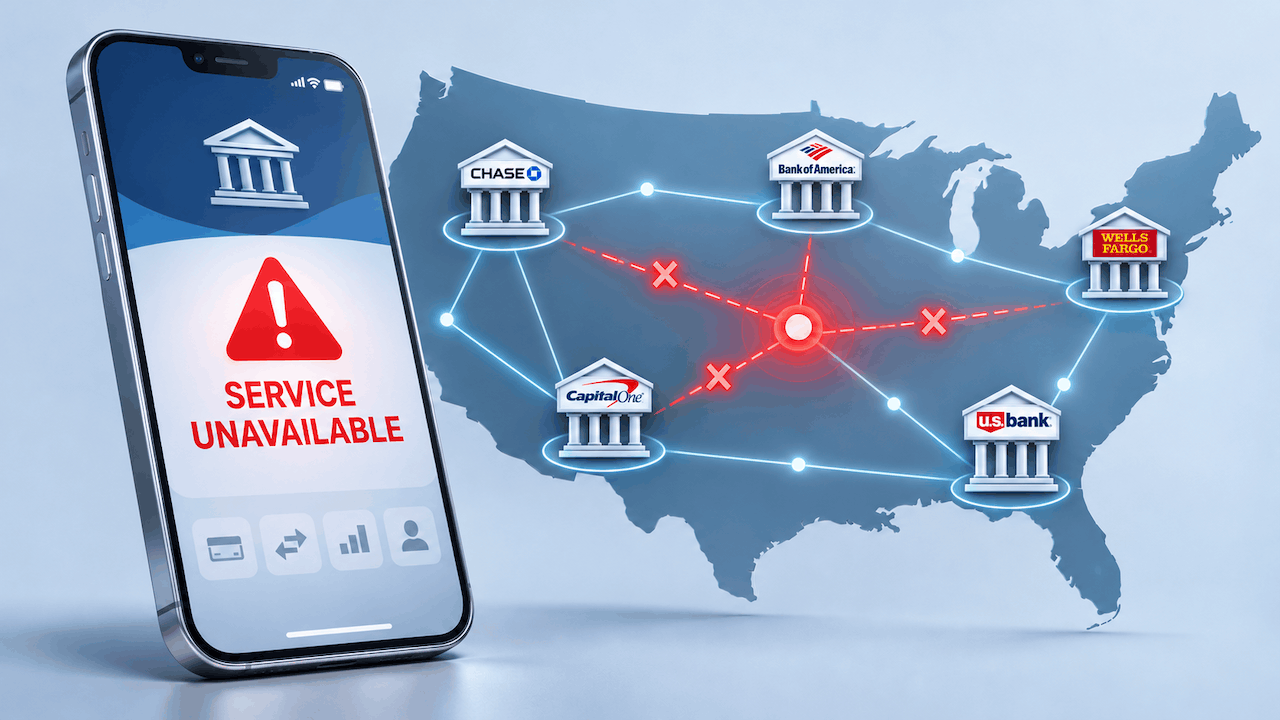
On Monday, thousands of U.S. banking customers found themselves locked out of their accounts. They couldn’t log in, complete transactions, or even check balances. The system meltdown also impacted some ATMs.
JPMorgan Chase, Bank of America, U.S. Bank, Wells Fargo, and customers at other big banks experienced problems. Some payment app users, including Zelle, also reported difficulty completing transactions.
Fortunately, it turned out to be a temporary inconvenience. Service was back to normal by early Tuesday morning.
Chase reported the most problems and apparently caused the network outage. Officials say the disruption stemmed from an internal software bug in the bank’s on-premises hardware systems. A Chase spokesperson described it as “a technical issue" that sent ripple effects spreading across partner institutions.
In a post on X, Chase said a software bug in its system affected other institutions "when we were party to a transaction involving other banks.”
Officials specifically ruled out a cyberattack.
Tufts University dean of graduate engineering Karen Panetta said the increasing integration of systems across multiple companies raises the risk of widespread outages.
"The larger companies have global reach that affords their customers flexibility and seamless integration with other businesses. Unfortunately, when one of these backbone providers has disruptions, the downstream effects are magnified. The multiple entities that rely on those services are also affected."
The U.S. banking system glitch comes just weeks after millions of bank customers in Paraguay found themselves locked out of their accounts.
The Paraguayan central bank shut down Ueno Bank after investigators discovered questionable loans to companies with inadequate collateral and weak documentation. According to the Guardian, Ueno had half the solvency necessary to meet its obligations.
It was a much different scenario than the one in the U.S., but the practical impact was the same. People suddenly found themselves unable to access their money.
Both incidents underscore the counterparty risk inherent in the banking system.
Counterparty risk is a fancy term for the possibility that the party on the other side of a transaction might not fulfill its obligation.
For instance, if I loan you $200, you might never pay me back. That possibility represents counterparty risk that I’m taking on.
Most transactions and investments involve some level of counterparty risk. If I invest in a stock, the company could go belly-up. If I buy a government bond, the issuing country could collapse politically. If I rent out my house, the tenant might stop paying.
And while you might not realize it, putting money in the bank comes with counterparty risk.
A lot of people just found out the hard way.
Now imagine the chaos if the system failure lasted more than a few hours.
What would you do?
Prepping for Analog Life in a Digital World
Here in the U.S., most of us live with a false sense of security. We expect to put our card in the ATM and walk away with money. We expect to slide our debit card and complete a transaction. We tend to imagine our institutions are failsafe.
Wrong.
In fact, our systems are fragile.
Monday's banking chaos was the third major system meltdown within days. The FAA air traffic control system went down over the weekend, forcing the agency to ground all flights for over four hours. Officials blamed the system outage on a bad server in Arkansas.
On Friday, Microsoft experienced a widespread outage impacting Outlook and Teams. This took millions of email accounts offline.
University of Notre Dame IT expert Mike Chapple told CBS News that while the three system failures were very different, they reveal a common problem.
"Our country has seen three very serious technology incidents over the past week. When we dig into the details, each one has an explanation that makes sense on its own, but they all point to a common theme: the complexity and fragility of the systems that we depend on every day."
This raises a question: can you cope in an analog world?
Banking problems in Paraguay and the U.S. underscore the importance of having access to an emergency fund. You should always have enough physical cash on hand to survive at least a couple of weeks with no access to your bank accounts.
As Monday's systemic hiccup reminds us, it wouldn’t take much to take down the banking system. Even if we’re not talking about a systemic bank failure, a natural disaster could easily take your bank offline locally. Lacking power or internet service, your cool banking app is useless. You’re functionally broke.
Of course, holding cash comes with its own counterparty risk. The government that issues your money constantly devalues it as a matter of policy. If all goes as planned, that cash in your safe will have about 10 percent less purchasing power in five years than it does today.
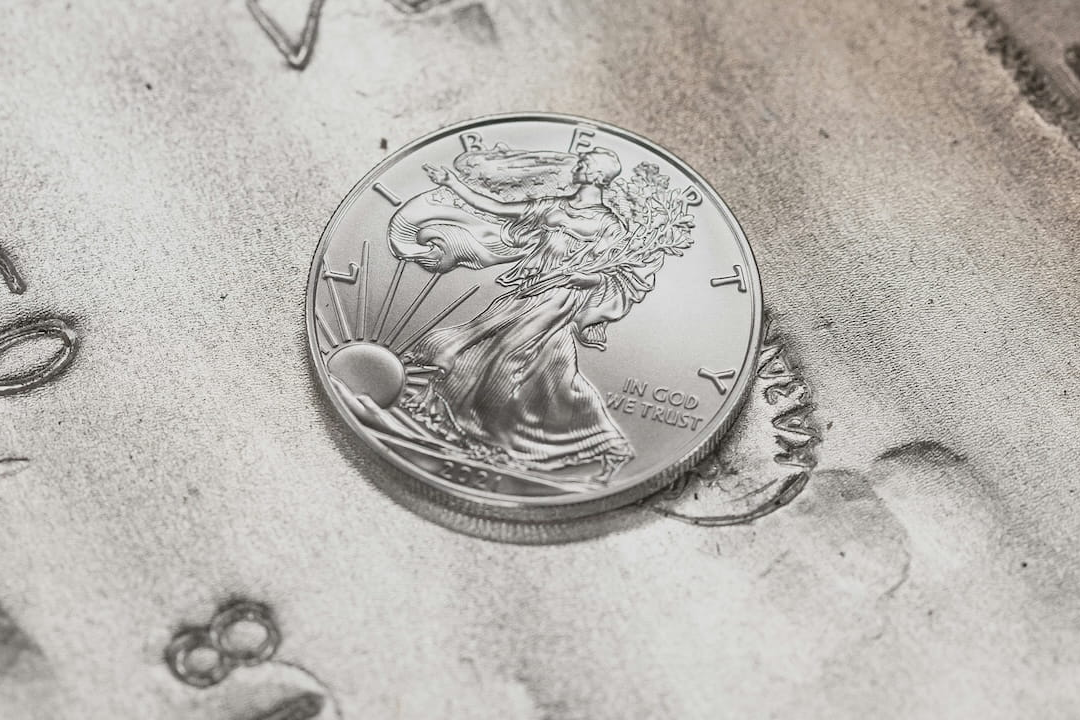
That’s why your best bet is to hold silver for barter transactions.
Junk silver is ideal for this job.
Junk silver consists of dimes, quarters, and half-dollars minted before 1965.
Of course, junk silver isn’t junk. It's more accurate to call their modern equivalents junk.
Junk silver coins are 90 percent silver and worth far more than their face value. At the current spot price of silver ($48), a 1964 quarter’s melt value is about $8.58.
You can see why junk silver would serve as a perfect barter currency. Virtually everybody recognizes silver's value. It is also easy to transport, and the coins are uniform in shape and weight.
You could almost certainly barter on the fly using junk silver. However, you’d be even more secure if you established barter networks before a crisis.
One thing is certain: you don’t want to count on the bank to protect your money. Up until yesterday, you probably didn’t consider losing access to your money very likely. But as we saw, a simple server problem can take down a network, not to mention a natural disaster, political malfeasance, or a broad-scale financial crisis.
Protect yourself. Keep hard money where you have access to it. Don’t wait for the crisis.


Comments
Log in or sign up to join the conversation.