

NZDCHF has been carving out an ascending triangle pattern on the short-term time frame, with the pair repeatedly testing the horizontal resistance around the 0.4640 level while chalking up higher lows connected by a rising trend line. Price is currently probing this ceiling once again, keeping traders on their toes for a potential breakout.
If the bulls manage to push a convincing close above the 0.4640 resistance, a measured move rally equal to the height of the triangle formation could follow, potentially sending NZDCHF toward the 0.4700 major psychological area or higher.
On the other hand, another rejection at this ceiling could trigger a pullback toward the rising trend line support near 0.4610–0.4620, with a deeper correction possibly reaching the 0.4580–0.4600 area where the moving averages are converging.
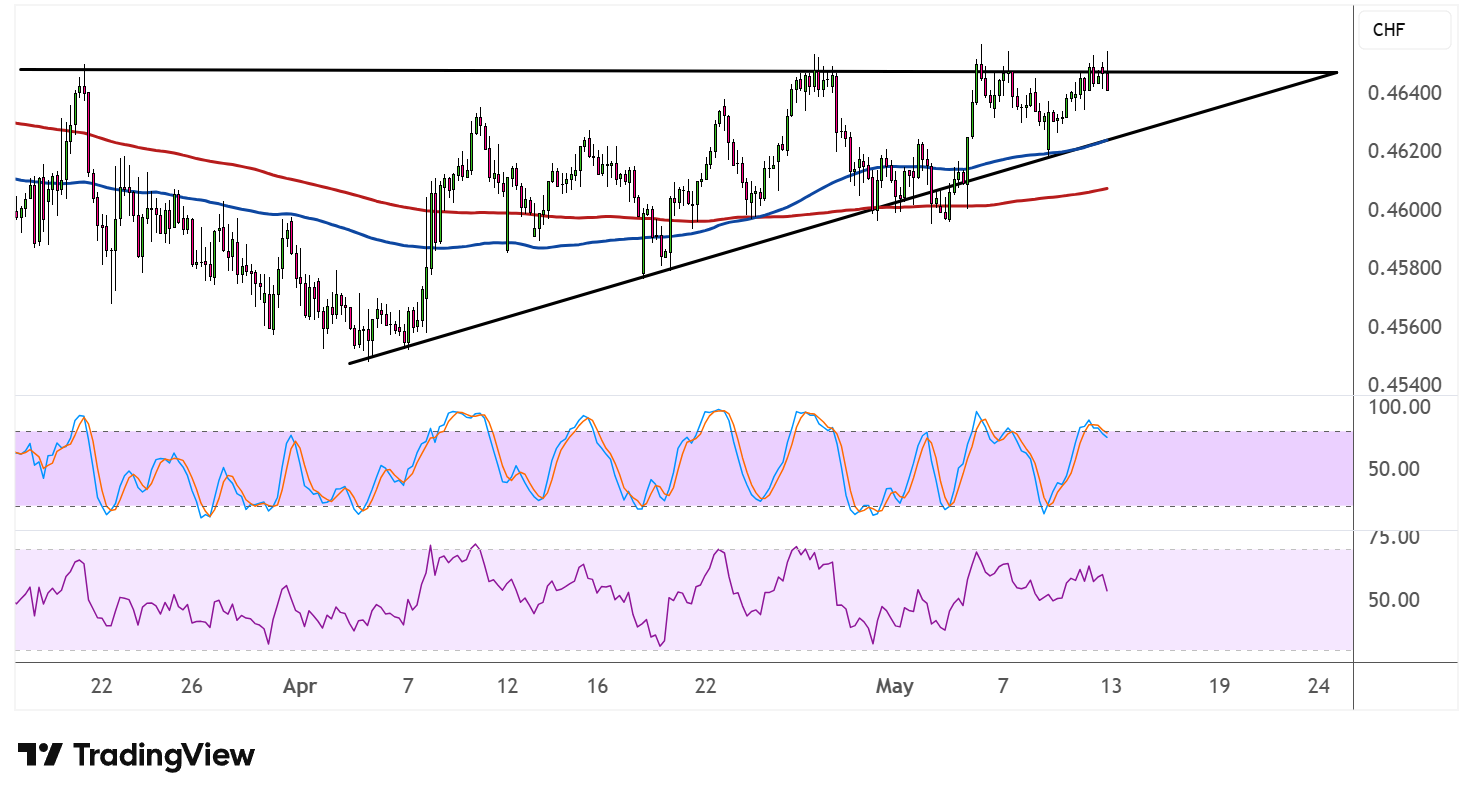
The 100 SMA has crossed above the 200 SMA to confirm that the path of least resistance is to the upside, or that the climb is more likely to gain traction than to reverse. Price is also trading comfortably above both indicators, which could serve as dynamic support on any dips should a pullback materialize.
Stochastic is pulling back from the overbought region, reflecting a return in selling pressure that could keep NZD/CHF under the resistance for a bit longer. The oscillator still has room to slide before reaching the oversold area, so some consolidation or a modest dip cannot be ruled out before buyers make another push.
RSI, however, is holding in the mid-range and appears to be leveling off rather than heading sharply lower, suggesting that bullish pressure hasn’t fully dissipated. A turn higher in the oscillator could be an early signal that buyers are gearing up for another assault on the 0.4640 resistance.
NZDCHF could take cues from overall risk sentiment, as geopolitical conflict could continue to keep the lower-yielding franc supported despite threats from the SNB to intervene or implement negative rates.



Comments
Log in or sign up to join the conversation.