

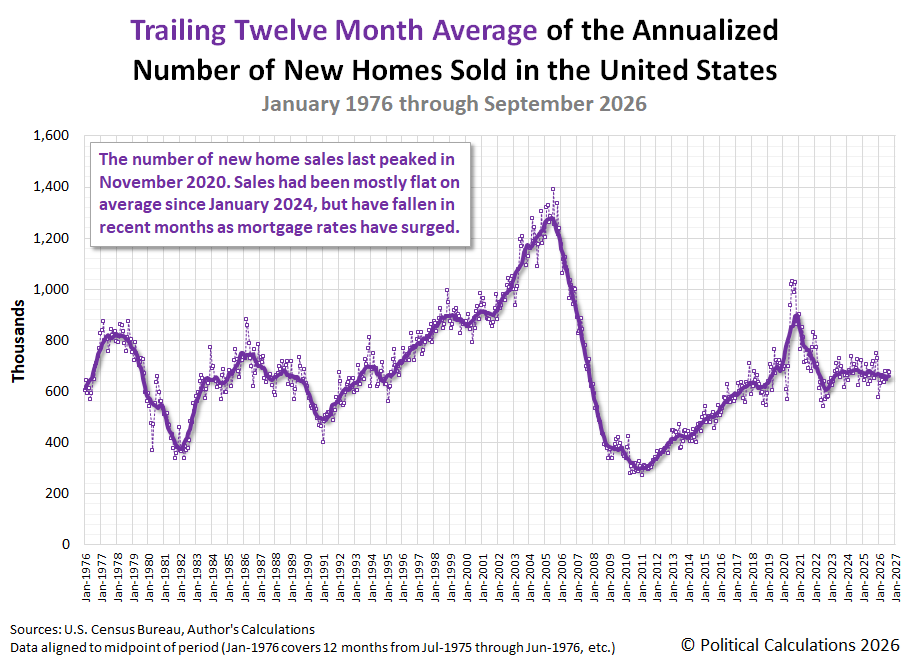
New home sales in the U.S. held relatively steady in September 2026 as builder incentives continued making buying a new home more affordable than buying an existing home for homebuyers.
Political Calculations' initial estimate of the total value of new homes sold across the United States during September 2026 is $28.88 billion. This value represents a small decrease from August 2026's initial estimate of $29.20 billion, which after the latest data revisions, came in at $28.88 billion, indicating the new home market was relatively steady month-over-month.
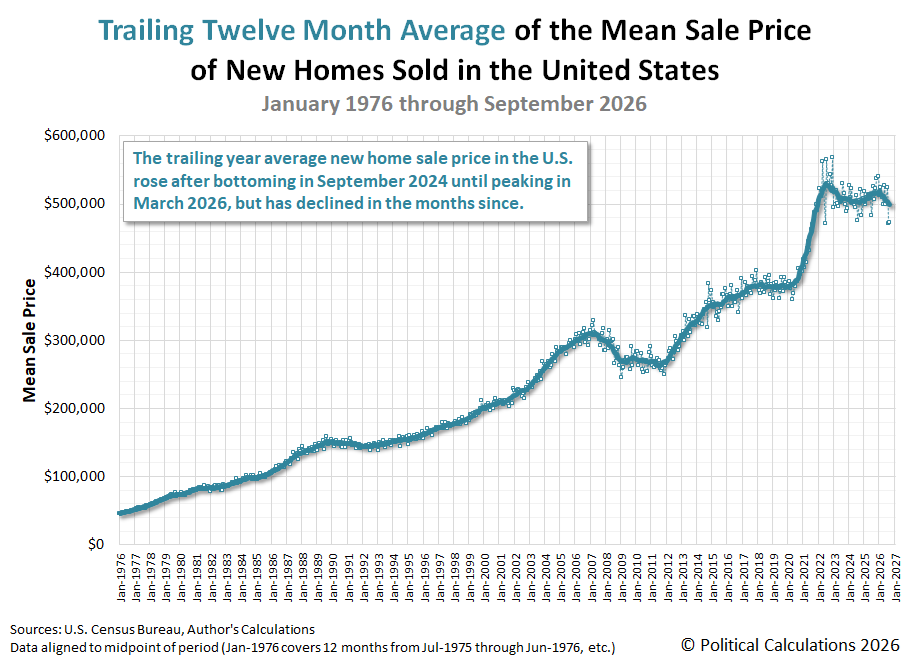
The average price at which new homes are being sold has been falling since March 2026 because of generous incentives from builders to make sales in a rising interest rate environment for mortgages. Realtor.com shared some insights into how generous those incentives have become for homebuyers in recent months:
Builders are facing some challenges, and this month’s new construction data shows that clearly. On the flip side, buyers hold the negotiating power in the new home market and can find some exceptional deals on new homes. Mortgage rates are certainly a deterrent for prospective buyers, but our research shows that new home buyers, who often take advantage of reduced rate offerings from builders, pay as much as a full percentage point less on their mortgage. The median new home sale price is less than the median existing home sale price, and new construction buyers benefit from a lower total cost of ownership over their time in the home.
The following charts present the U.S. new home market capitalization, the number of new home sales, and their average sale prices as measured by their time-shifted, trailing twelve month averages from January 1976 through August 2026.
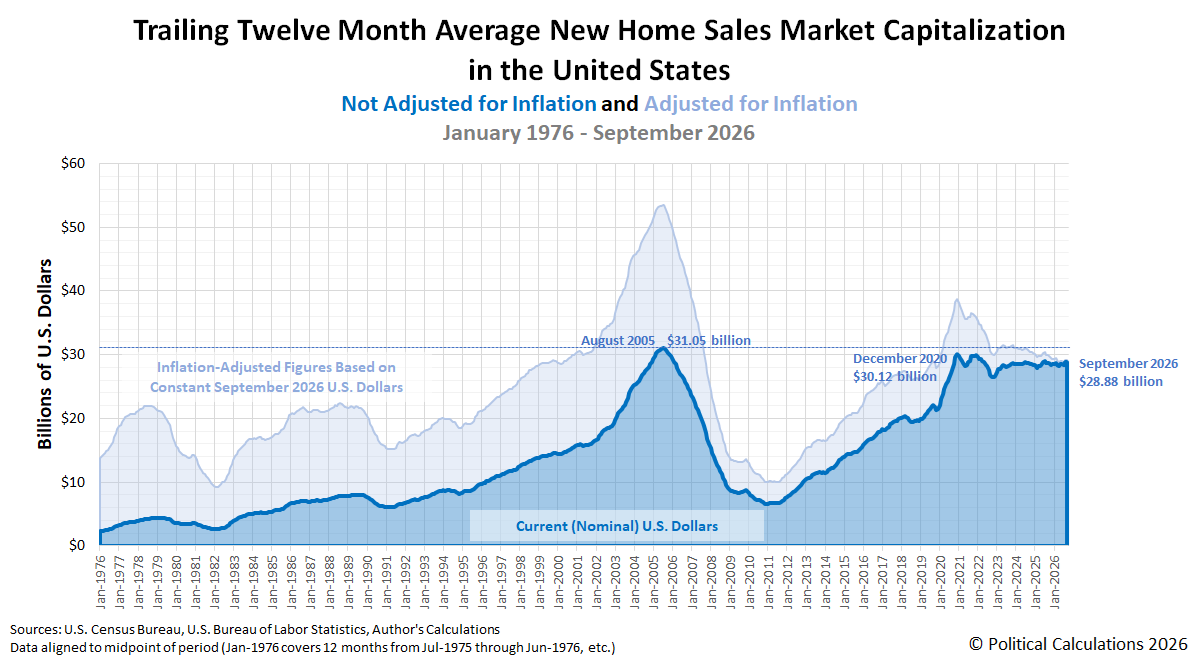
New home sales relatively steady
New home prices falling:
While the incentives are sustaining new home homes, they are impacting the earnings of homebuilders. Realtor.com describes how the new home market has changed for several publicly-traded builders since the start of 2026:
"Buyers are reluctant in this environment of elevated mortgage rates, and builders are having to offer lower prices and buyer incentives to entice them," Berner says.
Last week, three major builders, PulteGroup (NYSE: PHM), M/I Homes (NYSE: MHO), and NVR, Inc. (NYSE: NVR), all reported major net income declines. That's caused many of them to be more selective about the markets where they're active, but they have also reported using incentives to entice buyers.
“The rapid increase in interest rates has stretched affordability even further, made selling an existing home even harder, and has pushed even more consumers to the sidelines,” PulteGroup CEO Ryan Marshall said as he reported the company's year-over-year net income dropped by 17% in the third quarter.
Providing financing that reduces a homebuyers mortgage rate by a full percent over what buyers can otherwise get from mortgage lenders is a huge contributor to how new homes have become more affordable to buy than existing homes.
Note: We added the links to the stock market tickers of the three publicly traded firms referenced in the quoted passage discussing the impact of builder incentives on the homebuilders' bottom line.
References
U.S. Census Bureau. New Residential Sales Historical Data. Houses Sold. [Excel Spreadsheet]. Accessed 27 October 2026.
U.S. Census Bureau. New Residential Sales Historical Data. Median and Average Sale Price of Houses Sold. [Excel Spreadsheet]. Accessed 27 October 2026.
Comments
Log in or sign up to join the conversation.