


Every earnings call now comes with an AI narrative attached, and Microsoft's is one of the loudest. The trouble with narratives is that they are cheap to tell and expensive to verify. The useful question for Microsoft specifically isn't whether AI is a theme, it's whether the demand behind that theme shows up in numbers a company can't talk its way around: revenue that's already been collected, growth that's either accelerating or isn't, and contracted work that hasn't been delivered yet. Four numbers answer that, straight from Microsoft's own SEC filings.
Cloud revenue, not cloud vibes
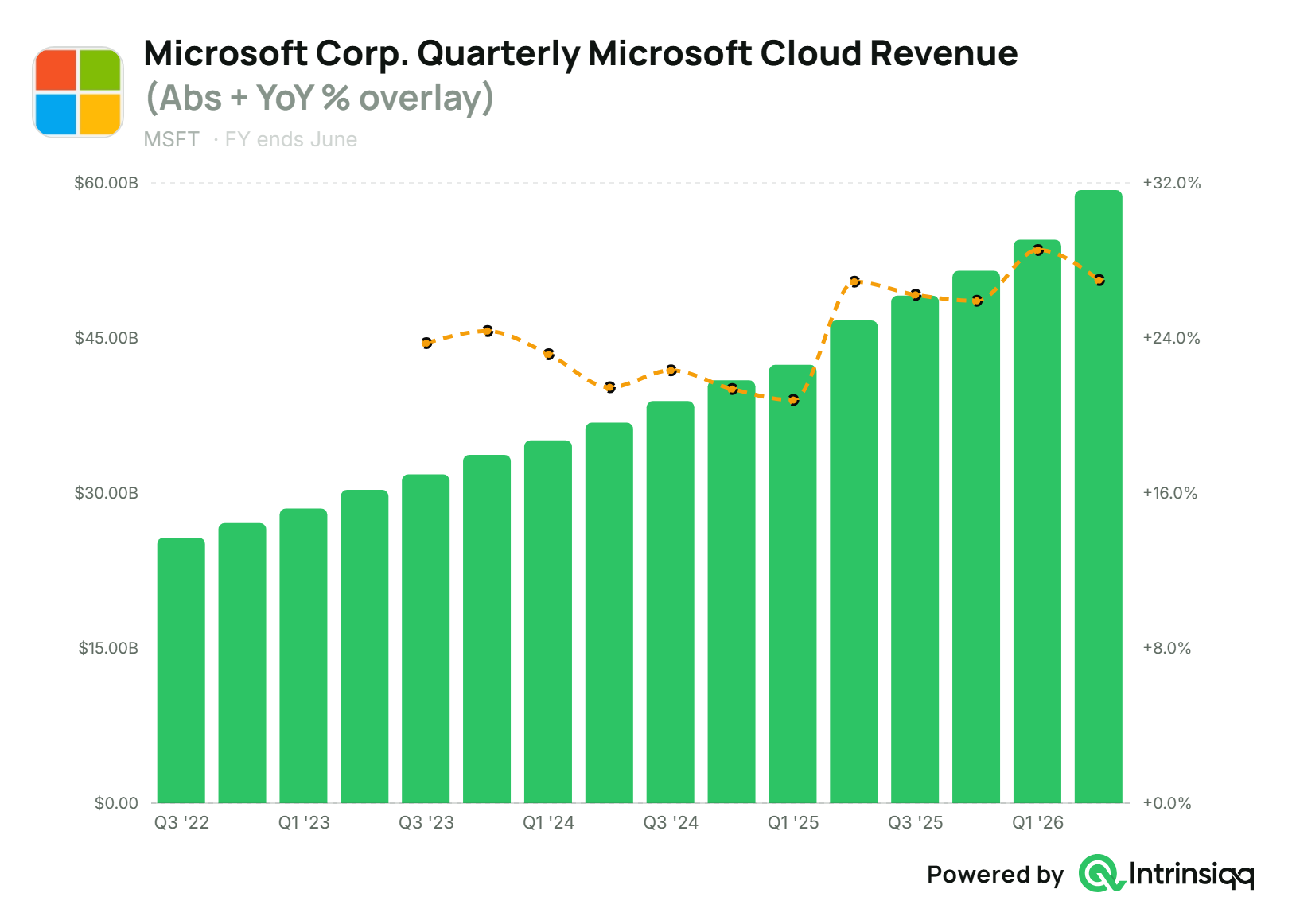
Microsoft Cloud, the segment that bundles Azure, Microsoft 365 Commercial, and Dynamics 365, has gone from roughly $26 billion a quarter to $59 billion a quarter over the past four years. That's a 25% compound annual growth rate sustained, not a single good quarter dressed up as a trend.
The overlay is the part worth sitting with. The YoY growth line dipped through 2023 as the post-pandemic enterprise software slowdown hit every large software vendor, then turned back up starting in 2025. A $59 billion quarterly run rate compounding in the high-20s percent range is not typical for a company this size. Most businesses grow slower as they get bigger, because the base gets harder to move. Cloud did the opposite here.
Azure specifically re-accelerated, it didn't just recover
Azure is the piece of Microsoft Cloud that gets the most attention, and it deserves a separate look because "Microsoft Cloud" can hide a slowing Azure behind a growing Microsoft 365.
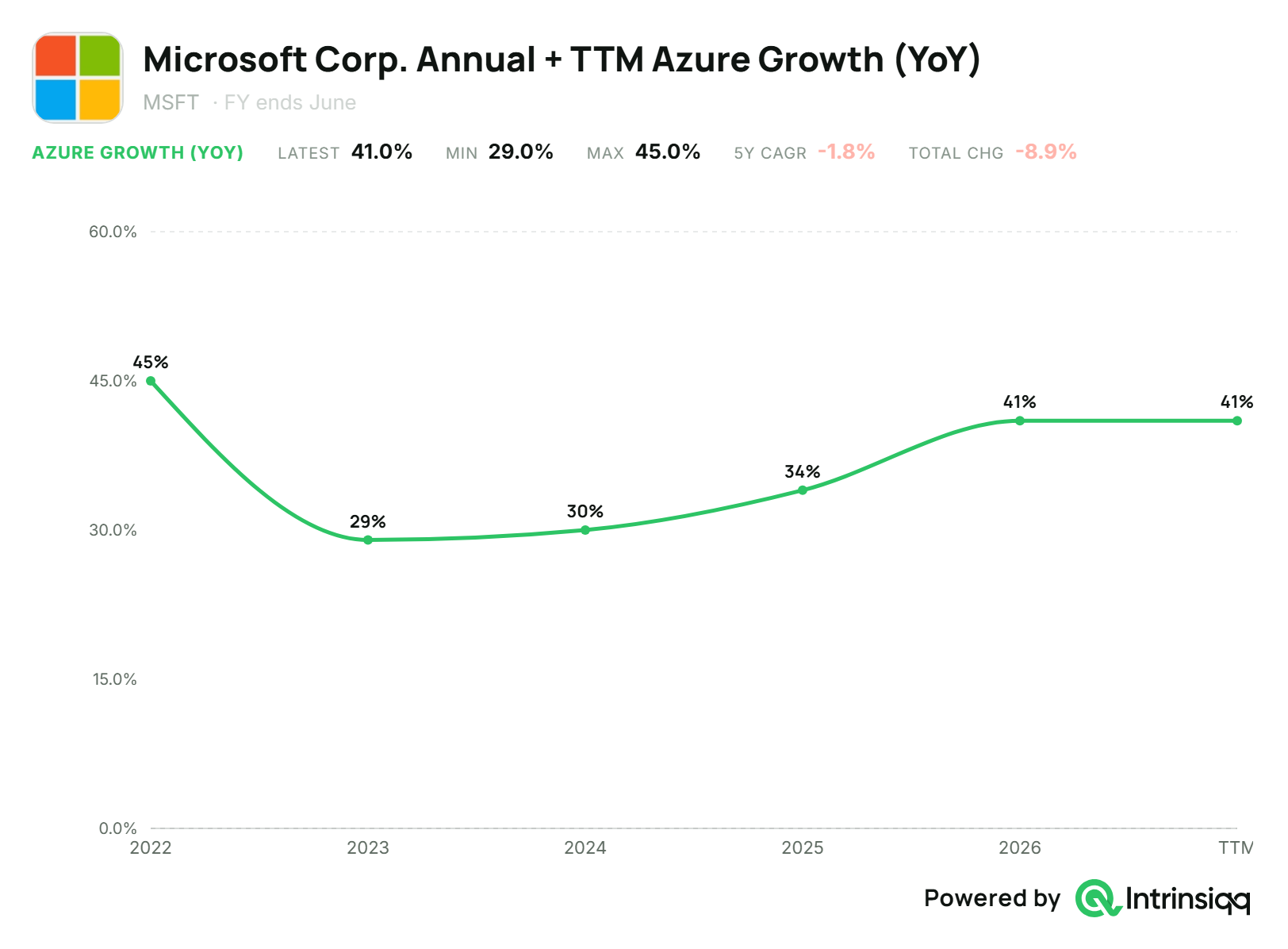
Azure growth fell from 45% to 29% between 2022 and 2023, which is exactly the slowdown every hyperscaler reported that year as enterprises paused cloud migration spending. What's notable is what happened next: growth didn't just stabilize, it climbed back to 41% by the most recent trailing twelve months. A deceleration that reverses is a different story than a deceleration that plateaus. It suggests the demand pulling growth back up (AI workloads, in Microsoft's own commentary) is real enough to outrun a very large existing base.
Backlog is the forward-looking number that's easy to miss
Revenue tells you what already happened. Backlog, the contracted work Microsoft hasn't delivered or recognized yet, tells you what's coming.
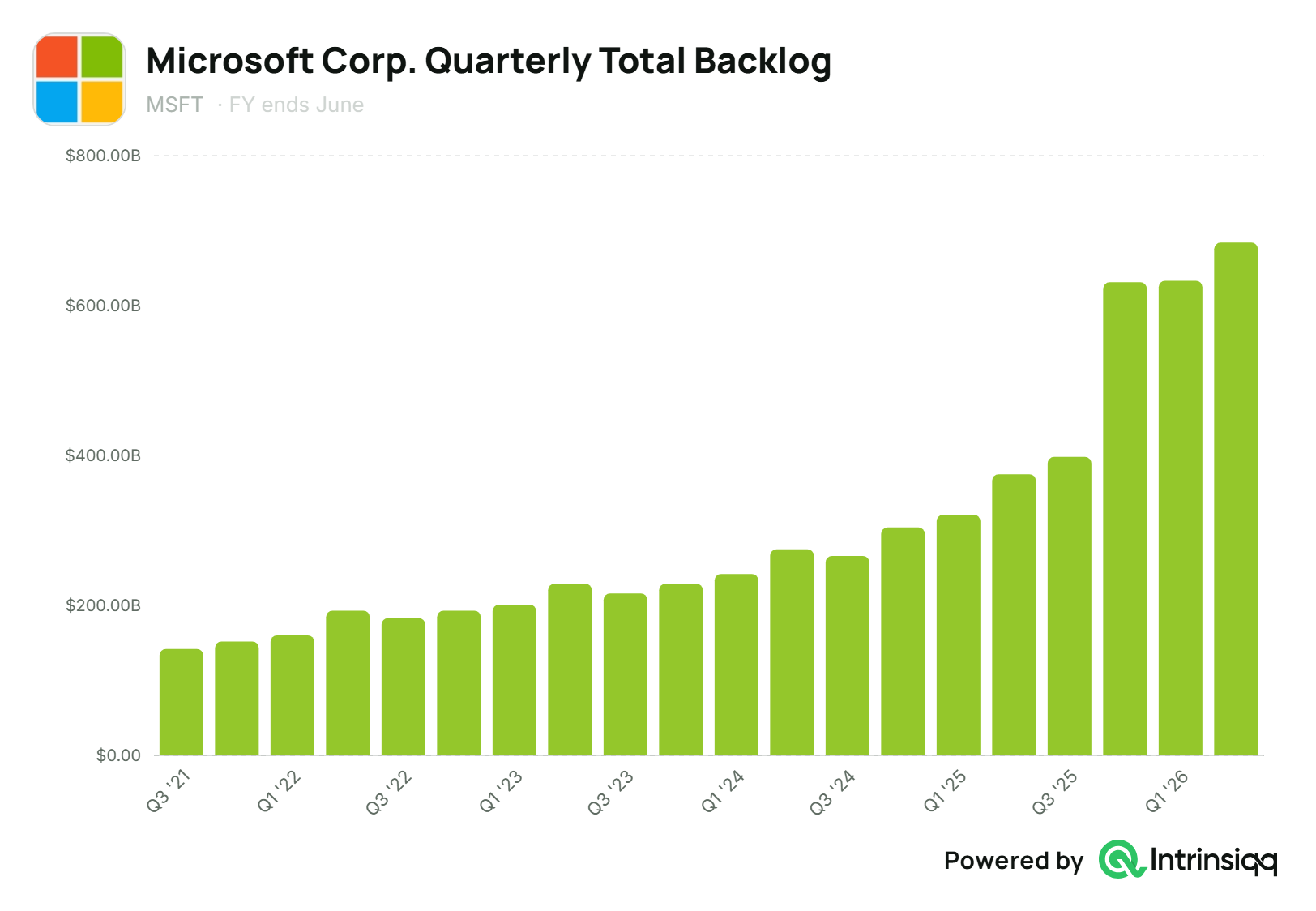
Total backlog has climbed from roughly $130 billion in 2021 to well over $600 billion in the most recent quarter, and the slope has gotten steeper, not flatter, over the last year. This is the number that matters most when judging whether the AI narrative is being priced in ahead of the cash or whether the company is actually sitting on demand it hasn't billed for yet. A backlog growing faster than revenue is a company that's further behind on fulfilling demand than its income statement alone would suggest.
It's not just cloud propping up a shrinking company
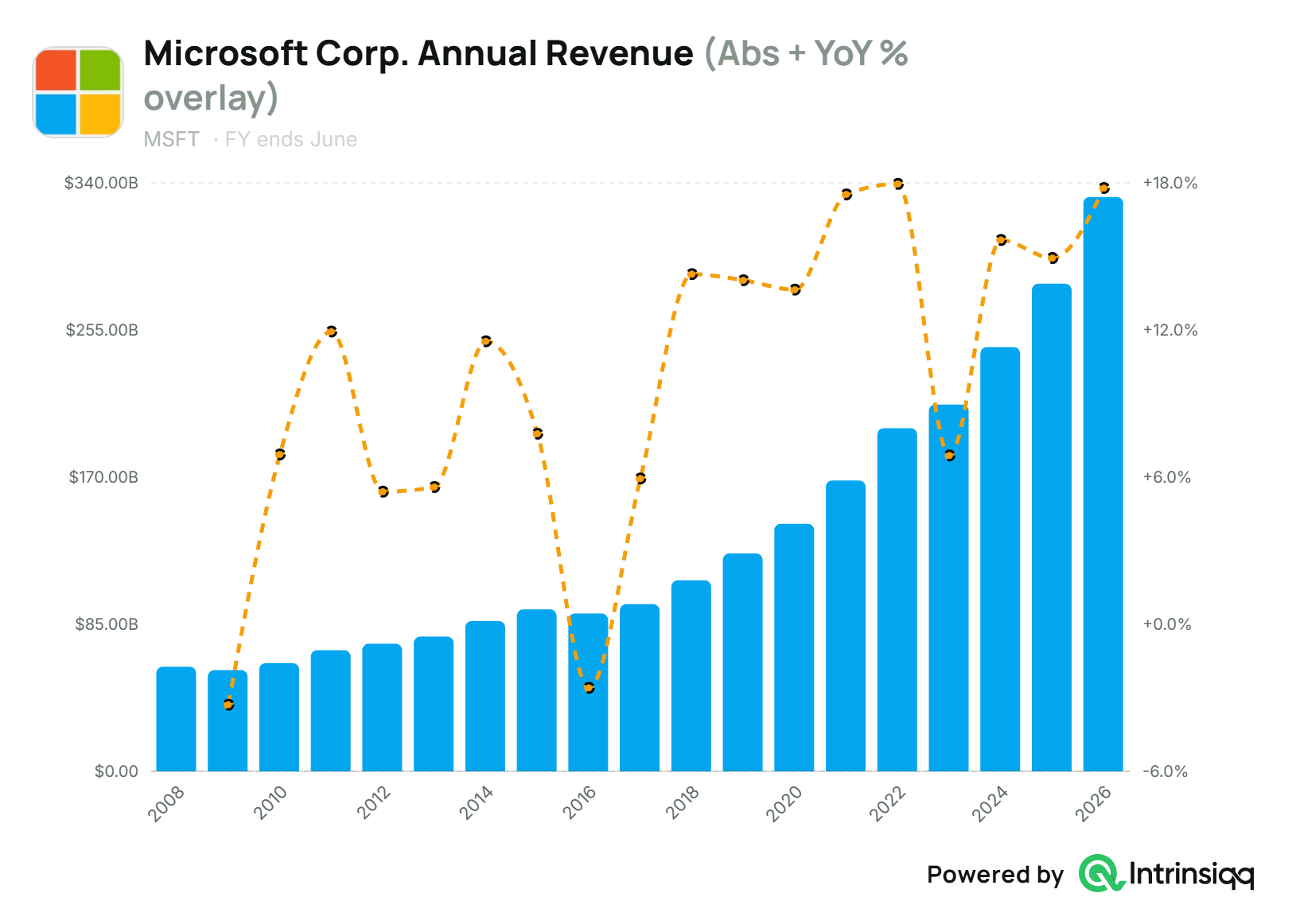
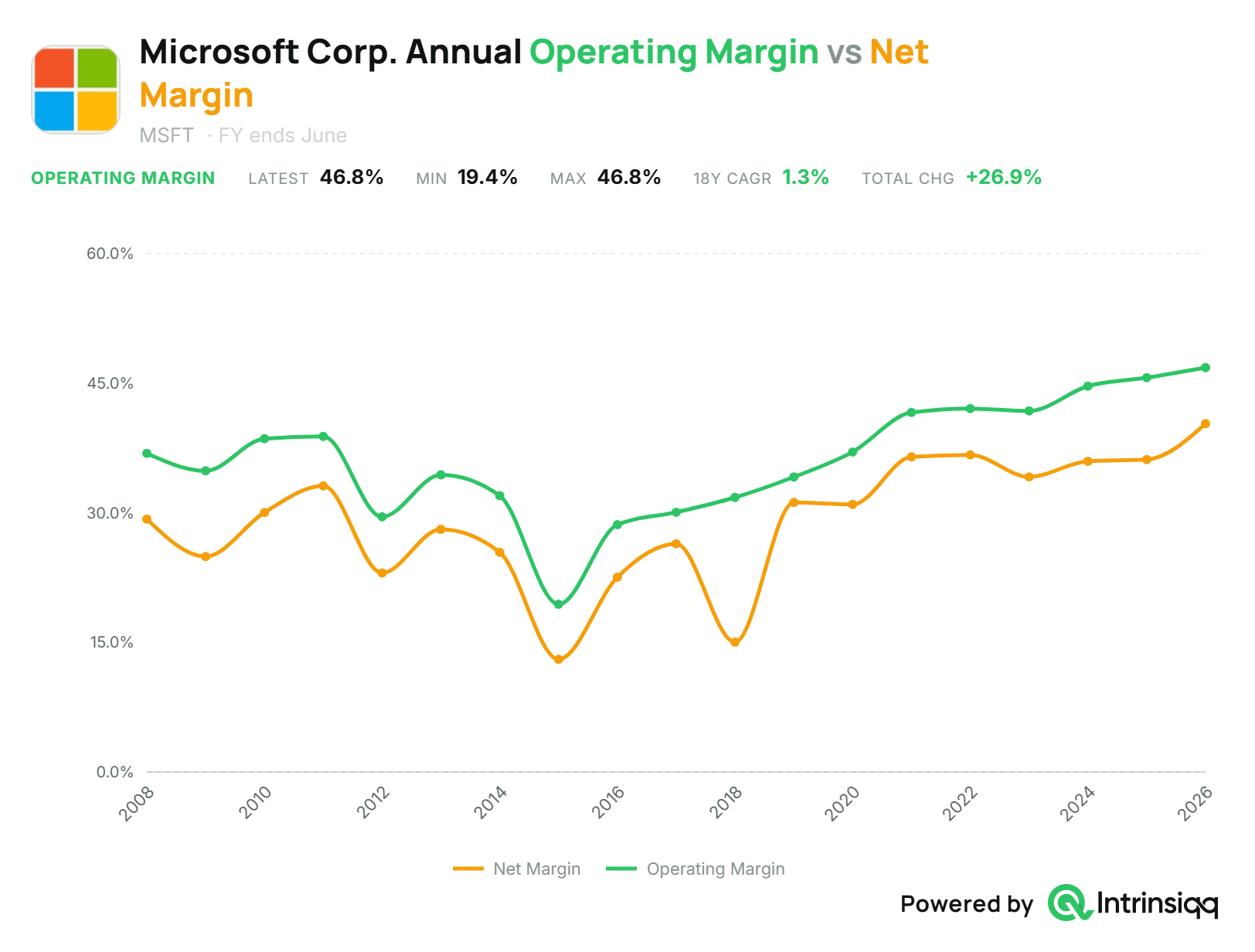
None of the above matters if it's cloud growth masking weakness everywhere else, funded by margin compression to keep the growth story alive. Total company revenue and operating margin both moved in the same direction as the cloud numbers above, which is the check that matters: growth paid for out of a widening margin, not a shrinking one, from a business that's growing broadly rather than being carried by one segment.
Putting it together
All four of these come from the same place: Microsoft's SEC filings, not analyst estimates or press release framing. I pulled and charted them using Intrinsiqq, a free tool I built that reads company fundamentals directly from SEC EDGAR. Anyone can look up the same underlying numbers for MSFT, or any other US-listed company.
The AI theme around Microsoft will keep getting told as a story on every earnings call. The more useful habit is checking whether the story shows up in the numbers first: revenue growing faster than the base should allow, a segment re-accelerating instead of merely stabilizing, and a backlog that's growing even faster than the revenue it will eventually become. Right now, for Microsoft, it does.

Comments
Log in or sign up to join the conversation.