

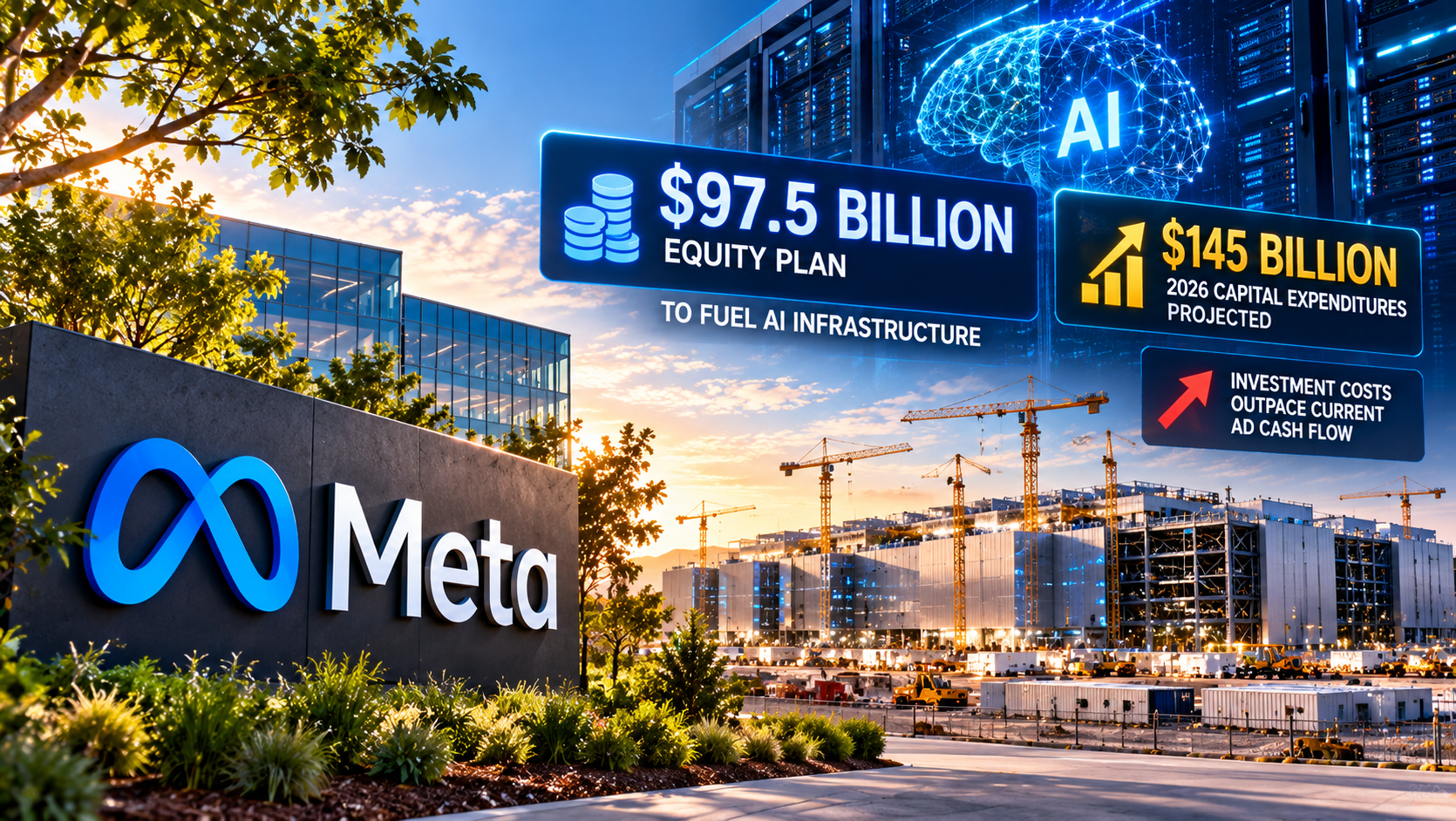
Why raise equity when the ads generate cash?
Meta Platforms (META) launched a $95 billion equity financing plan yesterday to support its AI expansion. The pricing announcement released early today increased the common stock offering from $22.5 billion to $25 billion. That brings the base potential financing to $97.5 billion before optional additional purchases.
The business still generates substantial cash. But Meta's investment plans are large enough that management is combining that cash with outside funding. Selling equity can reduce reliance on borrowing for a given investment budget, while giving additional investors a share of the business and its future returns.
The total combines offerings already priced with a much larger share sale program still planned for the future. The money would arrive in stages, and some of it may never be raised. For existing shareholders, the test is whether the investments create enough additional value to justify sharing the business with more owners.
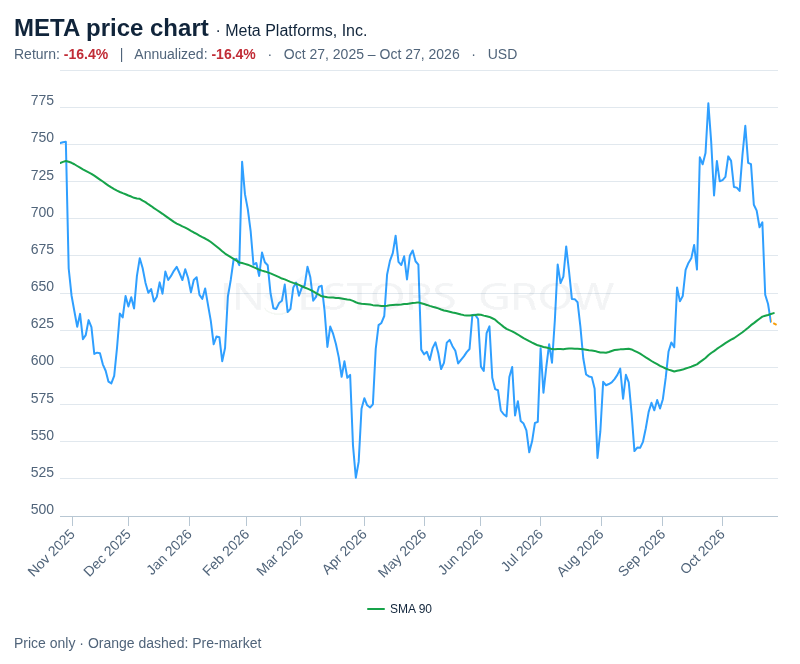
Meta Platforms 1 year chart
The advertising cash is substantial. So is the spending.
Advertising remains Meta's economic engine. In the quarter ended September 30, 2026, it generated $63.061 billion of the company's $64.601 billion in total revenue. Businesses pay to reach potential customers across Meta's services.
But revenue alone does not explain the funding decision. Meta's third quarter results, released last Wednesday, October 21, showed $32.79 billion of operating cash flow and $34.91 billion of capital expenditures, including principal payments on finance leases. Those lease payments repay financing used to obtain property and equipment.
In other words, the business generated substantial cash, but those capital outlays consumed more than it generated during the quarter. Meta reported negative free cash flow of $2.12 billion. Its definition of free cash flow subtracts both property and equipment purchases and finance lease principal from operating cash flow. This is a non GAAP measure, meaning it supplements standard accounting results.
One quarter also needs context. Free cash flow remained positive at $11.049 billion for the first nine months of 2026. Cash, cash equivalents and marketable securities totaled $82.45 billion at September 30.
Management expects $135 billion to $145 billion of capital expenditures for 2026, including finance lease principal. That is companywide spending guidance, rather than a separate tally of AI spending alone. Equity provides another source of money alongside operating cash flow, debt and partnerships. A company can generate plenty of cash and still choose to raise capital when its investment plans are this large.
Three ways to raise money, with different costs and timing
The plan combines common stock, preferred stock that later converts into common shares, and a prospective program for selling more shares over time. Meta's pricing announcement sets out the terms of the first two components.
$25 billion of common stock through forward sale agreements. The offering price is $625 per Class A share. The financial firms handling the agreements are expected to borrow existing shares and sell them into the offering. Meta expects to deliver shares to those firms and receive the agreed proceeds later, with settlement expected by November 19, 2027. Contractual adjustments affect the amount it ultimately receives.
$12.5 billion of mandatory convertible preferred stock. Investors buy depositary shares, each representing a small fraction of a preferred share. The preferred stock accumulates dividends at a 6.50% annual rate, payable when declared. It is scheduled to convert into common equity around August 15, 2029 unless converted earlier. Subject to the terms, dividends can be paid in cash, shares or a combination. Meta gets funding sooner, while investors receive a preferred dividend claim before receiving common shares through conversion.
A prospective $60 billion Class C share sale program. An at the market program allows a company to sell shares over time at prevailing market prices. Meta's launch announcement says this program is not expected before the first quarter of 2027, after Class C trading begins. The agreement, final terms and actual sales remain uncertain.
The common and preferred offerings are expected to close on October 29, subject to conditions. Meta expects to receive the preferred proceeds at closing. The common offering's forward structure puts its cash receipt later. Both arrangements also contain conditional provisions involving the planned Class C shares.
The $97.5 billion combines gross offering values with the prospective program amount. Fees and contractual adjustments affect what Meta ultimately receives. For shareholders, the distinction matters: pricing an offering, receiving cash and delivering new shares can happen at different times.
A smaller percentage can still be worth more
When a company issues shares to new investors, existing shareholders own a smaller percentage of it, all else equal. That is economic dilution. The company also receives money in exchange, so the ownership percentage tells only part of the story.
If Meta invests that money successfully, an existing shareholder can own a smaller fraction of a more valuable business. If the returns are weak, the business may gain too little value to justify sharing it with more owners.
Class C introduces a separate question: who gets a say? These shares are designed to be nonvoting. Meta can therefore raise outside equity without adding ordinary voting power as it would by issuing voting shares. The board presents this structure as supporting financing flexibility and continued founder leadership. Buyers of the nonvoting shares can supply more capital without gaining a corresponding voice in how it is spent.
Meta also plans to distribute one Class C share for each existing Class A and Class B share, contingent on the charter amendment taking effect. Because that distribution goes proportionally to existing holders, it raises no money and transfers no ownership to outsiders. Later sales of new shares are the capital raising step.
The final dilution percentage depends on actual sales, future prices, optional purchases and the applicable conversion and Class C adjustments. Those details will determine how much additional ownership Meta issues for the money it receives.
Better ads and new AI products are different bets
The most direct path to returns runs through the advertising business. Better recommendations could keep people engaged. Better ad delivery could help advertisers reach customers more effectively, giving them a reason to spend more. Management says AI is already helping advertising through stronger engagement, recommendations and monetization.
New AI products face an additional test: finding demand that Meta can serve profitably. Attracting users is a start. Generating enough revenue to cover computing costs and justify the investment is the harder economic question. Management itself says its newer AI investments will take longer to generate returns than investments in the core business.
Cash spending also deserves separate attention from accounting profit. Meta's cash flow statement treats purchases of property and equipment separately from depreciation and amortization. The practical question is how much cash remains after both running the business and investing in its future.
Nor is the preferred dividend rate of 6.50% a simple target for the expansion to beat. It is one financing term. Common shareholders also require compensation for risk, and the preferred shares eventually convert into common equity. The relevant return is the additional cash the investment can produce after operating costs, taxes and continuing capital needs, weighed against the amount invested, the time it takes and the risk involved.
If the investment works, Meta will use the funding to build useful capacity, strengthen advertising and establish profitable new products. If spending and equipment needs grow faster than the revenue and cash they produce, shareholders could face another funding round before the previous investment has proved its worth.
The useful evidence will be operating cash flow relative to capital spending across several quarters, the shares actually issued, and product revenue alongside delivery costs and infrastructure use. The goal is more cash and value for each ownership interest, not simply a larger Meta.


Comments
Log in or sign up to join the conversation.