


The CPI report puts the Fed in a box heading into Wednesday’s meeting (9/16). The market is now pricing about an 80% chance of a 25 basis point hike. Some of this could have been avoided if Chris Waller had said nothing before the blackout period, but he chose to say the CPI report would help him decide whether the Fed should raise rates. The market clearly thinks it should, and we don’t really know what he is thinking, which has made things more challenging for the Fed this week.
On top of that, the ECB raised rates this past week and is now expected to raise them further, with the market pricing a rate around 3.20% to 3.25% by April, another three hikes. The Bank of Japan is pretty much expected to hike 25 basis points this week, and another 25 by January, and the Bank of England is expected to hike, potentially as soon as November, to 4%. The Reserve Bank of Australia has an 85% chance of a hike priced for September 29; the Bank of Korea has been raising fairly aggressively and could go again by mid-November; and the Bank of Canada is potentially looking at a hike by the beginning of December. So the Fed is in a corner. Every other major central bank is raising rates or is signaling it is expected to, except the Fed.
That puts a lot of pressure on the dollar index, which has struggled recently even with the stronger CPI data. The dollar closed flat on Friday, which I think signals the market doesn’t know what the Fed will do. If the Fed doesn’t want to give forward guidance and wants the market to play ball, that’s fine. But the market now thinks it should be hiking; every other major central bank is, and if the Fed opts not to, that is going to put immense pressure on the dollar and raise the question of what it does to its credibility. They have talked a lot about getting inflation back to 2% on headline PCE, and now they have to do it by raising rates at this meeting.
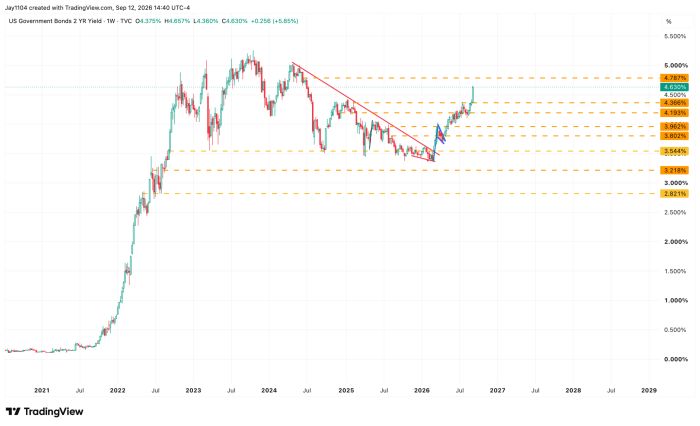
The rates market is saying the same thing. The 2-year yield has moved up to 4.63%, suggesting the market expects the Fed to raise rates. The spread between the 3-month Treasury bill one year forward and the 3-month spot rate is up to about 75 basis points, meaning the market expects 3-month yields around 4.75% a year from now, and the bill itself rose five or six basis points on Friday. So bills are pricing in a hike and further hikes after that, pointing to the 2-year yield returning to the 5% region if the Fed starts this cycle. Based on the pricing, this isn’t a one-and-done. The market expects two to three, maybe even four hikes before this is all said and done, because inflation hasn’t come back to target in five years and it doesn’t look like it will on its own.
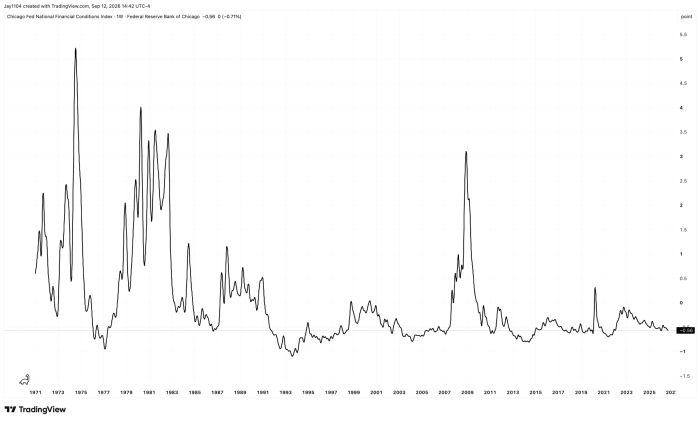
Financial conditions add to the case. The Chicago Fed’s NFCI (National Financial Conditions Index) sits at negative 0.56, in the bottom third of its history over the last forty or fifty years, which suggests conditions are fairly loose. The Fed isn’t creating a policy stance that looks restrictive anywhere; if anything, you can argue policy is accommodative. Credit spreads are about as tight as they can get. The ICE BofA corporate option-adjusted spread is among the tightest levels since the late 1990s; the high yield spread over AAA has moved up a little in recent weeks but remains near those levels, and the high yield spread itself is among the tightest since 2007. Since the NFCI is mostly made up of credit spreads, it isn’t surprising the two look almost identical over time.
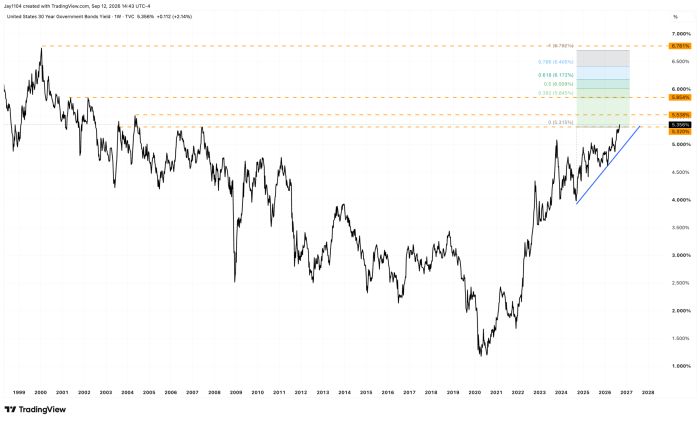
The consequence, if the Fed doesn’t hike this week, is that Treasury rates are likely going significantly higher. The 10-year rose about 18 basis points this week and finished at its highest closing yield since 2007, which I think is an important tell. All it needs is a break above 5%, and we could be headed toward 5.25%. The 30-year also closed at its highest level since around 2004 and looks to be in an ascending triangle pattern, a bullish indication of further rate increases, with the potential to reach around 5.5%.
Putting the pieces together, the market is expecting a hike. If the Fed doesn’t deliver, I think the long end of the curve goes substantially higher while the 2-year probably comes down. Right now the market is telling the Fed it needs to hike, and that is pretty much what I think will have to happen this week.


Comments
Log in or sign up to join the conversation.