

TINA Still Rules - and saved the day from being 'Buffeted' severely. Yes, I did expect a turnaround, but believe this paying-up for growth stocks is all within-context of a defensive backdrop, as evolving over the last 2 weeks.
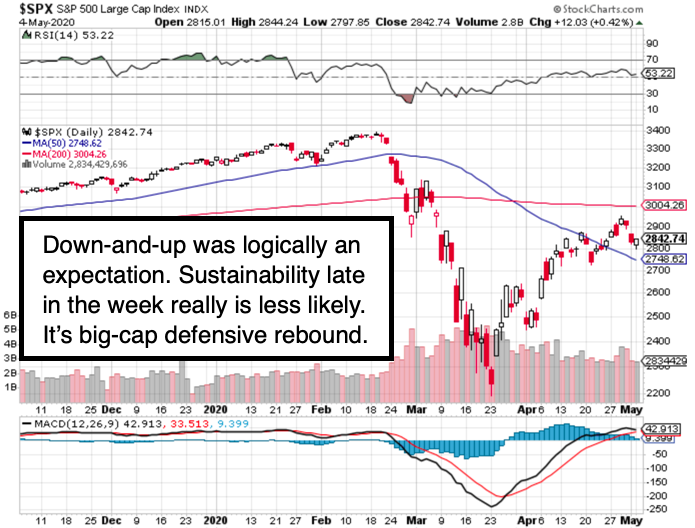
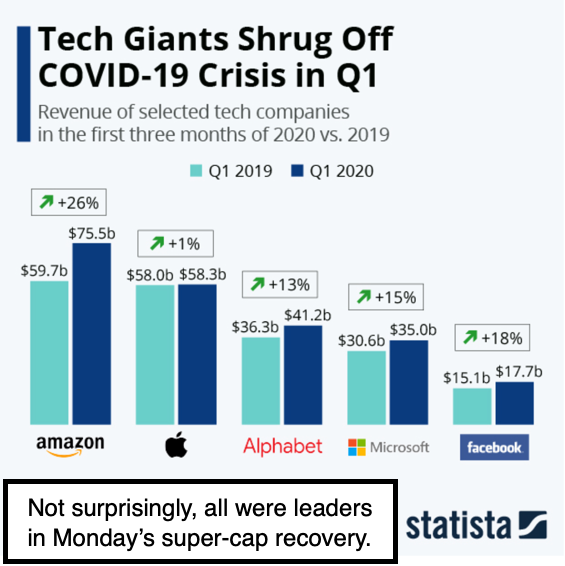
Of course TINA (There Is No Alternative) refers mostly to stocks over bond investments. However in this case it was merely super-cap leadership, that reversed the anticipated initial Monday downside, and kicked-in as FANG, as well as a few others, dominated the capitalization-led turnaround. All of it is within-context of the increasingly defensive backdrop, with excessive comfort perhaps about the (understandably essential) gradual reopening. I believe we all know that how medical aspects go will impact outcomes.
'Extraordinarily-Wide Economic Possibilities'
Certainly I concur with Warren Buffet's concern about the unknown number of possibilities ahead. Berkshire's $50 Billion 1st Quarter loss reflected a correlation to some of those worst periods of capitalism and suffering in our history, which I discussed before, but aside the common reflection on the 'Great Depression', there's at least one other time I think worth contemplating, and the aftermath.
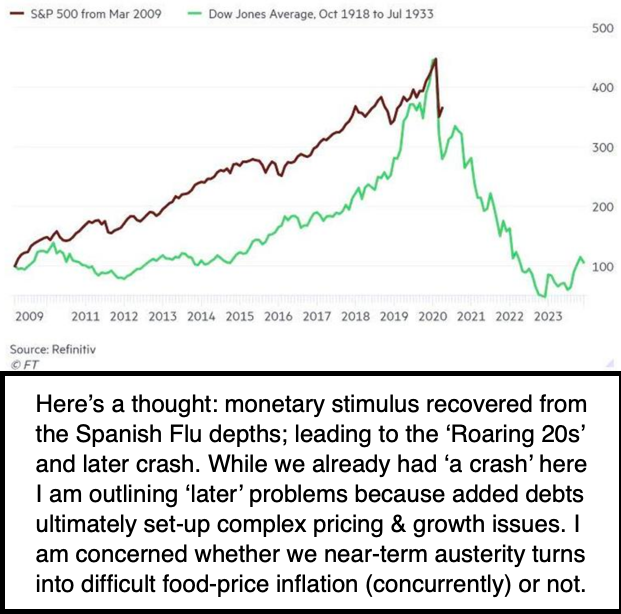
So, while the 1930's are somewhat curious in terms of pattern behavior as I have outlined before, there were two other periods worthy mentioning. In this regard its the long struggle during post-Civil War 'reconstruction' (that preceded a boom before the break I believe in 1887 and I've mentioned it), or of course the period that led-up-to the 'crash of '29', equally important.
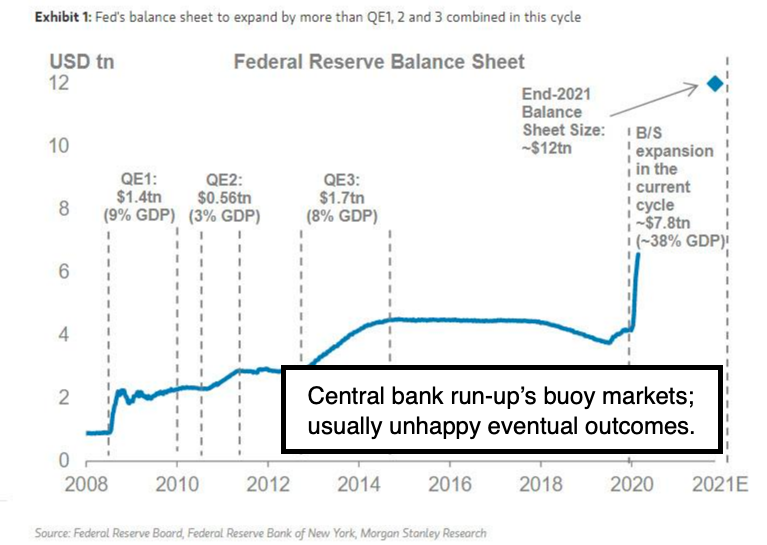
My main thought is a slight shift in thinking (helped by Fed action, as well as Congress) to contrast what's possibly unfolding over the next year more with what happening during and after the late phases of the Spanish Flu nearly at the end of World War 1 (perhaps contributing to it ending for that matter, as the President quipped last night. That's also a factor Trump did note, and though he didn't flush-out his thinking as to why I will sort of hint at what could be possible). And none of this tonight wants to focus on the dangerous blame-game that's going on between Trump and China, while a very experienced physician notes to me that the DNA similarities between SARS and Covid-19 of 96% doesn't mean Covid was engineered, he has pointed-out that human DNA is over 99% the same. Interesting regardless how the 'investigation' goes on. Anyway back to the future of 1917-'18.
That post-War / post-Flu aftermath featured -for the era- tremendous fiscal stimulus following a totally flu-ravaged financial scene in the US, along with a mortally-wounded European picture in so many more ways. What came then was a tough couple of years, but with capital flowing you shifted gears into coming-to-grips with the despair of the war/flu years and into a frenzy of prosperity. That era, preceding Depression, became the 'Roaring 20's'.
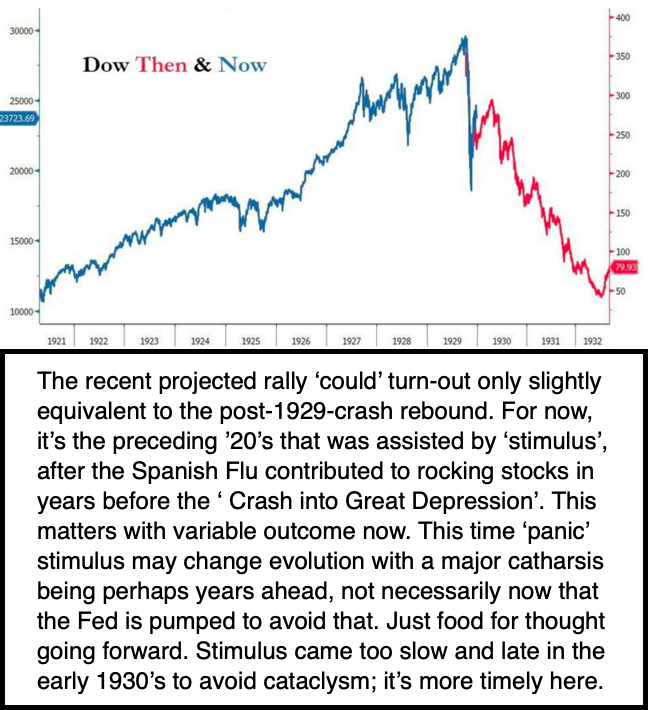
'If' we can avoid war with China (at least limit the confrontations while USA supply-chain changes and other initiative have time to unfold a bit), focus a bit better of our Alliances and less on politics, and -totally essential- rebuild the economic basis upon prior recovery phases became robust, you have a shot not at a multiyear period of despair and deprivation, but instead the opportunity to reshuffle a lot of industries and structures, supply-chains are just part of it, and also emerge with a respect for work and 'worth' missing in some social aspects, but with a ton of debt-baggage to carry forward.

In-sum: debt is the albatross of this idea; but frenetic growth eventually is a way to try to surmount it. One difference: the U.S. was relatively fiscally conservative in the old days, which we have not been more recently. A few countries (Germany and Sweden come to mind) have been more sober in spending for years, while China itself has not been. And our educational or high-level skill-sets are limited to a proportion of the population, but that's something that was also the case after the Civil War, World War 1, or the Depression. So I don't negate the prospect of achieving some of this.
Bottom-line: we're having an intraweek turnaround led by super-caps, of course the usual suspects. I spent a little time tonight just highlighting an alternative pattern, which may or may not have validity but differentiates the idea of a financial crisis (which this is becoming as it persists) rivaling the 'duration' of the Great Depression, and perhaps more like the couple years that came after the Civil War and then World War 1.
In any case the near-term can be heavy, and even Warren Buffet would probably concur if we discussed the variable outcomes longer-term. So for now we have a defensive rebound expected and probably persists a bit; but would not expect anything dramatic or dynamic given the backdrop.
Comments
Log in or sign up to join the conversation.