

Classic capitulation technicals were glimpsed at S&P lows ten days ago; a characteristic we emphasized based on 'even' so-called 'safe haven' stocks cratering; which historically occurs at the end of a downtrend. Sure, other very common features in classic bottoms were mixed; but we assessed this as not definitive because so much of the market was 'already crashed', it would very clearly be tough to crash a broad market already retreated to the trenches.
That's why there was (and conceivably still could be) risks of retreats; re-tests; or similar; but a lot of that would depend on events; and 'if' some Fed remarks this past week (from a couple regional Fed-heads) can be believed; there may not be a need for more than one or two more hikes, with inflation fading just a bit from incredibly fast-paced levels that are already at slightly lower rates.
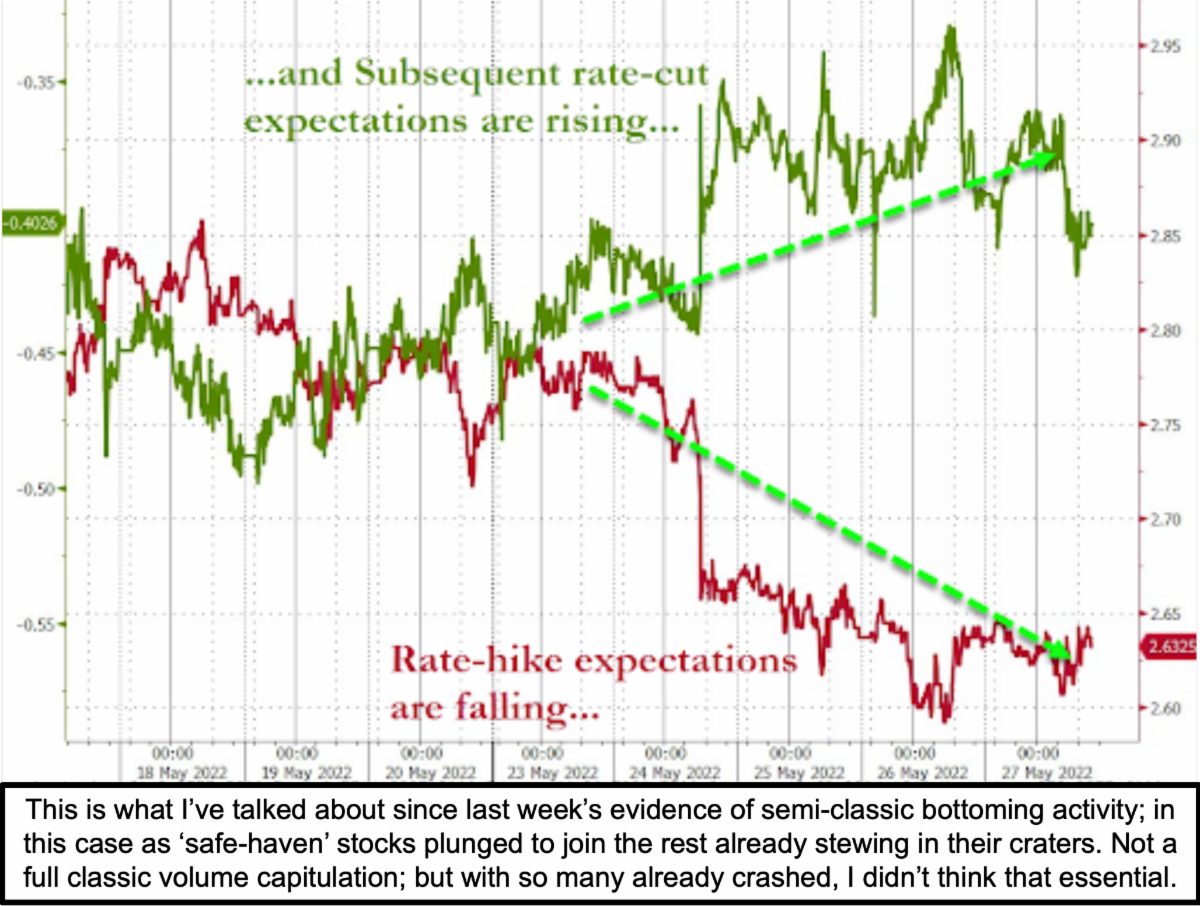
Certainly there remain a number of variables; but we suspected the best parts of the recent and ongoing rally, whether just 'relief' or more, were predictable just over a week ago, when you had the stalwart defensive stocks plunging; in the wake of a mega-cap crunch, and as small caps basically stopped eroding.
You also had (and still have) some money managers and investors wanting to avoid markets or just stay away; which is also characteristic of washouts. Yes that is fairly typical with the old 'sell in May and go away' mantra; but this year we had sell in 'last' May (of 2021) and they never came back.. with a very long dome construction of the S&P and (also capitalization weighted) NDX working through a persistent 'distribution' that masked internal destruction elsewhere.

In other words, the damage was done; the frustration persisted; and 'if' things do improve with regard to the Fed, with respect to Putin's war in Ukraine (we'd lean towards negotiations not more belligerence), and hence avoiding famine as the rationale for both sides to find some area of agreement, and with fades in the pace of inflation (perhaps as the Fed realizes they alone don't control all of it as much as some of the hawks think, at least in this wartime era) ... put it all together and you might find that the next retreat is a pullback not leg down.

All this is happening while there's a waning impact of former stimulus monies helping consumers; and the rapidity of how quickly sentiment can deteriorate is likely increasingly evident to the central bankers and other economists. So, sure, travel and other consumption is still ongoing; but plans are slipping, and if you survey folks just completing short vacations, most were stunned by the cost (not just hassle, but there's that too) and limiting forward plans. Yes there is a segment of the population for whom cost is no object; but not the majority.
In sum: to an extent I'm pleased so many money managers are suspicious (it is a reasonable stance); and do not like this market and didn't buy anything as of yet. That's great especially if the next pullback is just that; and at worst the retest of the lows earlier this month, rather than starting new protracted woes.
Typically we'd not be particularly enthused going into Summer; however we'd warned this market was under distribution a year ago (buybacks masking lots of that). Now you have likely seen insider buying; not selling such as then. It's something nobody will know in detail under later; but seems logical; if they did sell (and they did) at dramatically higher prices last year; why not accumulate when those premier growth stocks (Semiconductors included) are on-sale.
It's all tricky and the Fed hasn't made it easier. We're not 'fighting the Fed' and warned against that for a year since assessing them as 'way behind the curve' which in a sense they still are. But they are starting to soberly assess the role they can play, and seemingly are aware of external factors influencing prices. It isn't 'yet' what can be called a 'pivot' by the Fed; but one can choreograph a path by which the Fed could arrive at that transition as the year evolves.

Debates about 'recession' really are academic; because the Fed is focused a lot more on prices; with a realization that shortages and slippage are already factors in the economy. Oil prices ideally will moderate over the Summer; and that's softer than the majority expect. For a truly bullish (and prod for the Fed) backdrop; a settling in a range of basically 80-100, instead of 100-120, would be a more favorable scenario for WTI.
There are more variables of course; including Putin's war (which extended Oil's rise beyond the near double from under 40 we had over 18 months preceding during which we remained entirely bullish on Oil or major Oil stocks); thrusting over 110 only on geopolitical matters, which should be 'transitory'. So far they are enduring (at costs in lives, famine; showing some greed by members of OPEC+); and on-top of this is the variable of whether Iran comes back online.

Oil prices really affect almost everything; I've pointed this out for years. OPEC has even 'under-produced' the lower levels they set for themselves; and that's pure greed as they enrich themselves while masking that with something they also want to do; which is transition their societies to the digital era. That might be part of why tons of expats are arriving from not just Indo-Pacific; but more specifically from Hong Kong to Dubai as they solicit financial and tech firms. I note of course that many are evacuating Hong Kong for various reasons; with most going to friendlier climes like Singapore. (Saudi Arabia has been trying to woo expats from Hong Kong with less success; which is understandable.)

Bottom line: after weeks of saying it was only a matter of time before Powell capitulates on plans to keep hiking Fed Funds until the rate is 'above neutral', we got a tentative confirmation of this when Atlanta Fed president Bostic said that: 'it may make sense to pause in September', to which I reacted: 'there's a first pause hint'. The Fed blinked; whether there's a later-year 'pivot' or not.
While September is now at risk, inflation remains too high for the Fed to do anything before then, and indeed, Axel writes that "the next 2 meetings in June and July will almost surely produce two 50bp hikes, which was reiterated in this week's FOMC minutes. The fed funds range will then be 1.75-2% going into the Sep meeting. The Fed will be able to argue that 1.75%-2% is the bottom of the “neutral range” indicated by the median of the long-term dots in their summary of economy projections."

Comments
Log in or sign up to join the conversation.