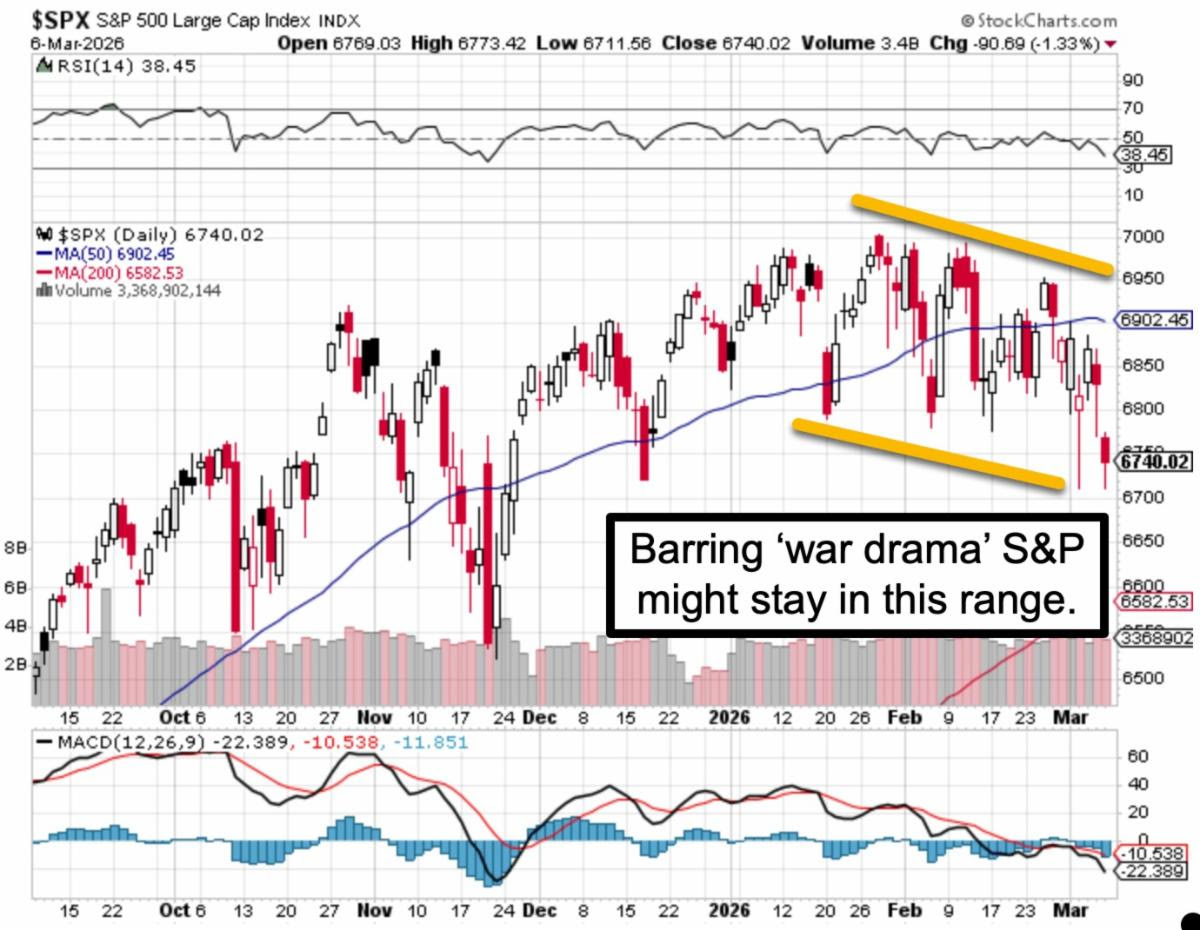
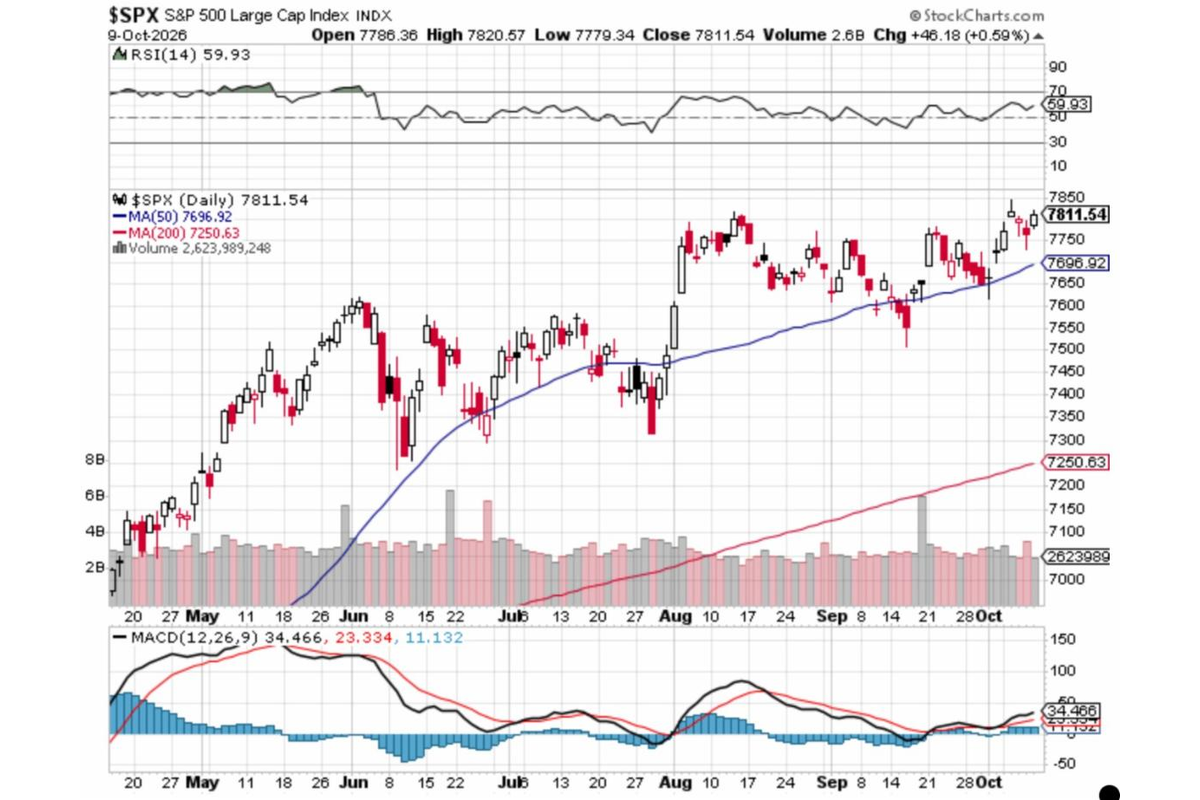
Bottom-line: the giant bottleneck of the Straits of Hormuz is for the moment the primary impetus for broad stock market action; and that can shift rapidly to the inverse, once you get a cascading unraveling of the tight situation; which could be sooner or later. Of course it's rising as a big dramatic global problem (not so much in the USA, which is in my humble thinking, 'why' we secured Venezuela first, in the scope of how all this progresses, presuming there is a 'master plan' to stabilize the 'free world' and particularly the West, over time). So sure, the Jobs number played a role, but it's the war and Oil prices mostly impacting. I do NOT expect any sort of to 'mission accomplished' statement at least not this early. No indication that either side is ready to de-escalate.. yet. Should Oil prices stay high, most presume it complicates the Fed policy. I see it differently, since failing to cut rates per general plan (and wishes of incoming Fed leadership) won't change the pricing aspects for consumers; when you do not want to 'hike' rates during an Oil price spike, which was the class mistake the Fed made make in the 1970's, as it wasn't the only one during Carter time and I think they Fed knows that. So how things re-open in the Persian Gulf is 'up in the air', and the radical regime may not care much about lost revenue, since it's pretty clear 'they' will be out of the 'oil business' very soon anyway. If there's one beneficiary of this, it's Russia and may be part of why they aren't helping their 'so-called' friend in Tehran, while Putin stated that he'd never be fighting Israel, since a couple million are Russian speakers. True, but more to it noted....so while Russia can get a better Oil sales price to China or India; it's the United States holding most of the cards (self-sufficient plus Venezuela). That's enough; we'll see what the new week brings... time for an effort to rest. | 

Comments
Log in or sign up to join the conversation.