

Unconventional dynamics - mostly surrounding trade negotiations - have a lot of analysts trying to define the obvious high-level instability. More realistic is just to understand the dimensions of market fundamental valuation (high for the leadership stocks, and low for the already corrected issues); for sure the credit market condition; assumptions by a heavily-committed investor class increasingly-dependent upon low rates to fuel or sustain markets; and an assumption the global central banks will provide underlying support.

All that is fine; but generally omits concernabout earnings guidance, which generally gets more conservative for the rest of the year; pending resolution of the key restraints, such as trade. However this is within the dimensions I suggested for the technical pattern; and if anything is stronger then probably will be looking out just a matter of weeks.
By then we'll see what happens with trade negotiations; while repeated and fast-moving shuffles on both sides (Bull & Bear; China & U.S.) are irresolute as they should be. You have Inverted Yield Curves across the world, and as the bond market is the center of action; one might be surprised that volatility is greater in equities than the credit market; even as everything from lower rates, to a mid-cycle cut; to misgivings about implications prevail broadly.
In fact these policies perceived to be supportive, tend to obscure exogenous factors (including geopolitical tensions ramped a bit); with now South Korea considering sending military forces to the Persian Gulf to protect oil shipping as part of the U.S. maritime coalition. No yield is better than negative yield it seems; and I am appalled that the ECB hasn't grasped this, much less what ridiculous encouragement for a near-NIRP policy here is now heard. Maybe it's falling on deaf-ears when Kudlow explains 'why' King Dollar strength will be appreciated as to how it matters in global commerce; if it's dethroned.
Technicals reflect repeated bounces off the S&P 200-Day Moving Average; with no real change (other than intraday swing) from our overall expectation for the big stocks to 'exhaust' in early-mid July; and enter a rangebound time of roller-coaster moves. The basic intermediate distribution is behind, with a renewed availability of liquidity some weeks ahead. But again; more should be focused upon other than merely 'money becoming available', although so many money managers do function that way; looking for any money to then throw into a selection of ETF's. That's part of why normally defensive, 'safe harbor' stocks, can decline with a basket, or conversely rally; because it is like doing marine plumbing with dissimilar metals on an ocean-going boat.
In sum: rolling corrections were the anticipation following upside exhaustion and I urge investors not to over-trade or go for the bait of breakdowns or the opposite, during this expected roller-coaster phase after early-mid July.
Trade remains the main focus other than credit markets. As it seemingly will be next month before the bilateral relationship between the U.S. and China are clarified, the market will continue to swing on every rumor like Friday's, which related to walking-back some of the prior evening's Huawei attack. Of course all that implies it is indeed a pawn in the trading battle; although the National Security aspect of their products must be viewed separately. That's likely why the 'clarification' pointed-out the limited license to transact (that's a relief for Android provider Google, which immediately recovered 'some').
Bottom-line: you can't (and won't) crash this market to smithereens as lots of technicians have been predicting; but you are correcting it rotationally as I thought reasonable and logical; because so many stocks already were in a heavily-hammered condition; hence hard to crash what's already crashed.
Of course what is 'not' crashed are the expensive FAANG+ types; and that's also why what buying interest exists, tends to focus on those areas so as to give a continuing illusion of greater overall strength than actually exists. This rotational action is going to continue; but the daily visibility resides upon the action in that relatively narrow universe of volatile big-cap stocks as noted.
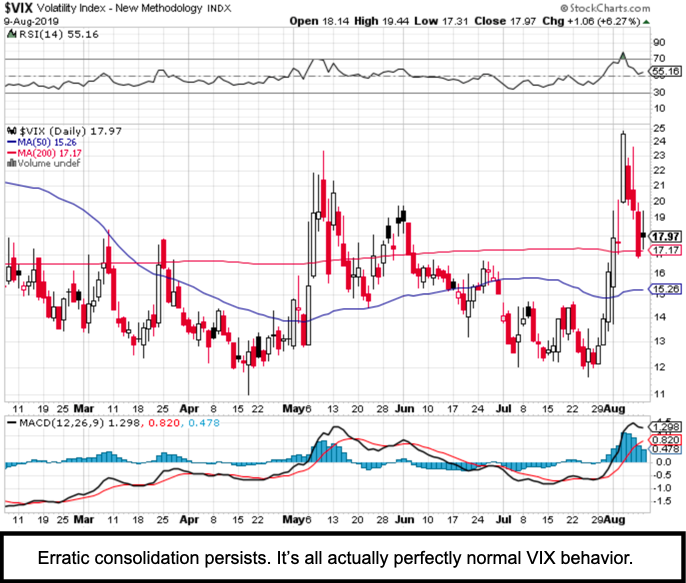
Monday's opening will vary with weekend developments (such as with Iran if anything) and overnight Sunday as Asian markets open. Ideally down a bit, yet-another intraweek rally, also rebounding to lower highs before fading; as that is sort of how (with nuances) a stair-step S&P move lower unfolds.
Comments
Log in or sign up to join the conversation.