

Key Takeaways
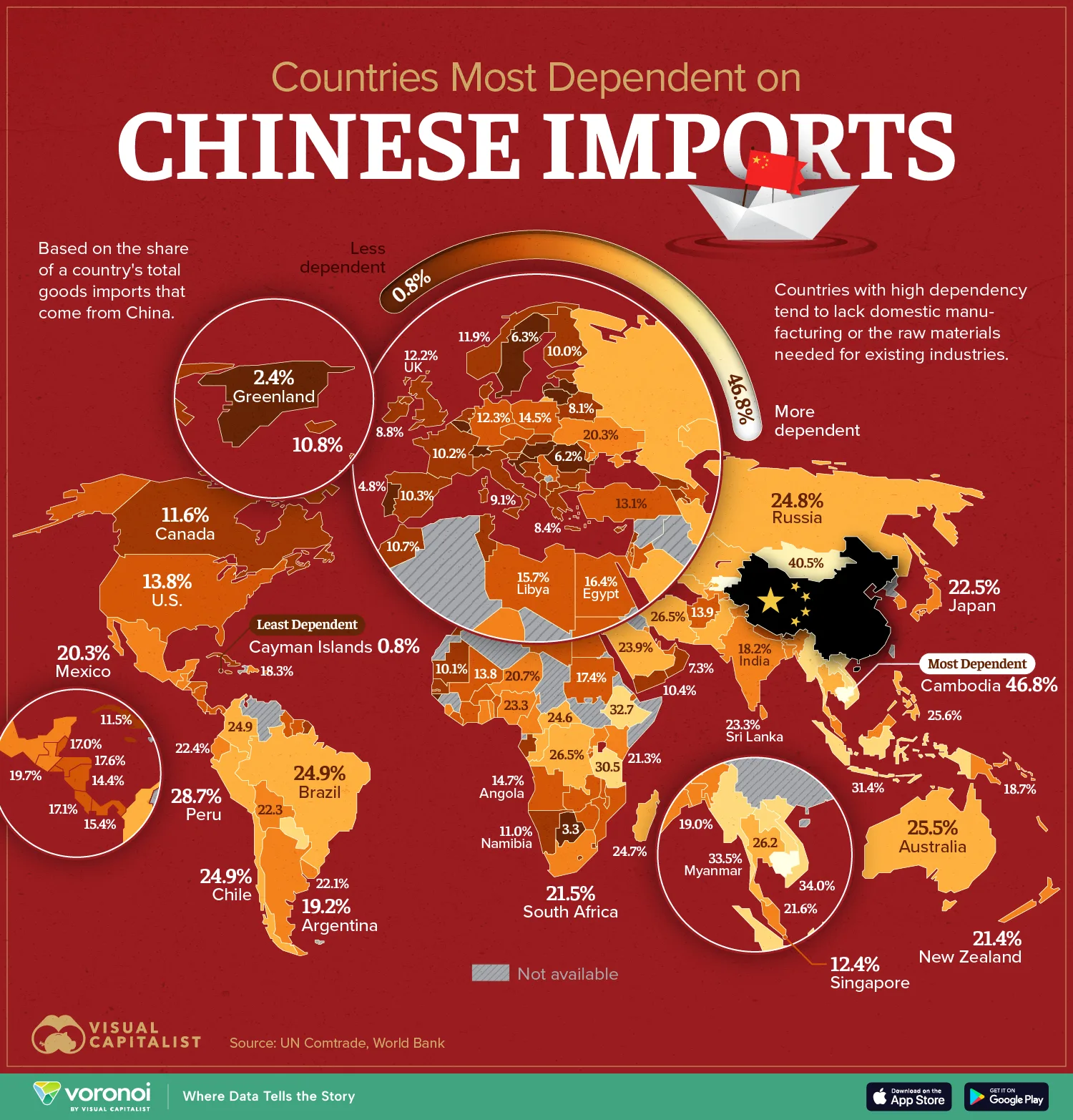
128 countries source at least 10% of their goods imports from China.
Cambodia is the most dependent country, with 46.8% of its goods imports from China.
The U.S. relies on China for 13.8% of its goods imports, compared to 9–10% for Germany, France, and Italy.
China is the world’s largest exporter of goods, and for many countries, it plays a central role in their supply chains.
The map below shows how dependent each country is on Chinese imports, based on the latest data from UN Comtrade and the World Bank.
Countries With the Highest Percentage of Chinese Imports
Cambodia has the highest dependency on Chinese goods imports at 46.8%. It imports a significant amount of raw materials for its textiles industry, according to The Observatory of Economic Complexity, which is then one of its largest exports.
Meanwhile, the U.S. ranks 97th overall, with 13.8% of its imports coming from China.
This data table below shows every country’s goods import dependency on China, with the latest data available for most countries as of 2024:
Rank | Country | Goods Import Dependency on China (%) |
|---|---|---|
1 | 🇰🇭 Cambodia | 46.8 |
2 | 🇰🇬 Kyrgyzstan | 45.8 |
3 | 🇭🇰 Hong Kong | 40.9 |
4 | 🇲🇳 Mongolia | 40.5 |
5 | 🇻🇳 Vietnam | 34.0 |
6 | 🇲🇲 Myanmar | 33.5 |
7 | 🇪🇹 Ethiopia | 32.7 |
8 | 🇵🇾 Paraguay | 32.5 |
9 | 🇮🇩 Indonesia | 31.4 |
10 | 🇹🇿 Tanzania | 30.5 |
11 | 🇲🇴 Macao | 30.1 |
12 | 🇱🇦 Laos | 29.8 |
13 | 🇺🇿 Uzbekistan | 29.2 |
14 | 🇵🇪 Peru | 28.7 |
15 | 🇵🇰 Pakistan | 28.3 |
16 | 🇨🇬 Congo | 27.6 |
17 | 🇨🇩 DRC | 26.5 |
18 | 🇮🇷 Iran | 26.5 |
19 | 🇹🇭 Thailand | 26.2 |
20 | 🇵🇭 Philippines | 25.6 |
21 | 🇦🇺 Australia | 25.5 |
22 | 🇰🇿 Kazakhstan | 25.3 |
23 | 🇧🇷 Brazil | 24.9 |
24 | 🇨🇱 Chile | 24.9 |
25 | 🇨🇴 Colombia | 24.9 |
26 | 🇷🇺 Russian Federation | 24.8 |
27 | 🇲🇬 Madagascar | 24.7 |
28 | 🇨🇫 Central African Republic | 24.6 |
29 | 🇸🇦 Saudi Arabia | 23.9 |
30 | 🇳🇬 Nigeria | 23.3 |
31 | 🇱🇰 Sri Lanka | 23.3 |
32 | 🇹🇬 Togo | 22.6 |
33 | 🇯🇵 Japan | 22.5 |
34 | 🇪🇨 Ecuador | 22.4 |
35 | 🇧🇴 Bolivia | 22.3 |
36 | 🇰🇷 South Korea | 22.1 |
37 | 🇺🇾 Uruguay | 22.1 |
38 | 🇲🇾 Malaysia | 21.6 |
39 | 🇿🇦 South Africa | 21.5 |
40 | 🇳🇿 New Zealand | 21.4 |
41 | 🇰🇪 Kenya | 21.3 |
42 | 🇷🇼 Rwanda | 21.0 |
43 | 🇳🇪 Niger | 20.7 |
44 | 🇲🇽 Mexico | 20.3 |
45 | 🇺🇦 Ukraine | 20.3 |
46 | Other Asia, not elsewhere specified | 20.1 |
47 | 🇸🇱 Sierra Leone | 20.1 |
48 | 🇬🇹 Guatemala | 19.7 |
49 | 🇺🇬 Uganda | 19.6 |
50 | 🇦🇷 Argentina | 19.2 |
51 | 🇰🇼 Kuwait | 19.0 |
52 | 🇧🇩 Bangladesh | 19.0 |
53 | 🇨🇲 Cameroon | 19.0 |
54 | 🇵🇬 Papua New Guinea | 18.7 |
55 | 🇬🇭 Ghana | 18.7 |
56 | 🇲🇻 Maldives | 18.7 |
57 | 🇩🇴 Dominican Republic | 18.3 |
58 | 🇹🇯 Tajikistan | 18.2 |
59 | 🇮🇳 India | 18.2 |
60 | 🇦🇿 Azerbaijan | 17.7 |
61 | 🇩🇯 Djibouti | 17.7 |
62 | 🇭🇳 Honduras | 17.6 |
63 | 🇲🇺 Mauritius | 17.5 |
64 | 🇯🇴 Jordan | 17.5 |
65 | 🇸🇩 Sudan | 17.4 |
66 | 🇸🇻 El Salvador | 17.1 |
67 | 🇨🇿 Czechia | 17.1 |
68 | 🇨🇷 Costa Rica | 17.1 |
69 | 🇿🇲 Zambia | 17.0 |
70 | 🇧🇿 Belize | 17.0 |
71 | 🇱🇷 Liberia | 16.7 |
72 | 🇦🇪 United Arab Emirates | 16.5 |
73 | 🇪🇬 Egypt | 16.4 |
74 | 🇲🇿 Mozambique | 16.2 |
75 | 🇲🇼 Malawi | 16.1 |
76 | 🇫🇯 Fiji | 16.0 |
77 | 🇨🇮 Côte d'Ivoire | 15.9 |
78 | 🇧🇫 Burkina Faso | 15.8 |
79 | 🇰🇮 Kiribati | 15.8 |
80 | 🇱🇾 Libya | 15.7 |
81 | 🇵🇦 Panama | 15.4 |
82 | 🇶🇦 Qatar | 15.0 |
83 | 🇸🇧 Solomon Isds | 14.9 |
84 | 🇦🇴 Angola | 14.7 |
85 | 🇮🇱 Israel | 14.7 |
86 | 🇵🇱 Poland | 14.5 |
87 | 🇳🇮 Nicaragua | 14.4 |
88 | 🇼🇸 Samoa | 14.3 |
89 | 🇧🇭 Bahrain | 14.3 |
90 | 🇹🇱 Timor-Leste | 14.1 |
91 | 🇹🇴 Tonga | 14.0 |
92 | 🇧🇮 Burundi | 14.0 |
93 | 🇿🇼 Zimbabwe | 13.9 |
94 | 🇦🇫 Afghanistan | 13.9 |
95 | 🇹🇹 Trinidad and Tobago | 13.9 |
96 | 🇲🇱 Mali | 13.8 |
97 | 🇺🇸 United States | 13.8 |
98 | 🇲🇩 Moldova | 13.8 |
99 | 🇸🇷 Suriname | 13.7 |
100 | 🇳🇵 Nepal | 13.5 |
101 | 🇷🇸 Serbia | 13.1 |
102 | 🇹🇷 Türkiye | 13.1 |
103 | 🇬🇾 Guyana | 12.9 |
104 | 🇧🇯 Benin | 12.8 |
105 | 🇸🇬 Singapore | 12.4 |
106 | 🇩🇪 Germany | 12.3 |
107 | 🇸🇮 Slovenia | 12.2 |
108 | 🇬🇧 United Kingdom | 12.2 |
109 | 🇳🇴 Norway | 11.9 |
110 | 🇲🇪 Montenegro | 11.8 |
111 | 🇸🇳 Senegal | 11.8 |
112 | 🇬🇦 Gabon | 11.6 |
113 | 🇨🇦 Canada | 11.6 |
114 | 🇨🇺 Cuba | 11.5 |
115 | 🇱🇧 Lebanon | 11.4 |
116 | 🇹🇳 Tunisia | 11.3 |
117 | 🇳🇦 Namibia | 11.0 |
118 | 🇦🇱 Albania | 10.9 |
119 | 🇮🇸 Iceland | 10.8 |
120 | 🇲🇦 Morocco | 10.7 |
121 | 🇧🇬 Bulgaria | 10.5 |
122 | 🇾🇪 Yemen | 10.4 |
123 | 🇪🇸 Spain | 10.3 |
124 | 🇱🇸 Lesotho | 10.3 |
125 | 🇫🇷 France | 10.2 |
126 | 🇪🇪 Estonia | 10.2 |
127 | 🇲🇷 Mauritania | 10.1 |
128 | 🇫🇮 Finland | 10.0 |
129 | 🇦🇲 Armenia | 9.9 |
130 | 🇲🇰 North Macedonia | 9.7 |
131 | 🇧🇦 Bosnia and Herzegovina | 9.6 |
132 | 🇬🇪 Georgia | 9.5 |
133 | 🇰🇲 Comoros | 9.5 |
134 | 🇮🇹 Italy | 9.1 |
135 | 🇮🇪 Ireland | 8.8 |
136 | 🇬🇲 Gambia | 8.7 |
137 | 🇳🇱 Netherlands | 8.6 |
138 | 🇵🇸 Palestine | 8.5 |
139 | 🇬🇷 Greece | 8.4 |
140 | 🇧🇳 Brunei Darussalam | 8.4 |
141 | 🇦🇹 Austria | 8.2 |
142 | 🇧🇾 Belarus | 8.1 |
143 | 🇯🇲 Jamaica | 8.0 |
144 | 🇨🇾 Cyprus | 7.8 |
145 | 🇸🇿 Eswatini | 7.6 |
146 | 🇩🇰 Denmark | 7.4 |
147 | 🇻🇨 Saint Vincent and the Grenadines | 7.4 |
148 | 🇸🇰 Slovakia | 7.3 |
149 | 🇴🇲 Oman | 7.3 |
150 | 🇧🇹 Bhutan | 6.5 |
151 | 🇭🇺 Hungary | 6.4 |
152 | 🇸🇪 Sweden | 6.3 |
153 | 🇷🇴 Romania | 6.2 |
154 | 🇱🇨 Saint Lucia | 6.0 |
155 | 🇵🇫 French Polynesia | 5.8 |
156 | 🇵🇼 Palau | 5.7 |
157 | 🇬🇼 Guinea-Bissau | 5.6 |
158 | 🇨🇼 Curaçao | 5.5 |
159 | 🇨🇭 Switzerland | 5.5 |
160 | 🇦🇬 Antigua and Barbuda | 5.2 |
161 | 🇨🇻 Cabo Verde | 5.2 |
162 | 🇸🇨 Seychelles | 4.9 |
163 | 🇵🇹 Portugal | 4.8 |
164 | 🇩🇲 Dominica | 4.7 |
165 | 🇱🇹 Lithuania | 4.6 |
167 | 🇸🇹 Sao Tome and Principe | 4.5 |
168 | 🇦🇼 Aruba | 4.3 |
169 | 🇧🇧 Barbados | 4.2 |
170 | 🇬🇩 Grenada | 4.1 |
171 | 🇲🇹 Malta | 4.0 |
172 | 🇱🇻 Latvia | 3.8 |
173 | 🇧🇪 Belgium | 3.5 |
174 | 🇭🇷 Croatia | 3.4 |
175 | 🇧🇼 Botswana | 3.3 |
176 | 🇱🇺 Luxembourg | 3.1 |
177 | 🇦🇩 Andorra | 3.1 |
178 | 🇧🇸 Bahamas | 2.5 |
179 | 🇬🇱 Greenland | 2.4 |
180 | 🇧🇲 Bermuda | 1.6 |
181 | 🇲🇸 Montserrat | 1.1 |
182 | 🇰🇾 Cayman Islands | 0.8 |
Many of the most dependent countries either lack large domestic manufacturing bases or rely on Chinese inputs to power export industries, such as textiles and electronics assembly.
Goods from China make up over 40% of imports for Kyrgyzstan, Hong Kong, and Mongolia, earning them spots near the top of the list. Of these, only Hong Kong ranks among China’s largest trading partners by total dollar value, largely because many mainland exports are routed through it for re-export.
In contrast, the Cayman Islands is the only entry with less than 1% of its imports coming from China. Instead, the country is highly dependent on the Netherlands.
Trade Ties Often Extend Beyond Imports
China’s trade playbook often includes investment and infrastructure development in countries it partners with.
Through its ambitious One Belt, One Road initiative, which was established in 2013, Chinese state-owned banks have funded port and dock infrastructure projects in developing nations via loans. It gives China a stake in strategic trade locations and influence, especially if the host country can’t repay the loan.
Notably, Cambodia netted $3 billion of Chinese grants and loans from 2002 to 2023.
China is also heavily invested in Djibouti (17.7% import dependency on China) and its port, which is the lifeblood of the African country’s economy. China established its first military base in the country in 2017, joining a handful of Western nations including the U.S., which neighbors the Doraleh port.
Technology is China’s Largest Export
Inexpensive goods have historically been associated with the “Made in China” stamp, but technology is its largest export today after establishing itself as a strong manufacturing hub with cheaper labor. Integrated circuits, which are foundational components of most modern technologies, make up the lion’s share of exports and highlight China’s critical role in global supply chains; phones and cars follow.
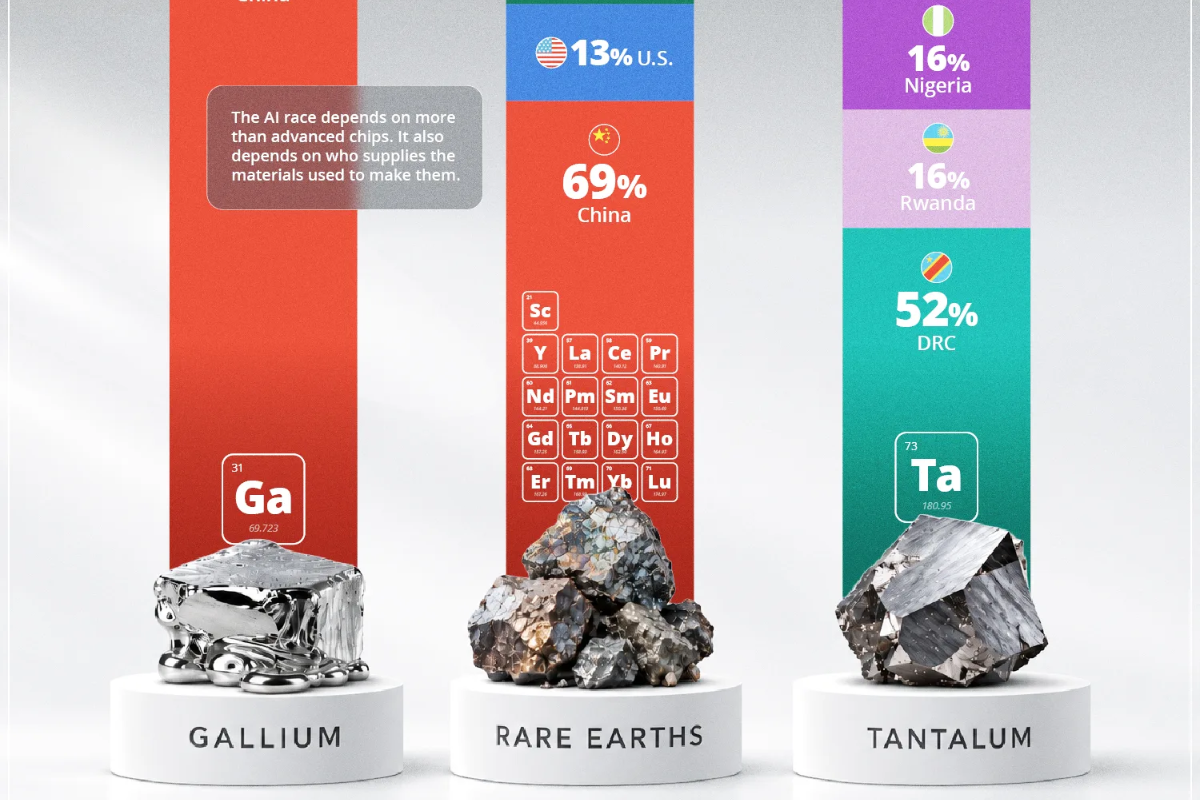
The world is particularly dependent on China for processing critical minerals, which are used in everything from consumer electronics to defense systems. This reliance has pushed U.S. policymakers to strengthen domestic capacity and diversify supply chains using tariffs and industrial policy.
As countries look to diversify suppliers and reduce risk, the data shows how deeply embedded China remains in global trade. Any major shift away from Chinese imports would ripple across industries worldwide.
Comments
Log in or sign up to join the conversation.