

Lower food and services inflation is welcome news for the Bank of England hawks, who worry the UK is at risk of another persistent bout of price pressure. Though inflation is set to rise towards 3.5% later this year, we expect the Bank to keep rates on hold throughout 2026.
The latest UK inflation data for June is welcome news for the Bank of England hawks, who worry that the energy crisis risks morphing into a long-lasting bout of price pressure.
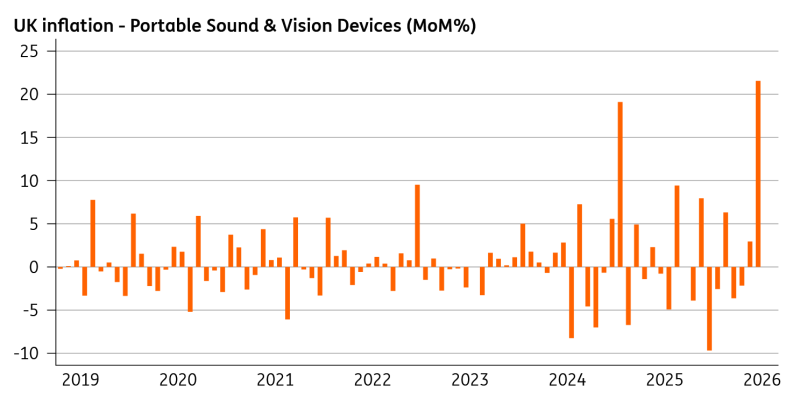
Yes, at 2.6%, June’s core CPI data was a tad above consensus. It looks like 'chipflation' has washed up on UK shores; portable device prices spiked by 22% month-on-month, the biggest monthly change since the series began in 2015. It’s possible that’s related to the Apple price hikes.
But that aside, there are two reasons this data is good news for the hawks. Firstly, food prices recorded their second consecutive month-on-month fall. That is highly unusual in recent history and echoes the equally benign food inflation story we’ve seen in many parts of Europe during Q2. Remember this wasn’t supposed to be happening in the aftermath of a spike in energy prices.
True, it will take a good year or so for the impact on food inflation to peak. But for those BoE officials who worry about the “salience” of food and petrol prices in forming consumer inflation expectations, the latest fall in both should be welcomed. It was enough to drag headline inflation down to 2.6%, below consensus.
'Chipflation' has arrived in the UK
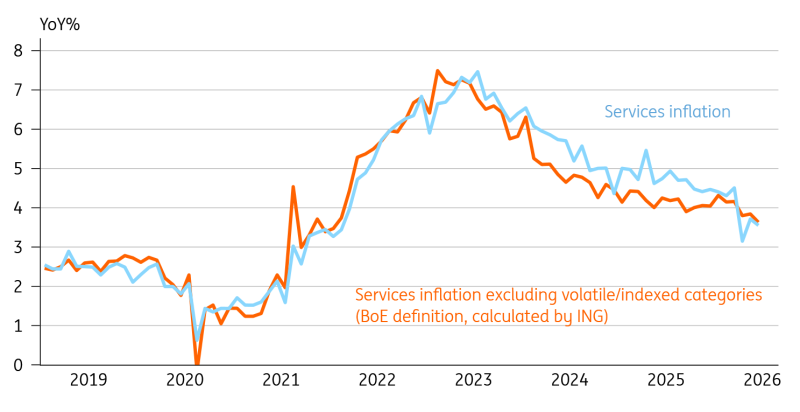
There’s also further evidence that services inflation is cooling off. Our calculation of the BoE’s preferred gauge of “core services” inflation shows it falling from 3.8% to 3.6%, a sharper pullback than in the overall services index. The trend is encouraging and, coupled with low private-sector wage growth, suggests that domestically generated inflation is currently very benign.
In short, these figures provide no compelling reason to hike interest rates right now. We expect the Bank of England to hold rates throughout 2026 before looking to cut rates gradually from next spring.
UK services inflation is cooling
We’ve long argued that the Bank is more likely to hike rates if inflation is projected to reach 4%. We’re still some way below getting there, even with the latest rise in oil and particularly natural gas prices. The latter means it’s now likely that the October household electricity/gas cap will be more-or-less unchanged or slightly higher – with rising natural gas futures offset by the recently-floated VAT cut on electricity bills. We now expect inflation to peak a tad below 3.5% late this year/early next year.



Comments
Log in or sign up to join the conversation.