

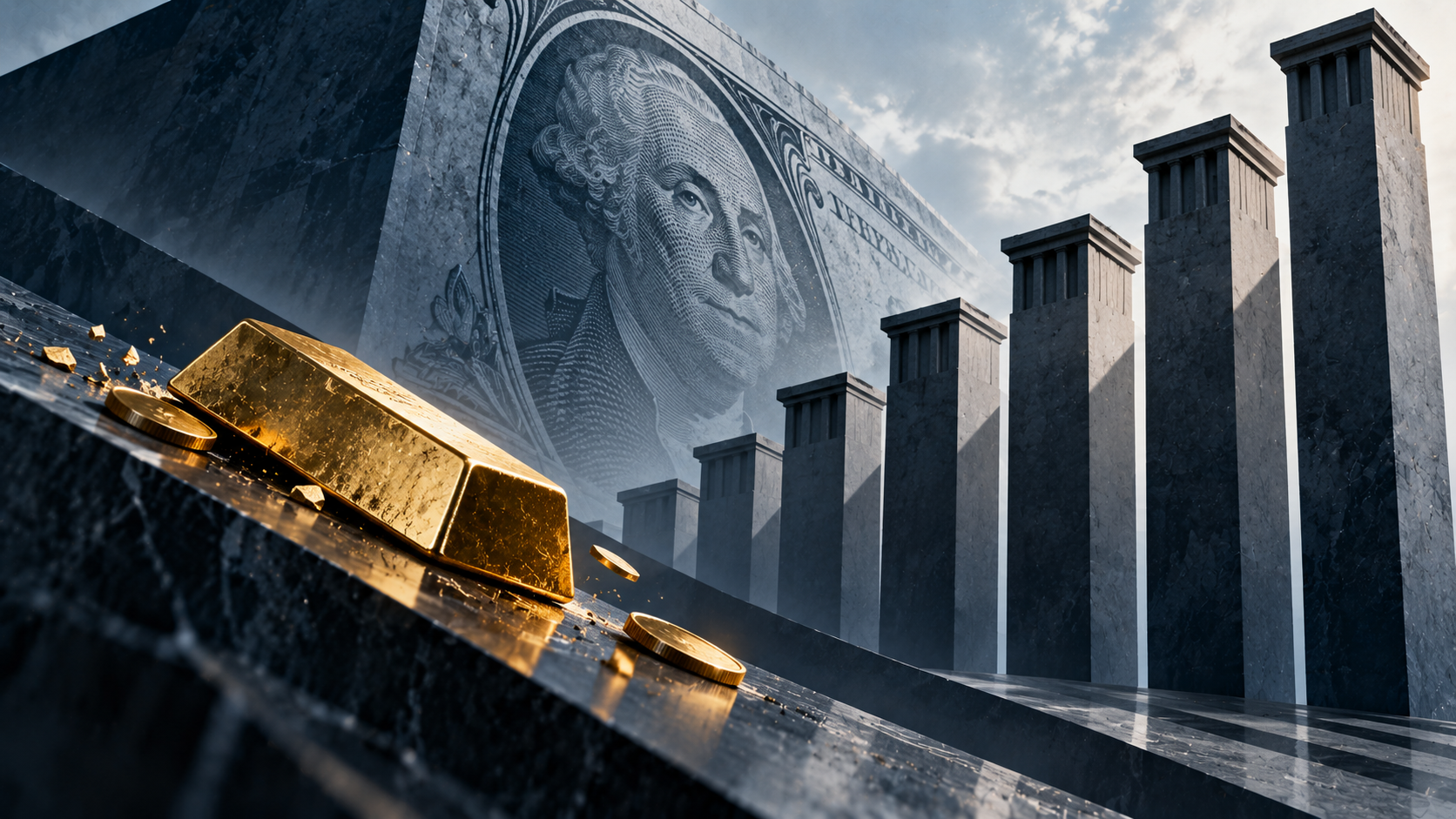
Investors should expect three things for the remainder of this year (2026) and throughout next year (2027): 1) a lower gold price, 2) a stronger U.S. dollar, and 3) higher interest rates.
LOWER GOLD PRICE
Gold at $5400 in January 2026 was a major price peak. The trend for the gold price is down and will remain so for an indefinite period of considerable length. Gold’s long-term, erratic rise in price since 1971 reflects the loss of U.S. dollar purchasing power over the past century. Gold’s price tops in 1980, 2011, and 2026 were the culmination of decade-long catch-up moves to bring its dollar price in alignment with the erosion of purchasing power that had taken place.
The 1980 peak price for gold gave way to a 70% decline that lasted twenty years, and the prior $850 peak price was not surpassed until twenty-eight years later, in January 1980.
The gold price peak in 2011 was followed by a 45% decline that lasted nearly five years. The 2011 peak at $1900 was not exceeded until nine years later, in August 2020.
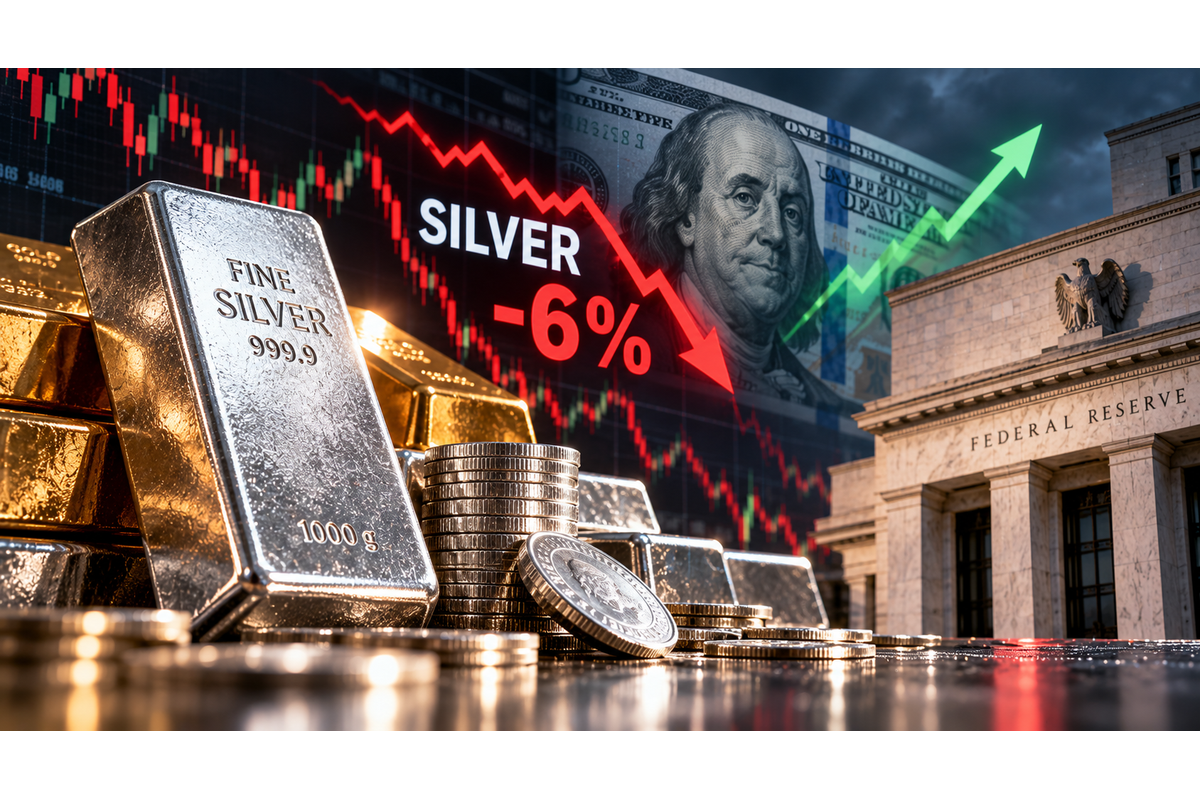
The gold price peaked in January 2026 at $5400 oz. Five months later (June 2026), the price had dropped to about $4000 oz., where it found temporary support. After rising to $4650, the gold price fell back to $4112.
I expect gold to break $4000 on the downside, and it could go as low as $3000 by the end of this year or early next year.
STRONGER U.S. DOLLAR
The past four years (2022-26) show relative dollar strength/weakness at a higher level than at any other time in the past forty years. The price action for DXY between 90 and 100 lasted for seven years and provides substantial support.
The recent breakout above 100 for DXY (US Dollar Index) has taken it to as high as 101.8. After some brief consolidation below 100, DXY is now above 102 and is moving strongly to the upside.
There are no better fiat alternatives to the U.S. dollar. That is because all governments inflate and destroy their own currencies.
Regarding BRICS, I said the following…
“Without convertibility, any new currency, even one issued with the pretense of being backed by gold, is just another empty promise and another substitute for real money, i.e., gold.
Do you trust the governments of Russia and China, or any quasi-government authority, to institute and maintain any proposed new currency (gold-backed or not) that would supposedly be a better alternative to the U.S. dollar?
As bad as the dollar is, you won’t get a better alternative from BRICS or any of its countries.
CBDCs are digital fiat currencies. With the move to eliminate cash, the U.S. dollar is pretty much a digital currency anyway.
The U.S. dollar will continue to strengthen versus other currencies and could gain in purchasing power as dollar prices for most assets (stocks, bonds, commodities, and real estate) are likely to suffer huge declines soon.
HIGHER INTEREST RATES
The Federal Reserve pursued a policy of lower interest rates that lasted forty years. Then, in an about-face that slammed the bond market and rate-sensitive investors, it told everyone that “spiked punch” would be more expensive for quite some time.
The Fed first announced a shift in emphasis regarding price stability and interest rate policy in March 2022…
“In support of these goals, the Committee decided to raise the target range for the federal funds rate to 1/4 to 1/2 percent and anticipates that ongoing increases in the target range will be appropriate” (FOMC, March 16, 2022)
The financial press coined the exact phrase “higher for longer” shortly thereafter, and former Chair Powell himself confirmed the meaning and accuracy of its use at the September 2023 Federal Open Market Committee (FOMC) meeting, emphasizing that borrowing costs would remain elevated for much longer than investors initially hoped…
“Restoring price stability will likely require maintaining a restrictive policy stance for some time. The historical record cautions strongly against prematurely loosening policy.” (J. Powell, Jackson Hole, Wyoming, August 2022)
In an interview a couple of years ago, former Fed Chair Powell said…
“I think instinctively – I can’t prove this; we’re going to learn about this empirically – but it seems to me that the neutral rate is probably higher than it was during the intra-crisis period. And so, rates will be higher.“
No matter the extent of collateral damage thus far, the potential for further harm to financial markets and the economy is likely, as interest rates could rise much higher. This is true regardless of Federal Reserve intentions. Here’s why…
The Fed’s action caused a misallocation of resources and inefficient use of capital, thereby distorting the markets.
Rates were forced to lower levels that were not economically efficient. The rates were held at those levels for too long. A cleansing of sorts has to occur before the economy can build momentum that reflects lasting, real growth.
That next wave higher for interest rates could be triggered by a collapse in the credit markets. The credit collapse could push the world economy into a severe economic depression.
SUMMARY AND CONCLUSION
Gold and dollar-denominated assets will soon see huge price drops. The inflationary wave that carried them to such extremes is in danger of breaking.
The likelihood of much higher interest rates and lower bond prices is high and rising.
The U.S. dollar will continue to strengthen on both a relative and absolute basis, defying the naysayers for now.
Comments
Log in or sign up to join the conversation.